
Heavy Periods and Blood Clots: When Your Flow Needs Attention
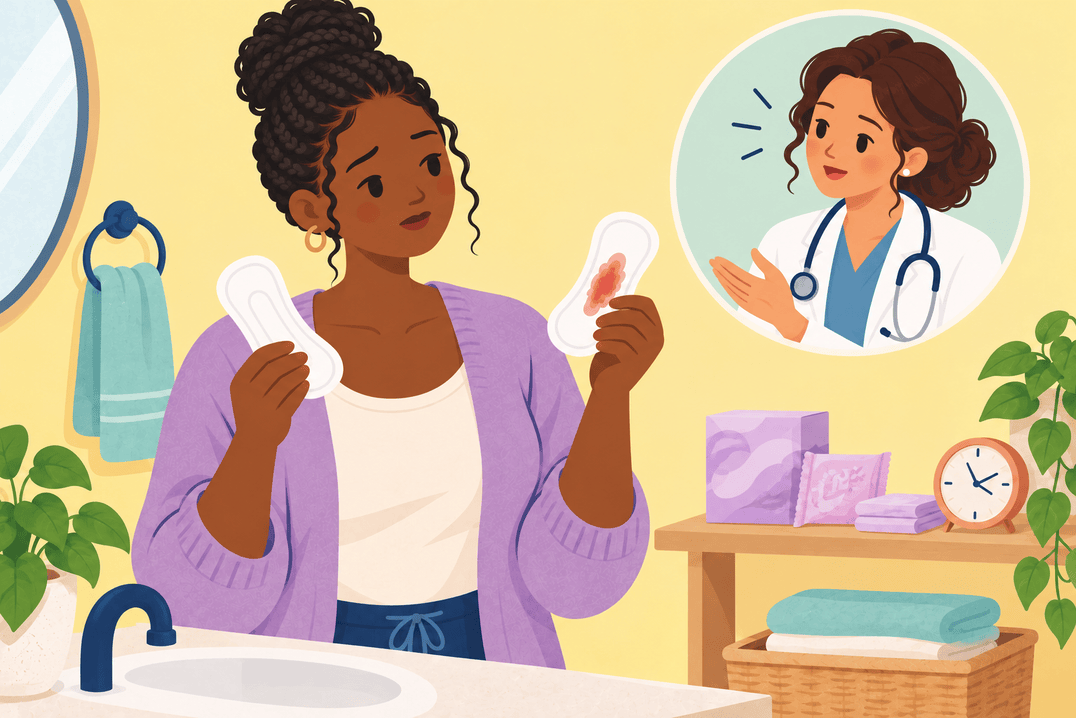
A heavy period is not only about how much blood you lose. It can mean planning every journey around a toilet, changing clothes unexpectedly, or feeling unable to leave home. Those experiences are worth describing when you seek care.
Signs your flow may be heavy
Changing pads or tampons every one to two hours, bleeding for more than seven days, passing clots larger than about 2.5 cm, or bleeding through clothing can indicate a heavy period. Frequent tiredness or breathlessness also deserves attention.
A clot by itself does not tell you what is wrong. Consider its size, the overall bleeding, and how you feel. Our guide to large period clots explains what to record.
Make your experience easier to explain
Note how often you change products and whether you use more than one type together. Record episodes of flooding and activities you miss. A description such as “I could not finish my commute without changing a pad” gives useful context.
If you do not know the amount of blood in millilitres, that is fine. You can still have a clear conversation.
What treatment may involve
A full blood count is a standard part of assessing heavy periods and can help identify anemia. A clinician will also consider possible causes. Options can include medicines to reduce bleeding, medicines that reduce inflammation and pain, or hormonal contraception; further tests or specialist treatment may be appropriate. Your plans for pregnancy should be part of that discussion.
Ask what the treatment aims to change, how soon to judge its effect, and what to do if bleeding remains difficult. The heavy period treatment choices guide offers questions about medicines, procedures, and pregnancy plans.
When bleeding is urgent
Seek emergency care if heavy bleeding comes with faintness, chest pain, shortness of breath, or dizziness, particularly when you are soaking products hourly for more than two hours. Do not wait to complete a symptom diary.
For painful periods as well as heavy flow, read period cramp relief and warning signs.
References

Lifeing Editorial
Stories for a little more understanding, a little more reassurance, and the everyday moments in between.
Related posts


How Often Should You Have Sex When Trying for a Baby?