
Ovarian cyst surgery: Questions to Ask Before Treatment

Ovarian cyst surgery may be considered when a cyst persists, causes troublesome symptoms, is large, or has features that need further assessment. An urgent complication can require a different approach. Being offered an operation should come with an explanation of why it is recommended in your situation.
Start with the reason for the operation
Ask which finding or symptom the procedure aims to address. Is the main concern pain, size, an uncertain diagnosis, or a risk seen on imaging? Ask what observation would involve and what could happen if treatment were delayed.
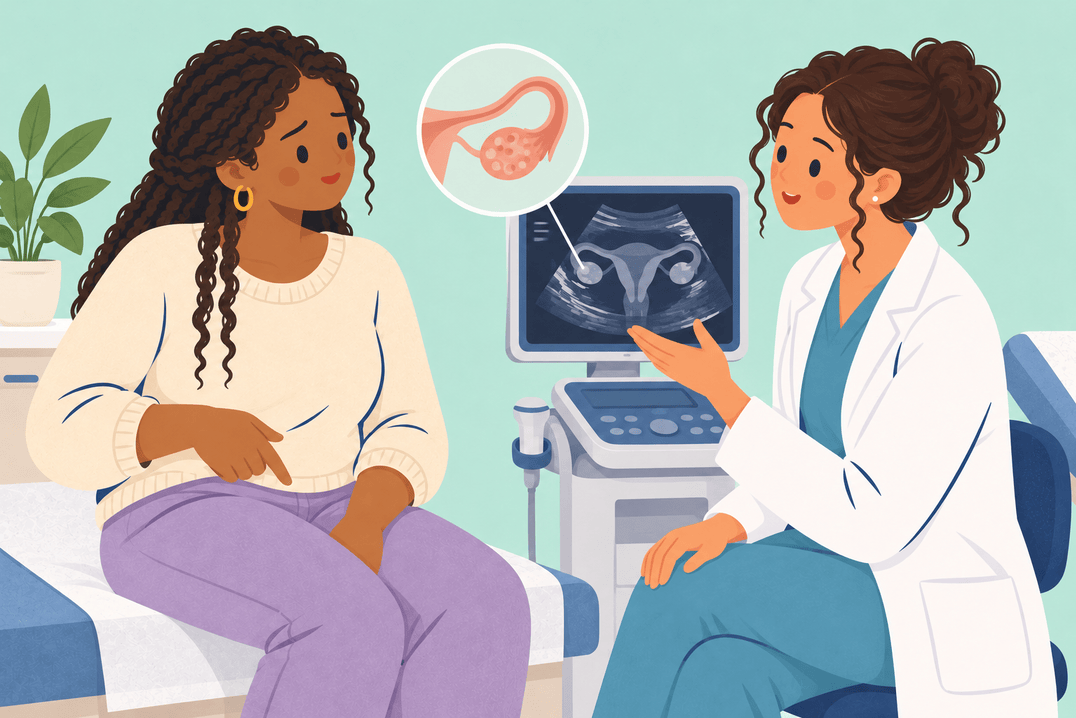
The cyst ultrasound guide explains why follow up varies. A cyst found incidentally does not automatically need removal, and a monitoring plan is not the same for every age or scan appearance.
Clarify what may be removed
Sometimes the cyst can be removed while preserving the ovary. In other circumstances, removal of an ovary may be necessary, such as when it is extensively affected or there is concern about cancer. Ask what the team expects and which findings during surgery could change the plan.
Discuss fertility wishes before a planned operation. Preserving ovarian tissue is an important goal when appropriate, but the team cannot guarantee a future pregnancy. If both ovaries are removed before natural menopause, this causes surgical menopause. Ask about the consequences and support if that is a possibility.
Understand the route and risks
Many procedures use laparoscopy, with small abdominal incisions. A larger incision may be recommended for some very large cysts or when there is concern about cancer. The surgeon should explain the approach, anesthesia, possible changes during surgery, and risks such as bleeding, infection, or injury to nearby structures.
Ask how previous operations, medicines, and other health conditions affect preparation. Follow the surgical team’s instructions about medicines and eating or drinking before the procedure rather than making changes yourself.
Plan recovery and the results discussion
Recovery depends on the procedure and your circumstances. Ask about pain relief, lifting, work, driving, exercise, and sex. Confirm when tissue results will be available and whether another appointment or scan is needed.
After surgery, increasing pain or swelling, fever, heavy bleeding, or unusual discharge needs prompt medical advice. Use the contact instructions provided by your team. For background on symptoms and reassessment, read the ovarian cyst symptoms guide.
References

Lifeing Editorial
Stories for a little more understanding, a little more reassurance, and the everyday moments in between.
Related posts

Ovarian cyst symptoms: When Pelvic Discomfort Needs Checking