
Ovarian cyst symptoms: When Pelvic Discomfort Needs Checking
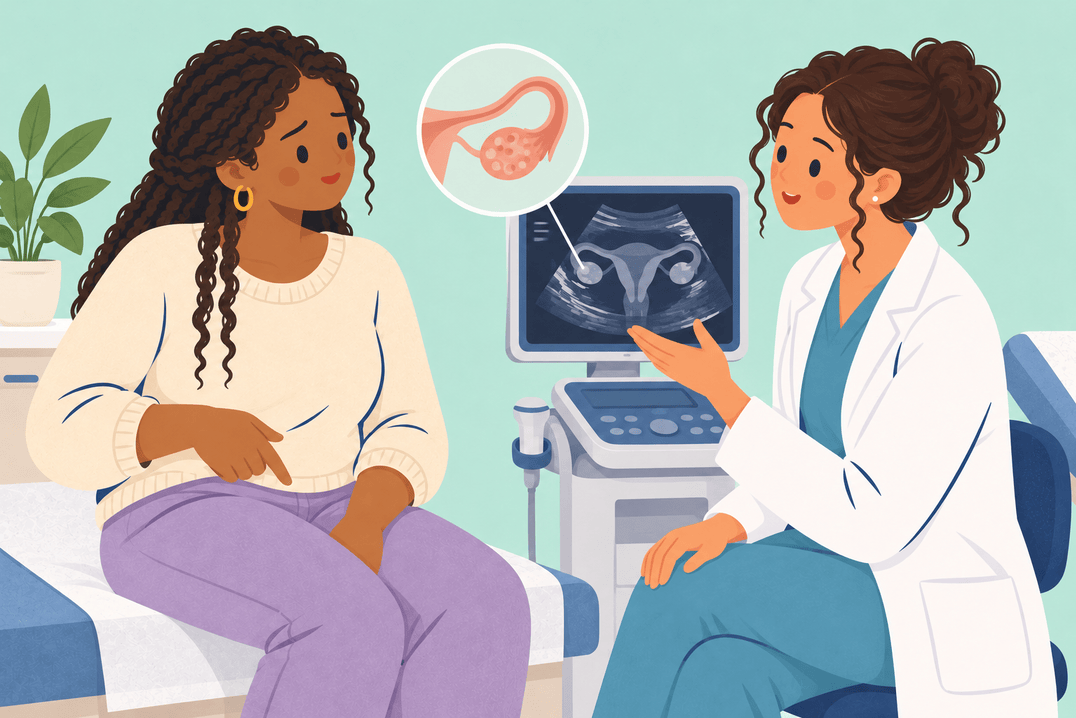
An ovarian cyst is a sac containing fluid that develops on or in an ovary. Many are found incidentally and cause no symptoms. Some cause discomfort, but pelvic pain alone cannot tell you whether a cyst is present or whether it explains the pain.
Notice the pattern rather than diagnosing the cause
Possible symptoms include a dull ache or heaviness in the pelvis, pain during sex, bloating, feeling full quickly, or changes in periods. A larger cyst may also affect bladder or bowel comfort. These symptoms have other possible causes, so a new or persistent change deserves assessment.
Record when the discomfort started, which side it affects, and whether it relates to periods, movement, sex, urination, or bowel movements. Mention unusual bleeding, discharge, fever, or a change in appetite. You do not need a perfect diary before asking for help.
Know when the timing becomes urgent
Seek urgent medical advice for sudden pelvic pain, pain with vomiting or fever, or pain when pregnancy is possible. Do not wait for a positive pregnancy test before mentioning that possibility.
Severe or worsening pain, fainting, marked dizziness, shoulder tip pain, breathing difficulty, or heavy vaginal bleeding with pelvic pain needs emergency assessment. The sudden pelvic pain guide explains why a known cyst should not lead you to dismiss a new episode.
Expect an assessment of the whole picture
A clinician may ask about your cycle, contraception, pregnancy possibility, previous surgery, and family history. An examination and ultrasound may help identify whether there is a cyst and describe its appearance. Some people need additional tests, depending on the findings.
Not every scan finding requires surgery. Size, symptoms, appearance, and whether you have reached menopause help determine the next step. The cyst ultrasound guide explains how to discuss that plan.
Ask what should happen next
Before leaving, clarify who will explain the results, whether another scan is needed, and which symptoms should prompt earlier contact. If symptoms persist despite a reassuring scan, ask what other causes should be considered. A reassuring ovarian finding does not make ongoing discomfort unimportant.
References

Lifeing Editorial
Stories for a little more understanding, a little more reassurance, and the everyday moments in between.
Related posts


Ovarian cyst ultrasound: Understanding the Follow Up Plan