
PCOS diagnosis: How Symptoms and Test Results Fit Together

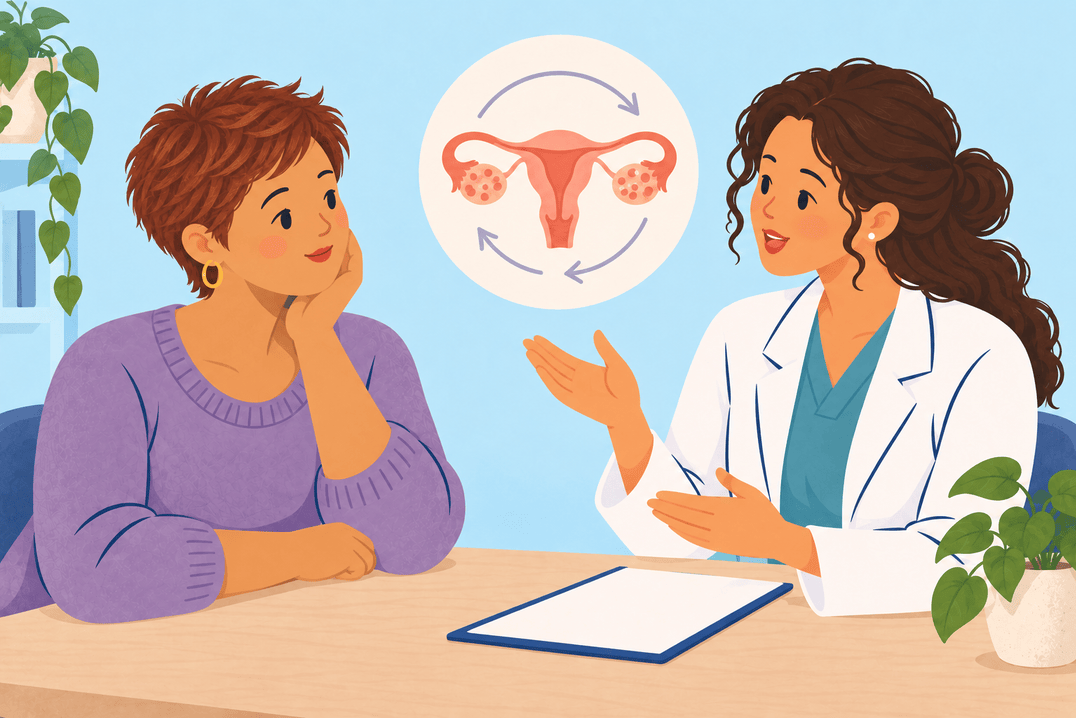
A PCOS diagnosis comes from a pattern of findings and the exclusion of other explanations. One scan, one hormone result, or one late period cannot establish it on its own. Your history gives the tests their meaning.
You may also encounter the newer name PMOS, explained in our PCOS overview.
How the adult criteria fit together
After other causes have been considered, adults generally need two of three features: evidence of excess androgen activity, problems with ovulation, and a characteristic ovarian pattern. Androgens are hormones present in everyone. Excess activity may show through certain physical signs or blood results.
The ovarian feature can be assessed with ultrasound or, in adults, an appropriately interpreted anti Müllerian hormone test, often shortened to AMH. AMH is not a diagnosis by itself. Routinely doing both AMH and ultrasound for this purpose can increase overdiagnosis.
The blood test guide explains why the same result can mean different things depending on medicines, age, and the laboratory method.
PCOS without ovarian cysts
You do not need ovarian cysts to have PCOS. When irregular cycles and excess androgen activity are both established, an ovarian scan or AMH test is not required to complete the diagnostic criteria.
Conversely, a scan describing polycystic ovaries does not by itself establish the syndrome. Ask which two features support your diagnosis and which other conditions have been considered. This is more useful than treating a scan description as the entire answer.
Adolescence needs a different approach
Cycle irregularity can be part of the transition after the first period. In adolescents, assessment requires both ovulatory dysfunction, judged in relation to time since periods began, and excess androgen activity. Ultrasound and AMH are not recommended for diagnosing PCOS at this stage.
If the picture is uncertain, a clinician may plan reassessment while still helping with troublesome symptoms. Uncertainty should come with a plan, including when to return and what can be treated now.
Prepare a short history
Bring dates of bleeding, when skin or hair changes began, and a list of medicines and supplements. Mention pregnancy possibility, major changes in exercise or eating, and any previous hormone results. Thyroid conditions and other hormone disorders can resemble parts of PCOS.
Do not stop contraception to make tests easier without an agreed alternative plan. Before leaving, ask how the diagnosis changes your care and which ongoing health checks are appropriate.
References

Lifeing Editorial
Stories for a little more understanding, a little more reassurance, and the everyday moments in between.
Related posts
PCOS nutrition claims: Separating Helpful Habits From Promises