
Understanding PCOS: Cycle Changes, Common Symptoms, and Getting Help
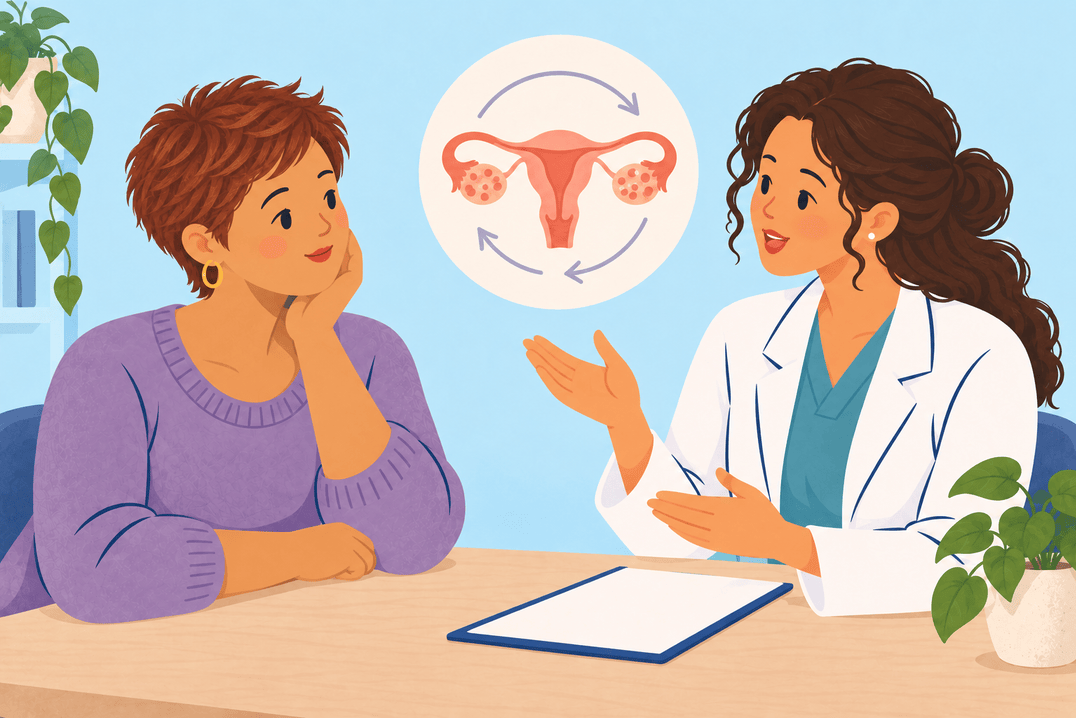
PCOS can affect periods, skin, hair, fertility, and metabolic health. The signs vary, so there is no single appearance or cycle pattern that everyone with the condition shares. If changes are troubling you, a clinical assessment is more useful than comparing yourself with a symptom photograph or checklist.
Understand the name
PCOS stands for polycystic ovary syndrome. You may now also see the name polyendocrine metabolic ovarian syndrome, or PMOS, in health information. These names refer to the same condition. The familiar term PCOS remains widely used in existing records and conversations.
The older name can be misleading: ovarian cysts are not required for a diagnosis. Our diagnosis guide explains how findings are combined rather than relying on a scan alone.
Look beyond period dates
Possible signs include infrequent or absent periods, coarse facial or body hair, persistent acne, and scalp hair thinning. Some people first seek help because they are having difficulty conceiving. Others notice skin or hair changes before they think about their cycle.
These findings have other possible causes. Acne or scalp thinning alone are relatively weak clues to excess androgen activity, and regular bleeding does not always confirm ovulation. Describe when a change began and whether it has progressed rather than trying to establish the diagnosis yourself.
New hair growth that appears suddenly, a deepening voice, or rapidly changing muscle size needs urgent medical assessment. Those changes should not automatically be attributed to PCOS.
Assessment should answer a question
A clinician considers your history, symptoms, medicines, and appropriate tests while looking for other explanations. Adults and adolescents are assessed differently. Ask which findings support the diagnosis and what remains uncertain.
Bring any earlier results and a short bleeding history. If you use hormonal contraception, describe the pattern before starting it where possible. Do not stop treatment simply to create a clearer test result without an agreed plan.
Care can address several priorities
You can ask for help with unwanted hair, acne, unpredictable bleeding, or emotional distress even if pregnancy is not a current goal. PCOS can also increase the likelihood of glucose problems, so metabolic assessment belongs in care at different body sizes.
Tell the clinician what matters most to you. That might be reducing time spent removing hair, knowing when to act on a missed period, or finding support for low mood. The mental health guide explains why emotional concerns deserve their own attention.
Leave with a plan for the immediate concern and the next review. You do not need to solve every aspect of PCOS at one appointment.
References
- WHO: Polycystic ovary syndrome (opens in a new tab)
- International guideline: PCOS and PMOS assessment and management (opens in a new tab)
- Office on Women’s Health: Polycystic ovary syndrome (opens in a new tab)
- NHS: Polyendocrine metabolic ovarian syndrome (opens in a new tab)
- NHS: Excessive hair growth (opens in a new tab)

Lifeing Editorial
Stories for a little more understanding, a little more reassurance, and the everyday moments in between.
Related posts


Unpredictable Periods: Understanding Changes in Your Cycle