
Period induction claims: Why Home Remedies Need Caution
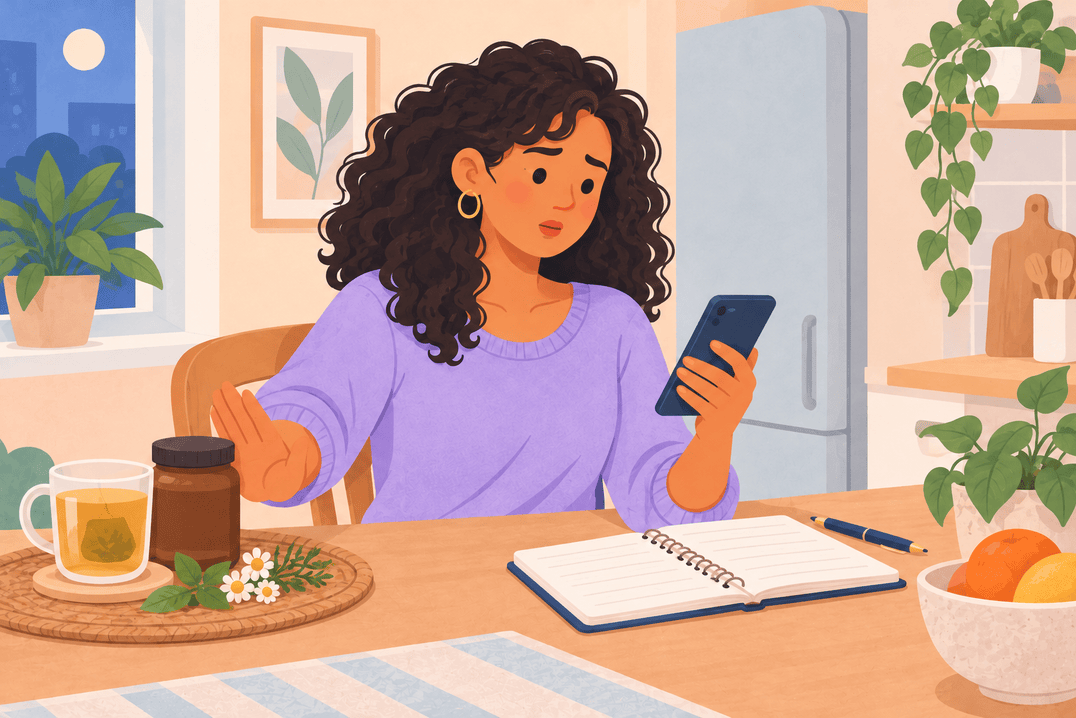
Promises to make a period arrive quickly can be appealing when waiting feels stressful. A testimonial about a food, tea, or supplement is not evidence that it reliably treats the cause of a delayed period. Before trying to trigger bleeding, consider pregnancy possibility and why the period may be absent.
Ask what the claim actually demonstrates
A period beginning after someone drank a tea does not show that the tea caused it. The bleed might have started anyway. Products can also combine several ingredients, making their effects and interactions difficult to judge.
Do not confuse a familiar food with a concentrated extract or a large supplement dose. The label “natural” does not establish safety, especially during pregnancy or alongside prescribed medicines.
Check pregnancy before self treatment
If pregnancy is possible, use an appropriately timed test. An early negative result can need repeating. Read a negative test and no period for a practical follow up plan.
Do not use unverified herbs, large supplement doses, or someone else’s hormonal medicine to make bleeding start. If you need pregnancy options advice, a qualified reproductive health service can provide an evidence based assessment and explain available care.
Bring the product to a pharmacist
If you have already taken something, keep the package and note the amount and timing. Tell a healthcare professional rather than hiding the information because you feel embarrassed. The ingredients may matter when checking interactions or new symptoms.
Seek urgent medical advice if you feel unwell after taking a product. Do not take another dose in an attempt to correct an unexpected effect.
Treat the reason for the delay
Care for missing periods depends on the cause. A clinician may sometimes prescribe hormonal treatment for a specific reason, but that does not make every product that causes bleeding a treatment for the underlying problem.
The late period guide explains what to record and when to ask for assessment. A clear testing and care plan is more useful than escalating through remedies while the cause remains unknown.
References
- NHS: Herbal medicines and complementary therapies (opens in a new tab)
- NCCIH: Women’s health and complementary approaches (opens in a new tab)
- NCCIH: Safe use of complementary health products (opens in a new tab)
- NHS: Missed or late periods (opens in a new tab)
- NHS: Doing a pregnancy test (opens in a new tab)

Lifeing Editorial
Stories for a little more understanding, a little more reassurance, and the everyday moments in between.
Related posts

Period leaks: Finding the Cause Without Blaming Your Body