
Period underwear: Understanding Absorbency and Washing
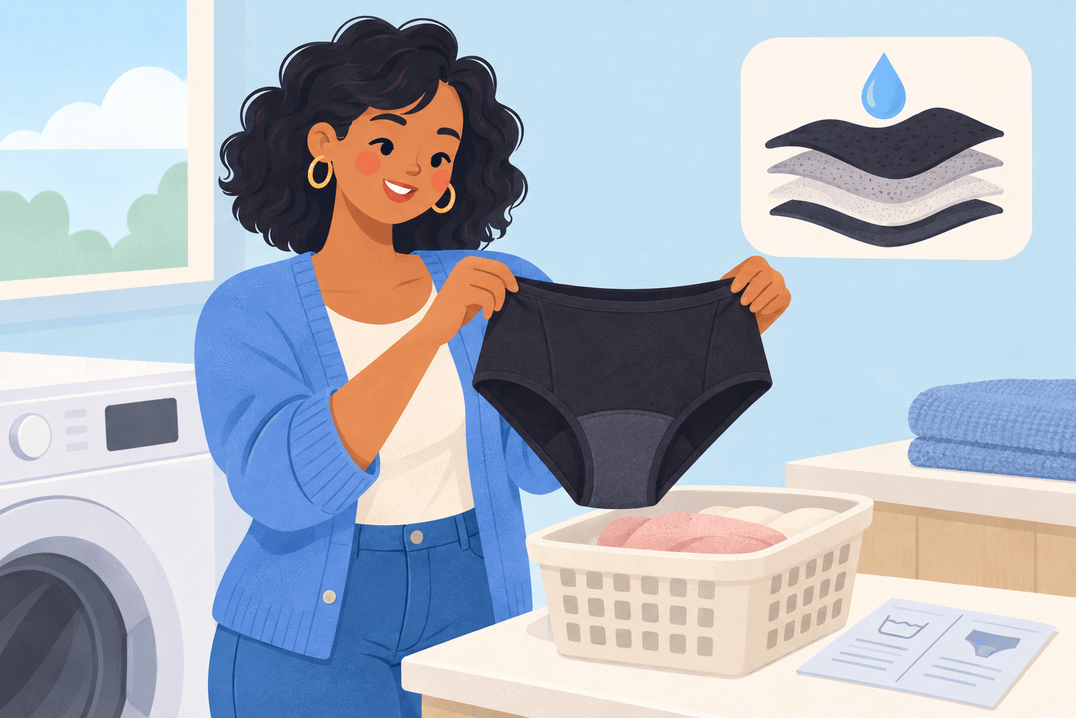
Period underwear has absorbent layers built into the garment. It can be an alternative to a separate pad or part of a backup plan. The useful question is whether a particular pair works for your flow and daily routine.
Read the label before relying on it
Check whether the product is intended for light flow, heavier flow, or backup use. Absorbency descriptions do not guarantee a fixed number of hours for every person. Start on a day when checking and changing are straightforward.
Notice where the absorbent area sits and whether the underwear feels comfortable when you move or lie down. You may prefer a different style for sleep than for daytime. Our choosing products guide can help compare these practical needs.
Plan for a complete change
Unlike replacing a pad, changing period underwear means changing the garment. Think through shoes, trousers, bathroom space, and where used underwear will go. A spare pair and a separate washable bag can make the routine easier outside home.
Change sooner if the underwear is wet, full, leaking, or uncomfortable, and follow its stated changing guidance. Do not wait for an advertised maximum if your flow has already exceeded what the garment can manage.
Make the care instructions part of the purchase
Check washing temperature, detergent guidance, whether rinsing is recommended, and the permitted drying method. Products can differ, so there is no single laundry setting to prescribe for all brands.
Allow enough time for each pair to dry before storing or wearing it again. Consider how many changes you need while other pairs are being washed. Our reusable pad guide offers a similar way to plan a rotation without buying everything at once.
Reassess comfort and performance
Stop using a garment that causes itching, a rash, swelling, or pain and seek advice. If it starts leaking differently, check fit and the manufacturer’s guidance about care and replacement rather than assuming your body is the problem.
Ordinary period underwear and period swimwear are different products. If swimming is the goal, choose a product specifically designed for that use. You can keep more than one kind of protection available without committing to the same option every day.
References

Lifeing Editorial
Stories for a little more understanding, a little more reassurance, and the everyday moments in between.
Related posts
Periods and sports in puberty: Supporting Participation and Comfort