
Pincer grasp: Encouraging Small Hand Skills With Safe Objects
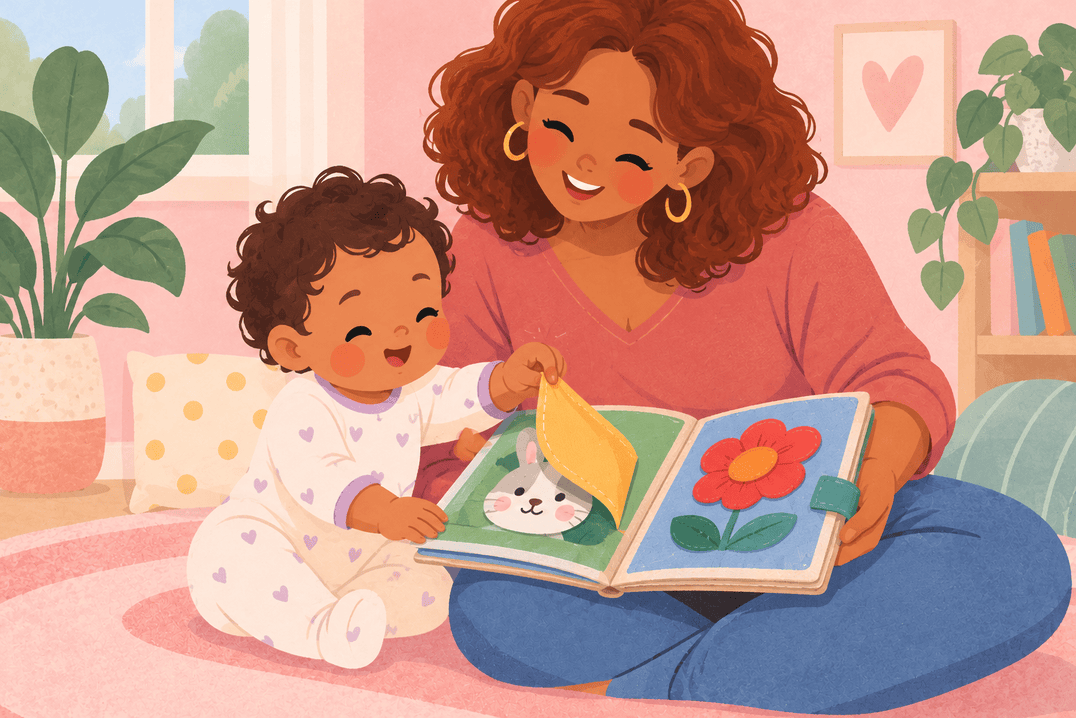
A pincer grasp uses the thumb and index finger together to pick something up. It develops gradually from less precise ways of holding and gathering objects. Your baby may use several approaches during the same activity, especially when an object is slippery or difficult to reach.
Look at progress rather than a perfect pinch
Earlier in development, babies may draw objects towards their palm with several fingers. More precise fingertip control emerges with practice and development. By one year, most babies can pick things up between their thumb and index finger.
This milestone is a reason to discuss progress, not to repeatedly test your baby with smaller and smaller items. If the skill is absent at the expected age, or you notice another concern, ask your clinician. Our hand skills guide looks at reaching, transferring and releasing as part of the wider picture.
Keep tiny household objects out of practice
Do not offer coins, buttons, beads, sequins, loose magnets or batteries to a baby for finger practice. Close supervision does not make these suitable toys. Keep older children’s craft materials and small toy parts away from the baby’s play area.
Use toys intended for your baby’s age, with securely attached features they can touch or explore. Larger objects still allow useful reaching, holding and releasing. You do not need to reproduce a clinical assessment or isolate the fingers with a special tool.
Use mealtimes only when your baby is ready
If your baby is already developmentally ready for solids, feeding themselves can provide opportunities to use their hands. Keep them alert, safely seated upright and continuously supervised. Prepare food to a suitable size, shape and texture for their current ability, following safe feeding guidance.
Small does not automatically mean safe. Avoid hard, round or sticky foods and do not use whole nuts, popcorn, whole grapes or dried fruit as a grasping challenge. Soften firm vegetables and prepare them appropriately rather than offering hard raw pieces. Do not introduce solids early solely to practise a grip.
Respect signs that your baby has had enough. A meal is not a finger exercise session that must be completed. If feeding skills are difficult or your baby has a medical condition, ask their feeding team for an individual plan.
Make ordinary play inviting
Sit nearby, show interest in what your baby is exploring and give them time to try. Offer one or two suitable objects rather than filling the space with choices. They may need a different position, a rest or a larger item that is easier to manage.
Avoid holding the other fingers down to create the appearance of a pincer grasp. The hand preference guide explains why persistently unequal use of the hands should be discussed rather than corrected by restraining one side.
Ask for help when progress concerns you
Contact your clinician if progress is limited, one hand is consistently less active or movements seem painful. If an established ability is lost, seek prompt assessment rather than waiting for routine review. A professional can consider vision, posture, sensation and movement together and suggest support suited to your child.
References
- CDC: Developmental milestones at one year (opens in a new tab)
- CDC: Developmental milestones at nine months (opens in a new tab)
- East of England Community Health and Care NHS Trust: Grasping, release and hand skills (opens in a new tab)
- NHS Best Start in Life: Play, reaching and coordination (opens in a new tab)
- CDC: Food choking hazards and safe mealtimes (opens in a new tab)
- NHS Best Start in Life: Preparing food safely (opens in a new tab)
- NHS: Baby and toddler safety (opens in a new tab)
- CDC: Getting help with developmental concerns (opens in a new tab)

Lifeing Editorial
Stories for a little more understanding, a little more reassurance, and the everyday moments in between.
Related posts

Placenta accreta: Understanding Specialist Birth Planning