
Pregnancy breast changes: Soreness, Size, and Skin Differences

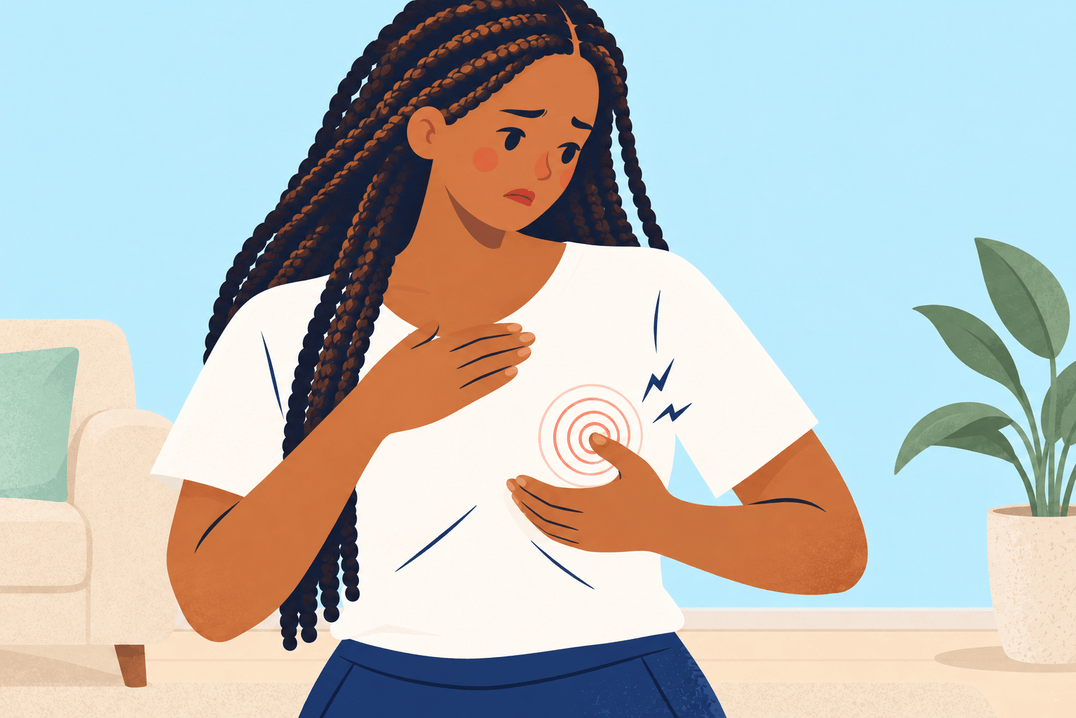
Breasts may feel tender or become larger during pregnancy, and the nipples or surrounding skin can darken. The amount and timing of change varies. Those differences can affect comfort, but they do not tell you everything about the pregnancy or future feeding.
Choose support for the body you have today
A properly fitting bra can help with soreness. Recheck the fit if straps dig in, the band feels restrictive, or the cups no longer support comfortably. A soft bra at night may feel helpful for some people and unnecessary for others.
Avoid measuring your experience against another person’s breast size or symptoms. If tenderness interferes with sleep or daily activity, ask about suitable relief rather than assuming it must be endured.
Expect some changes without dismissing every change
Pregnancy can explain tenderness and changes in pigmentation, but a new lump, an unusual change in shape, skin dimpling, or a nipple turning inward needs medical assessment. Redness, heat, swelling, fever, or feeling shivery also needs prompt advice.
Tell the clinician whether a change affects one breast or both and when it appeared. You do not need to wait until after birth to have a breast concern examined.
Ask about nipple leakage
Small amounts of early milk may leak during pregnancy. The guide to leaking colostrum before birth explains what to discuss and why expressing milk is a separate decision.
Tell your midwife or doctor about new nipple discharge so they can advise whether it needs examination. Blood stained or otherwise unusual discharge should be assessed promptly. If you are unsure whether a fluid is expected, describe it to your midwife or doctor instead of repeatedly squeezing the nipple to check.
Include medicines and skin products in the conversation
Check before using pain medicines, medicated creams, or supplements marketed for breast discomfort. Bring the product details with your pregnancy medical history.
A useful consultation should address both the symptom and your practical goal, such as sleeping comfortably or finding supportive clothing, while making clear which changes need further review.
Breast changes before a positive test
Tenderness or fullness may be noticeable before you know whether you are pregnant. Those experiences can also occur before a period, so their timing or strength cannot settle the question. A change in nipple appearance is not a substitute for testing either.
The cyclical breast tenderness guide explains the usual recurring pattern and the need to assess new changes independently. Follow the pregnancy test timing guide rather than repeatedly checking whether your breasts feel different.
If a test is negative but pregnancy remains possible, repeat it at the appropriate time. Do not delay a breast assessment while waiting for that result. In particular, a new lump, blood stained discharge, or a red and painful breast needs its own medical conversation.
References
- NHS: Early pregnancy signs and symptoms (opens in a new tab)
- NHS: Common health problems in pregnancy (opens in a new tab)
- NHS: Breast pain (opens in a new tab)
- NHS: Doing a pregnancy test (opens in a new tab)
- NHS: Nipple discharge (opens in a new tab)
- Frimley Health NHS: Antenatal colostrum information (opens in a new tab)
- NHS: Medicines in pregnancy (opens in a new tab)

Lifeing Editorial
Stories for a little more understanding, a little more reassurance, and the everyday moments in between.
Related posts

Pregnancy chances after a period: Why Cycle Length Matters