
Breast tenderness before periods: What a Cyclical Pattern Can Mean
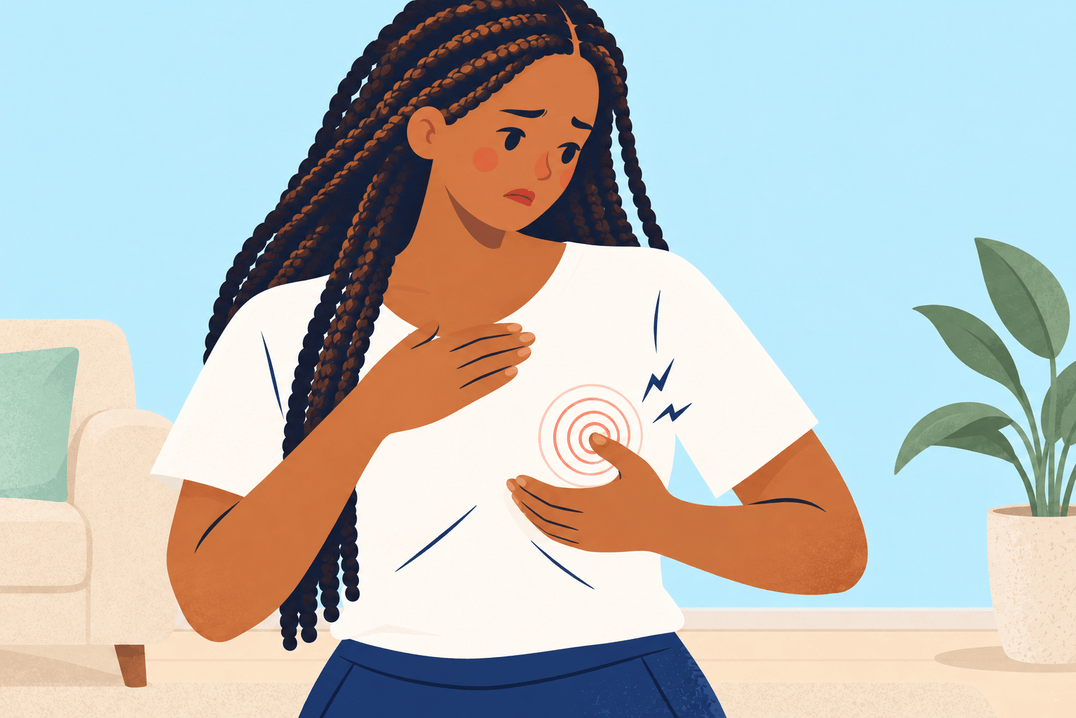
Breasts can feel heavy, sore, or tender before a period. A recurring pattern affecting both breasts and easing with menstruation can be cyclical breast pain. Timing is useful information, but it does not replace assessment of a new lump or other breast change.
Write down the pattern
Notice whether discomfort affects one breast or both, one area or a wider region, and whether it extends toward the armpit. Record its relationship to bleeding and how it affects sleep, movement, or clothing choices.
Cyclical pain can begin up to two weeks before menstruation and usually improves by the end of the period. Our PMS symptom guide explains how breast tenderness can occur alongside other changes.
Keep other possibilities open
Pregnancy, some medicines, injury, and infection are among other possible explanations. If pregnancy is possible, tenderness cannot distinguish pregnancy from PMS. The early symptoms and testing guide helps you choose a more reliable next step.
Do not stop a prescribed medicine because you suspect a connection. Bring the name and timing of any new treatment to your clinician or pharmacist instead.
Choose comfortable support
A well fitting bra may help, including suitable support during activity. Try an option that feels comfortable rather than one that simply compresses the painful area. Ask a pharmacist about pain relief suitability if needed, especially if you might be pregnant or already take other medicines.
Evidence does not establish evening primrose oil as an effective treatment for breast pain. Before buying a supplement, consider the questions to ask about PMS products. A familiar recommendation from a friend is not the same as a treatment that fits your circumstances.
Act on a new breast change
Breast pain alone is unlikely to indicate cancer, but persistent or unexplained pain deserves review. Get prompt medical advice for a hard fixed lump, nipple discharge especially if bloodstained, skin dimpling, a new inverted nipple, or a change in breast shape.
A red, hot, swollen breast with fever needs urgent assessment. Do not wait to see whether the next period changes those symptoms. A reassuring menstrual pattern applies to the pattern you have already assessed, not automatically to every future change.
Use a repeating pattern without overlooking a new lump
A record of discomfort before bleeding and relief afterward can help the clinician recognize cyclical pain. It does not establish the nature of a separate lump. Arrange assessment of any new breast or armpit lump, even if it is tender, seems to change with your period, or resembles a problem you have had before.
Tenderness after presumed ovulation cannot confirm conception
Soreness after an estimated ovulation date can overlap with the usual premenstrual pattern. It cannot establish that an egg was released, measure the quality of the luteal phase, or distinguish pregnancy from an ordinary cycle. More intense soreness is not a more certain pregnancy result.
The ovulation confirmation guide explains why clinical testing is selected and timed for a specific question. For pregnancy, test from the first day of a missed period. If the next period date is unclear, test at least twenty one days after the relevant sex. Keep new breast changes separate from that waiting period so that a lump or concerning skin change is assessed on its own merits.
References
- NHS: Breast pain (opens in a new tab)
- Office on Women’s Health: Premenstrual syndrome (opens in a new tab)
- NHS: PMS (opens in a new tab)
- NCCIH: Evening primrose oil (opens in a new tab)
- NHS: Breast lumps (opens in a new tab)
- ASRM: Fertility evaluation (opens in a new tab)
- NHS: Doing a pregnancy test (opens in a new tab)

Lifeing Editorial
Stories for a little more understanding, a little more reassurance, and the everyday moments in between.
Related posts


Breast tenderness on contraception: When to Review Your Method