
Breast lumps and menstrual changes: Why a New Lump Needs Assessment

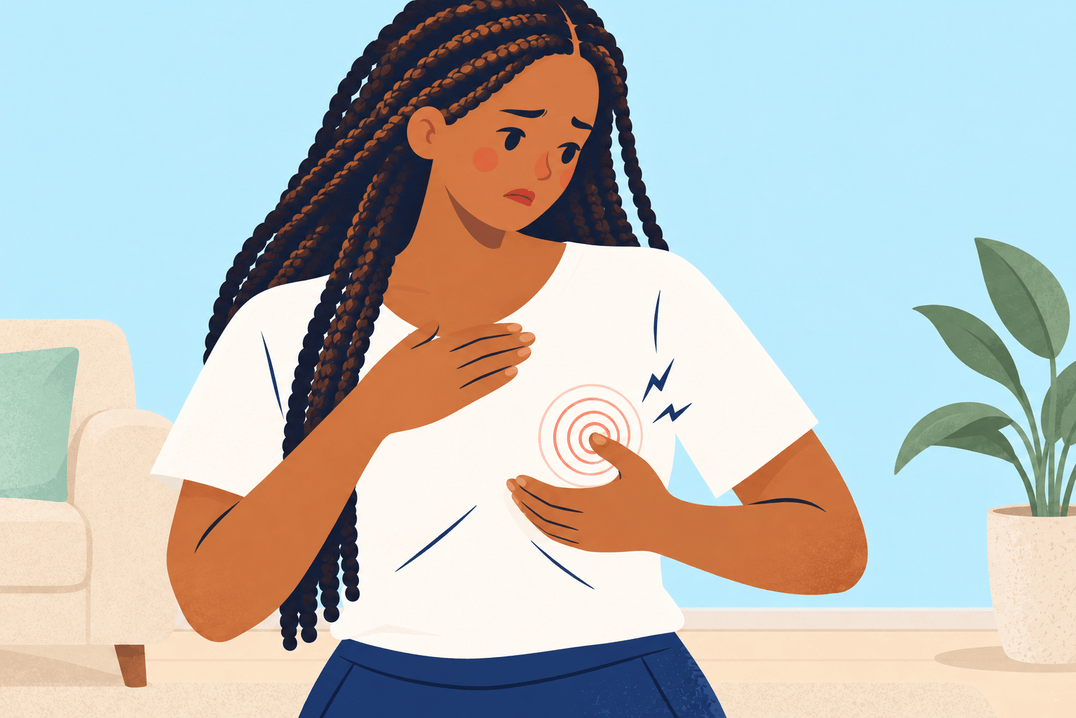
Finding a breast lump can be unsettling, especially when you also notice cycle related tenderness. Many lumps have a benign cause, but a new lump should be checked. Its timing, softness, or tenderness cannot establish what it is at home.
Arrange an appointment rather than waiting for a pattern
Tell a clinician about a new lump in the breast or armpit. Mention when you first noticed it and whether there are nipple or skin changes. You do not need several cycles of observations before asking for assessment.
If the lump changes while you wait, share that information too. A change in size may be useful to the clinician, but it is not a reliable substitute for an examination.
Understand what menstrual timing can explain
Some breast cysts become larger or more tender before a period and settle afterward. A cyst contains fluid, and imaging may help distinguish it from a solid lump. You cannot confirm that distinction by how the area feels alone.
The breast tenderness guide discusses general cyclical discomfort. A distinct new lump still needs its own assessment, even when soreness is familiar or you have had a cyst before.
Prepare for the visit
Bring information about hormone treatment, medicines, previous breast problems, and any relevant family history. Point out the area you noticed. If you are worried you will forget a detail, make a short note before the appointment.
A clinician may refer you to a breast clinic for examination, ultrasound or mammography, and sometimes a biopsy. The choice depends on the circumstances. Ask what each test will answer and when you should expect the results, since they may not all be available together.
Know what to report sooner
Seek prompt advice if the breast becomes red, hot, or swollen, particularly with fever or feeling unwell. Tell the service about a new inverted nipple, dimpling, bloodstained discharge, or a shape change when booking.
If a benign explanation is confirmed, ask whether any follow up is needed and which future changes should bring you back. The guide to pain without a cycle pattern can help describe discomfort that continues alongside or after the lump assessment.
References

Lifeing Editorial
Stories for a little more understanding, a little more reassurance, and the everyday moments in between.
Related posts

Breast pain without a cycle pattern: When to Get Checked