
Breast pain without a cycle pattern: When to Get Checked

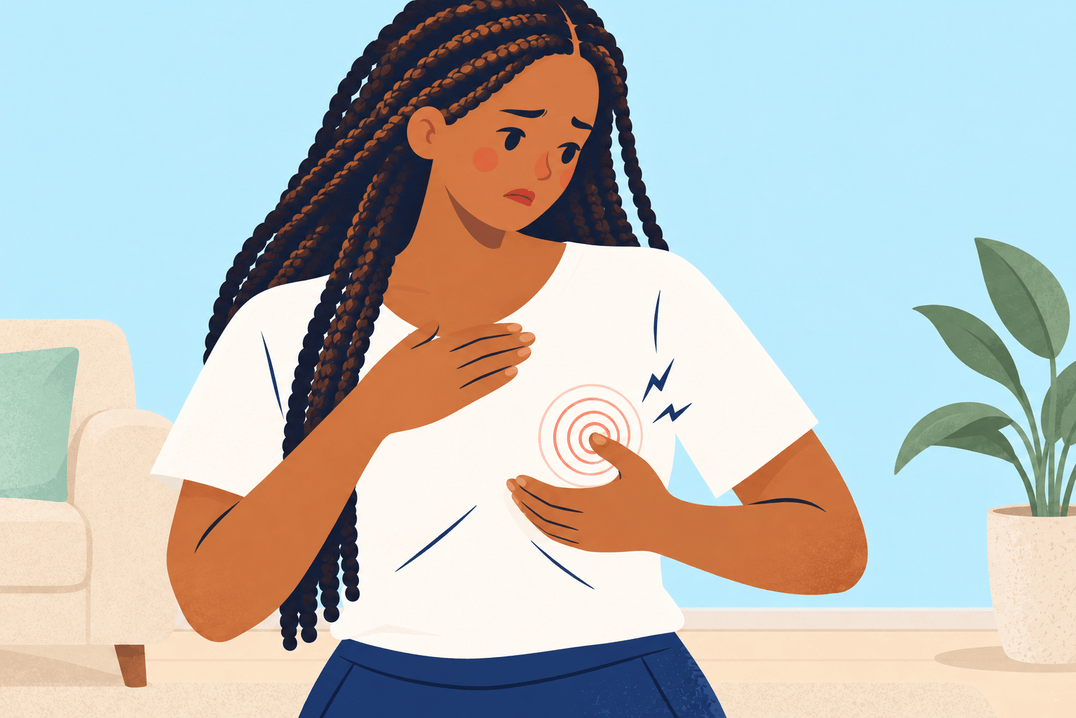
Breast pain that comes and goes without a menstrual pattern can be confusing. It may affect one spot or a larger area, and it can occur before or after menopause. Persistent or unfamiliar pain deserves assessment even when there is no obvious lump.
Explain where the pain seems to come from
Try to describe the location, whether it is constant or intermittent, and what seems to bring it on. Mention an injury, recent activity, surgery, medicines, or supplements. Sometimes discomfort felt in the breast comes from the chest wall or nearby muscles rather than breast tissue.
That is something an examination can help clarify. Do not repeatedly press or provoke the pain to prove where it originates. A few clear examples, such as discomfort when lifting an arm, can be useful without trying to diagnose it yourself.
Arrange a focused assessment
See a clinician for pain that is new and concerning, persists, worsens, or affects daily activities. The visit may include a breast examination and questions about the pattern. Further tests or a breast clinic referral depend on the findings.
If a pattern with periods later becomes apparent, the cyclical breast pain guide may help you explain it. A diary is optional information, not something you must complete before you can ask for care.
Separate pain from other changes
Pain alone is rarely a sign of breast cancer, but that does not rule out a problem when other changes are present. Get a new breast lump assessed, and mention nipple discharge, skin dimpling, swelling, or a new nipple change.
A hot, red, swollen breast with fever needs urgent advice. Sudden persistent chest pressure, pain spreading to an arm or jaw, or chest pain with sweating, faintness, or breathlessness needs emergency help rather than a breast pain appointment.
Agree on relief and follow up
Comfortable support and appropriate pain relief may help after suitability is checked. Ask what to try, how long to use it, and what to do if the pain does not improve. If you receive reassuring findings but the symptom changes or a new lump appears, return for reassessment rather than treating the earlier visit as a permanent explanation.
References

Lifeing Editorial
Stories for a little more understanding, a little more reassurance, and the everyday moments in between.
Related posts

Breast tenderness before periods: What a Cyclical Pattern Can Mean