
Week 7 of pregnancy: Coping With Fatigue and Food Aversions
At seven weeks, the gap between how you look and how you feel can be frustrating. You may have no visible bump while tiredness or food smells make an ordinary day difficult. Adjusting expectations is reasonable, even if you have chosen not to tell many people about the pregnancy yet.
Development is happening on a small scale
The brain and spinal cord are developing quickly. The head is relatively large, the early arms are lengthening and the ends that will become the hands are changing shape. The eyes and ears are continuing to develop too.
These changes do not create a checklist of sensations you should notice. A weekly description explains the stage without telling you how tired, hungry or nauseated you must feel.
Give tiredness room in the day
Fatigue is common in the first 12 weeks. Plan a shorter version of a demanding day where you can, and accept practical help. For example, someone could collect groceries or handle the evening meal while you rest.
Try to protect a regular sleep opportunity and take breaks when possible. If poor sleep, low mood or loss of interest in things persists, discuss it with your midwife or doctor. The pregnancy fatigue guide helps you describe the impact rather than dismissing it as something you must simply tolerate.
Work with food aversions
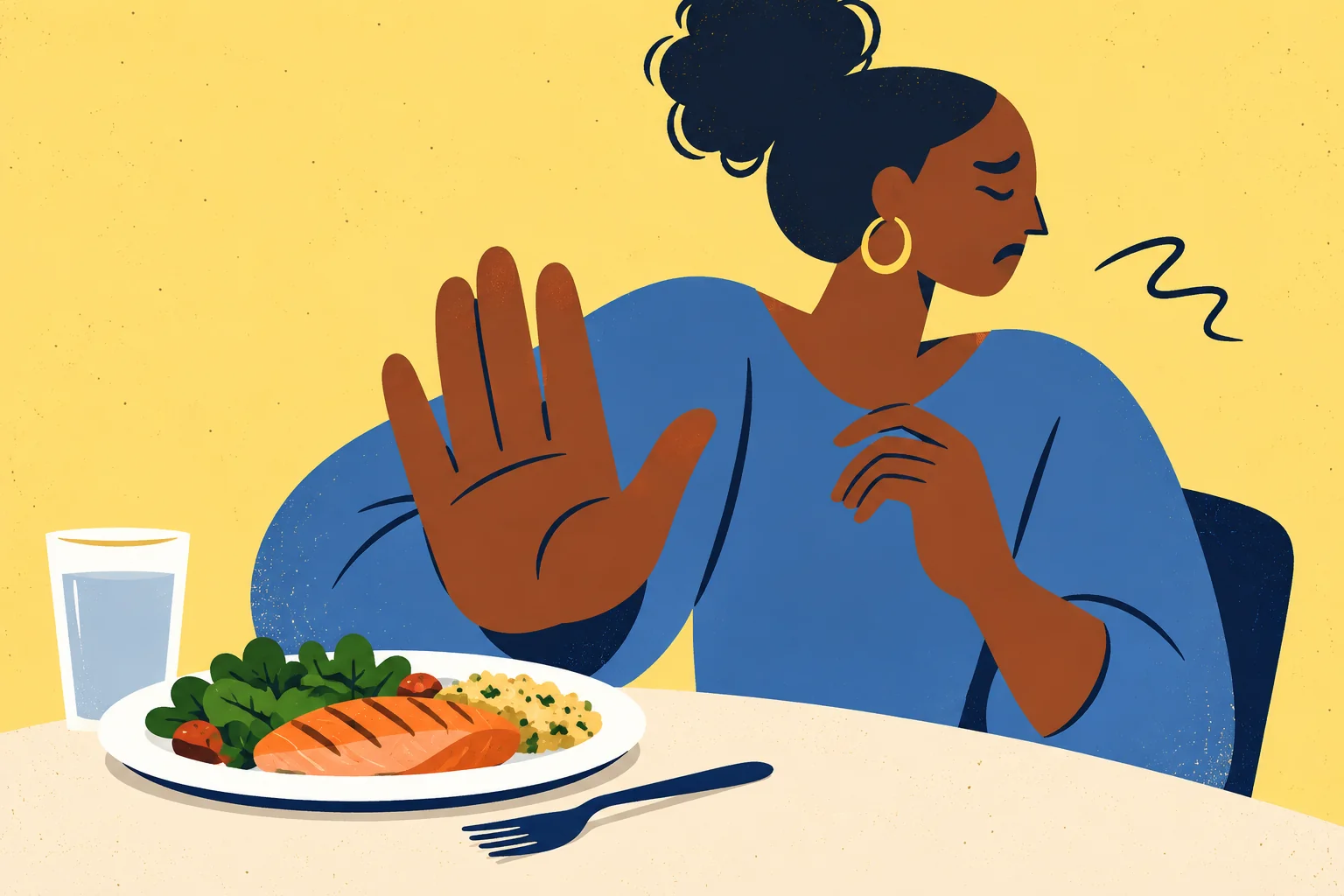
An aversion can be quite specific: coffee, cooking oil or a food you usually enjoy. Smaller meals and cooler foods may be easier if smells trigger nausea. Ask someone else to cook or choose an alternative you can tolerate instead of repeatedly forcing the same meal.
Keep the plan flexible. The food aversions guide discusses ways to retain variety when your usual choices become difficult. If vomiting leaves you unable to keep fluids down, you feel faint, urine becomes very dark or you are losing weight, contact your clinician promptly.
Check supplements without adding more by default
Food alone may not provide the recommended folic acid amount, so continue the supplement plan agreed for early pregnancy. If a vitamin worsens nausea, ask a pharmacist or midwife about a suitable alternative rather than taking several products to compensate. Avoid supplements containing vitamin A as retinol.
Keep a brief note of what is hardest: getting through a commute, preparing food or managing a particular smell. That gives your care team a clearer starting point than a symptom score. Your aim this week can be a more manageable day and a clear route to help when the current plan is not enough.
References

Lifeing Editorial
Stories for a little more understanding, a little more reassurance, and the everyday moments in between.
Related posts

Week 8 of pregnancy: Development Updates and Everyday Comfort