
Food aversions during pregnancy: Meeting Your Needs When Foods Put You Off
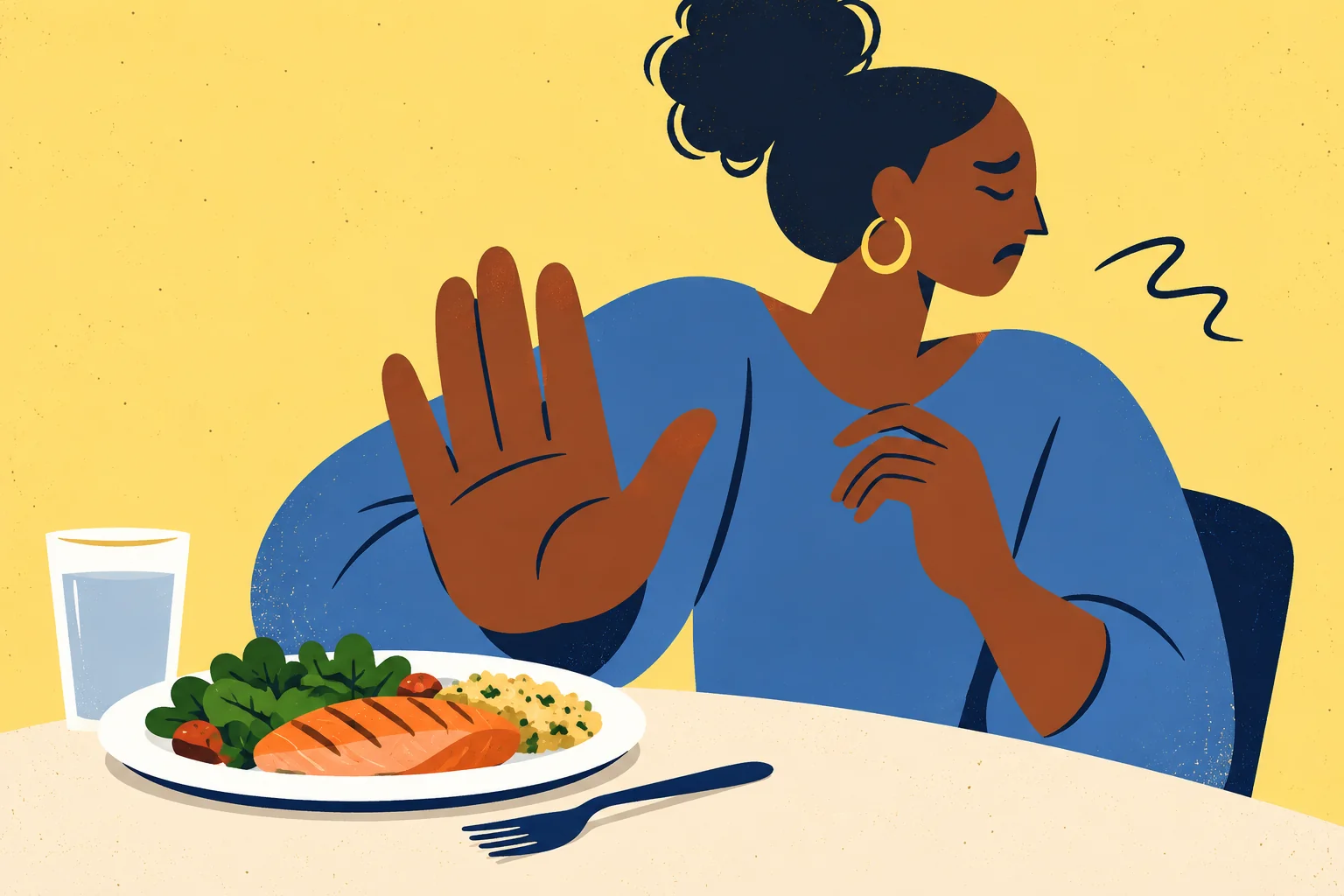
A food you enjoyed last week may suddenly smell or taste impossible during pregnancy. Food aversions can make shopping and cooking frustrating, especially when advice about eating well assumes every food still feels appealing.
Separate the ingredient from the whole food group
If one food puts you off, consider whether another source of similar nutrients feels manageable. For example, a dislike of meat does not automatically rule out beans, lentils, eggs, or other protein foods you normally eat and can prepare safely.
You do not need to test every substitute in one meal. Keep a short list of foods you currently tolerate and build from that. Our guide to eating during pregnancy can help you identify useful alternatives and food safety questions.
Reduce the work around eating
Ask someone else to prepare foods with strong smells, choose simple meals, and consider cold foods when hot food aromas trigger nausea. Follow normal storage and pregnancy food safety guidance; a food being easier to tolerate does not change those requirements.
It may help to separate preparing a meal from sitting down to eat it. Buying a small amount of a tolerated food can also avoid a fridge full of ingredients you no longer want.
Think across several days
One limited meal does not define your whole diet. Look for a workable pattern over time rather than judging each plate. If entire food groups remain difficult, ask your midwife or a dietitian how to cover the gap. Do not assume several extra supplements will solve it.
Bring persistent restriction to your care team
If aversions come with ongoing nausea, weight loss, or difficulty drinking, discuss them promptly. Nausea without vomiting can still substantially limit intake and may need treatment.
Explain what you can actually eat rather than what you feel you should be eating. That gives your care team a more useful starting point and makes advice easier to put into practice.
Food aversions before a pregnancy test
Losing interest in a familiar food can happen in early pregnancy, but it does not confirm that pregnancy has begun. A change that feels unusually strong is still a symptom with more than one possible explanation. Its disappearance cannot rule pregnancy out either.
Use the early signs and testing guide to plan when to test. Keep meals manageable while you wait, without interpreting each food choice as evidence for a result. If a metallic flavor is the main problem, the taste change guide explains other possibilities to discuss.
Tell a clinician if restriction persists or affects drinking, even when the pregnancy test is negative. A useful question is what would help you meet your needs now, rather than whether a particular aversion appears on someone else’s pregnancy checklist.
References

Lifeing Editorial
Stories for a little more understanding, a little more reassurance, and the everyday moments in between.
Related posts

Food cravings before periods: Understanding Appetite Changes