
Skin irritation from pads: Reducing Friction and Identifying Triggers
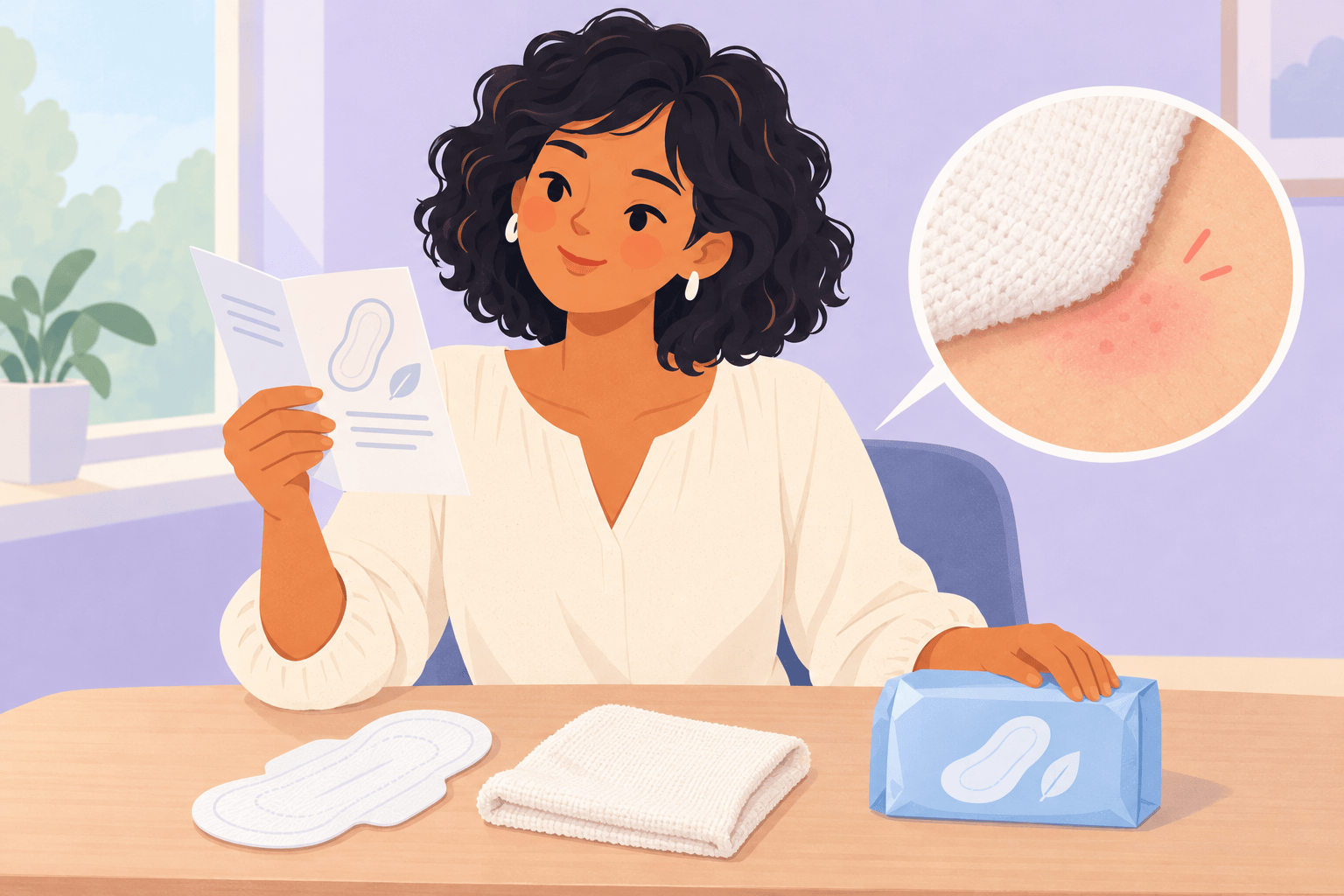
Soreness during a period can come from rubbing, moisture, or sensitivity to a product. Timing alone cannot prove that the pad is the cause. An infection or a skin condition can produce similar symptoms, particularly when discomfort continues after bleeding ends.
Notice where and when it happens
Record whether the discomfort is on skin touching the pad, starts after a change of brand, or comes with itching, discharge, or pain when urinating. Keep the product name or packaging if you plan to seek advice.
A reaction can develop even after a product has previously seemed fine. Changes to laundry products or intimate washes also matter, so consider the whole routine rather than the pad alone. Our scented product guide explains that overlap.
Remove the likely irritant
Stop using a product that causes a rash, swelling, itching, or pain and seek advice. You could choose an unscented alternative and a shape that rubs less while arranging assessment.
Change pads regularly and sooner when wet or full. Wearing damp protection for longer is unlikely to improve comfort. Reusable pads and period underwear are possible alternatives, but their fabrics and washing products can also cause irritation in some people.
Keep skin care gentle
Avoid scrubbing, deodorants, antiseptics, and washing inside the vagina. Wash the external area gently and pat dry. Repeated washing and fragranced products can worsen sensitive skin.
If plain care is not enough, ask a clinician or pharmacist about a suitable bland cleanser or emollient. Do not keep layering different creams or assume that every itch needs a thrush treatment. The vaginal itching guide describes why the cause matters.
Know when to arrange an examination
Seek assessment for persistent symptoms, broken skin, sores, a new skin color or texture change, or unusual discharge. Pelvic pain or feeling feverish needs prompt medical advice.
Tell the clinician which changes you have already tried and whether the symptoms improve between periods. The appointment can focus on both the current irritation and a practical product routine for the next period. You do not need to keep using an uncomfortable product to demonstrate that it is a problem.
References

Lifeing Editorial
Stories for a little more understanding, a little more reassurance, and the everyday moments in between.
Related posts
Sleep and fertility routines: Supporting Your Health During Trying