
Sleep trouble before menstruation: Creating a More Supportive Routine
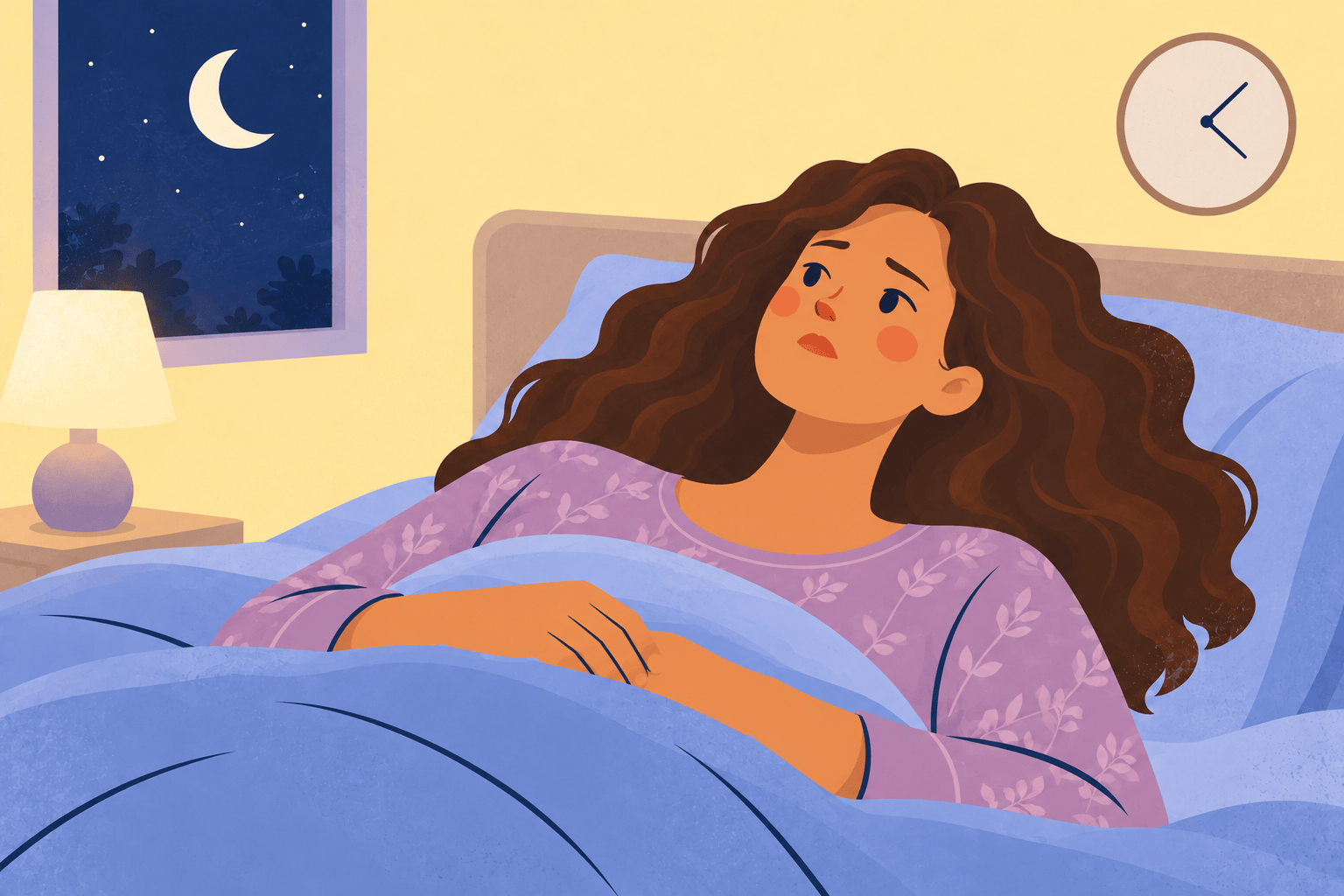
Trouble falling asleep or waking repeatedly before your period can make the following day feel much harder. Sleep disturbance can accompany PMS, but pain, stress, medicines, and other sleep problems can also contribute. Start with the pattern you can observe rather than assuming there is one hormonal explanation.
Separate the different sleep difficulties
Note whether the problem is getting to sleep, waking during the night, waking earlier than intended, or feeling unrefreshed. Include approximate sleep and waking times without repeatedly checking the clock through the night.
Add the start of your period and the effect on daytime activities. The fatigue guide helps distinguish low energy from a broader sleep or health concern. Mention loud snoring or breathing concerns during sleep to a clinician.
Create a repeatable evening
A consistent waking time and a quieter period before bed are useful starting points. Choose a wind down activity that is easy to repeat, such as reading or a warm bath. Aim for a dark, quiet sleeping space where possible.
Go to bed when you feel sleepy. Consider whether caffeine, alcohol, or a late demanding activity is interfering with rest. You do not have to build a perfect bedroom or purchase a sleep product before making one small adjustment.
Look at what is keeping you awake
If pain is the main problem, address that with an appropriate care plan. If worry keeps returning, write a brief note to discuss during the day rather than trying to solve everything at bedtime. Read PMS and anxiety when worry is affecting more than sleep.
Do not assume a herbal sleep remedy is harmless or combine sleep medicines without advice. A pharmacist or clinician can check product suitability and interactions.
Seek help for persistent disruption
Arrange a review if changing habits has not helped, sleep problems persist, or tiredness makes daily life difficult. Treatments such as cognitive behavioral therapy for insomnia may be appropriate. You do not need to wait until you can prove a menstrual link.
Do not drive when sleepy. If your work or caregiving involves safety risks, describe that at the appointment. A practical goal might be staying alert during a usual journey or having enough rest to manage the morning, rather than achieving a perfect sleep score.
References

Lifeing Editorial
Stories for a little more understanding, a little more reassurance, and the everyday moments in between.
Related posts
Smell sensitivity and pregnancy: A Symptom That Cannot Confirm the Answer