
Sun Protection for Babies: Shade, Clothing and Sunscreen Advice
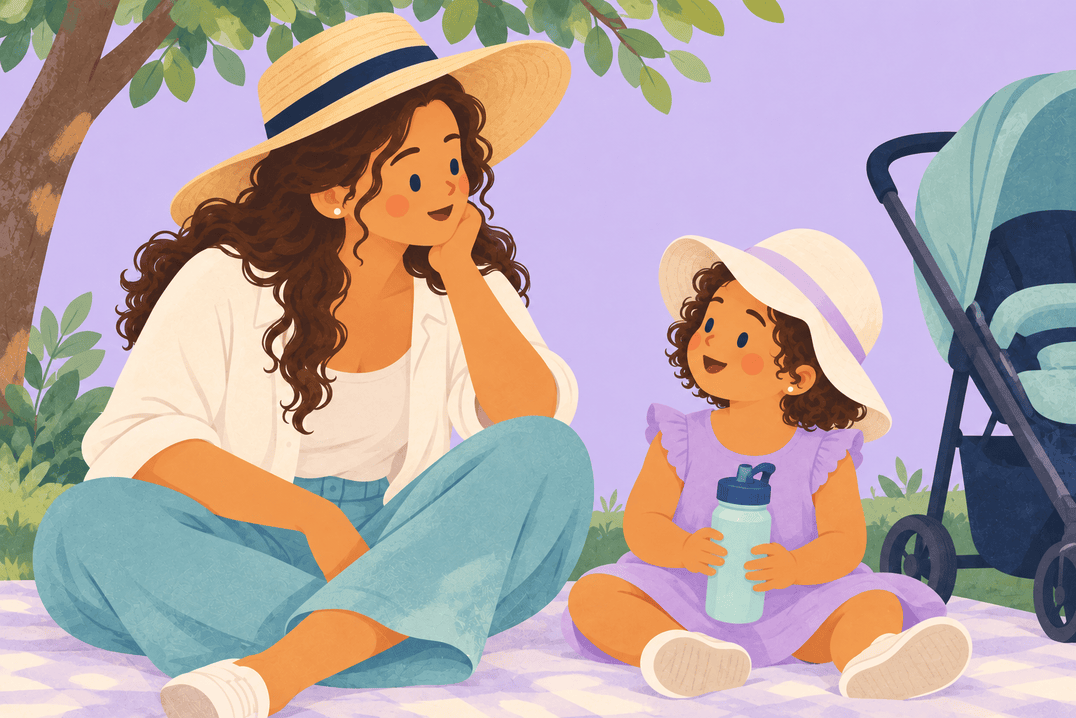
An outing does not need bright sunshine to expose your baby to ultraviolet light. Start with a plan for where you can find shade and when you can move indoors. Sunscreen is one part of protection, rather than permission to stay outside longer.
Keep young babies out of direct sun
Babies younger than six months should stay out of direct sunlight. Choose a shaded route and lightweight clothing that covers their skin without making them too hot. A hat should protect the ears and neck as well as the face. Closely woven fabrics provide more protection than very sheer material.
Shade moves during the day. Check where the sunlight reaches the pram or picnic space instead of assuming that the spot remains protected. Reflected light from water and sand can still reach skin in an otherwise shaded area.
Treat sunscreen advice differently before six months
For a baby under six months, ask your clinician before using sunscreen. Protective clothing and shade remain the main approach. Pediatric guidance allows a small amount on exposed areas when adequate shade and clothing are unavailable, but that limited exception does not make planned sun exposure appropriate.
From six months, choose a suitable broad spectrum sunscreen with at least SPF 30 for exposed skin. Broad spectrum means protection against both UVA and UVB. Follow the label for application before going outside, use enough to cover exposed areas, and take care around the eyes.
Reapply at least every two hours and after swimming, sweating or towel drying, following the product directions. Water resistance does not mean the protection lasts indefinitely. If a product irritates the skin, stop using it and ask for advice about an alternative.
Keep airflow around the pram
Use an appropriate canopy or parasol. Do not drape a blanket or muslin over the pram opening: heat can build up beneath it. Check your baby regularly rather than judging their comfort only by how warm you feel.
Choose cooler parts of the day for outings and follow local heat alerts. The strongest sun hours vary with location and season. Offer usual milk feeds and plan somewhere comfortable to feed. Our overheating guide also explains why adding layers is not always reassuring.
Plan protection before a holiday
Pack the shade equipment and clothing you actually know how to use. Check fit before leaving and keep the sunscreen accessible. A written reminder can help another caregiver follow the same plan.
Our toddler travel guide covers the wider journey. Around water, combine sun protection with close supervision and the barriers described in our pool safety guide.
Get help if the skin burns or your baby becomes unwell
Seek urgent medical advice if a baby or young child develops sunburn. Move out of the sun and gently cool the affected skin without making the whole baby cold. Do not use ice or break blisters. Redness can be harder to notice on darker skin, so also look for tenderness, heat or swelling.
Suspected heatstroke, a seizure, collapse or serious breathing difficulty needs emergency help. Move to a cooler place and start cooling while following the emergency team’s instructions. Do not wait for a sunscreen change to solve an unwell baby’s symptoms.
References
- NHS: Sunscreen and sun safety (opens in a new tab)
- American Academy of Pediatrics: Sun safety for children (opens in a new tab)
- FDA: Sun protection and sunscreen for infants (opens in a new tab)
- NHS Best Start in Life: Dressing a newborn in warm weather (opens in a new tab)
- NHS: Sunburn and when to get help (opens in a new tab)
- NHS: Heat exhaustion and heatstroke (opens in a new tab)

Lifeing Editorial
Stories for a little more understanding, a little more reassurance, and the everyday moments in between.
Related posts
Supporting a partner after miscarriage: Making Space for Different Reactions