
Teen period cramps: Taking Pain Seriously From the Start
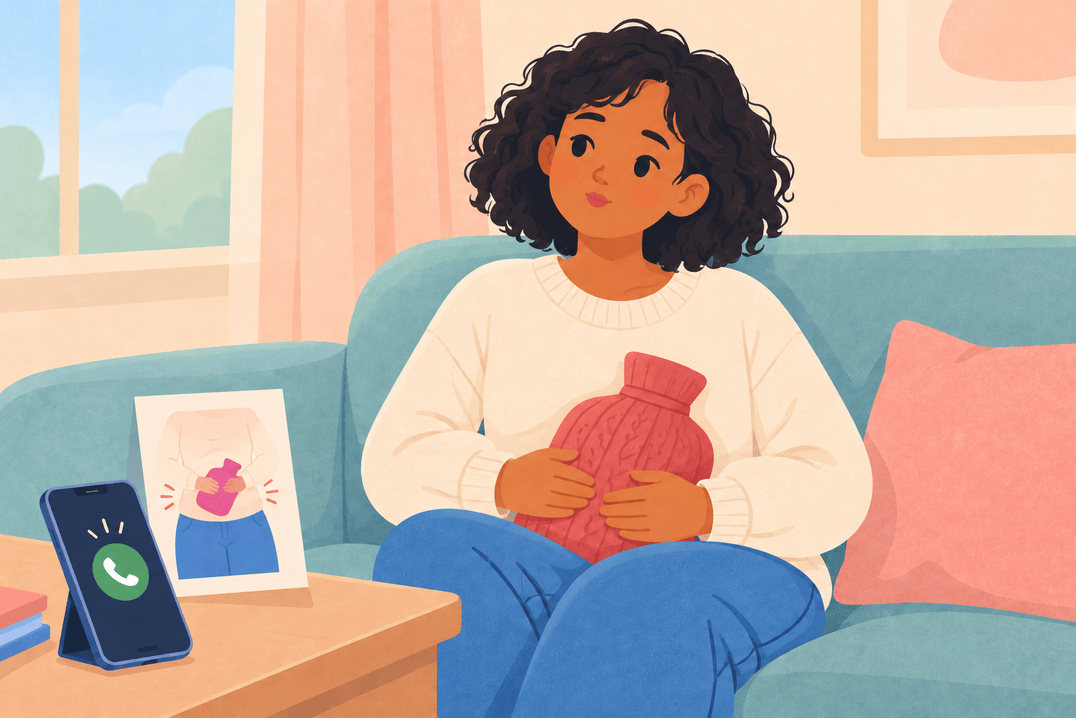
Period cramps are common in teenagers, but regularly missing school or giving up activities because of pain deserves care. A young person should not have to prove they can tolerate it before being offered help.
Describe the pattern and the impact
Note when pain starts, where it is felt, how long it lasts, and whether it happens only with bleeding. Add what the teenager could not do, such as sleep, sit through a lesson, or take part in sport.
Tell a clinician about pain from the very first period, worsening pain, pain when urinating or opening the bowels, and a family history of endometriosis. These details can affect assessment. The appointment guide helps organize questions without needing a perfect diary.
Try comfort measures without making them a test
A warm bath or a wrapped heat pack may help. Protect the skin from burns and follow the heat product instructions. Gentle movement can be useful if it feels comfortable, but the teenager does not need to exercise through pain.
Rest and practical help can make a difficult day more manageable. They should not become the whole care plan if symptoms repeatedly disrupt daily life.
Check medicine suitability
Medicines such as ibuprofen can help cramps, but the right product and dose depend on age, health, and other medicines. Ask a pharmacist or clinician and follow the label or prescription. Mention asthma, previous medicine reactions, kidney problems, or other health conditions.
Do not combine ibuprofen with another similar anti inflammatory medicine, such as naproxen, unless specifically directed. Do not give aspirin to a child under sixteen unless prescribed. If pain relief is not helping, seek advice rather than repeatedly increasing doses.
Ask for review when the plan is not enough
Severe pain that is worse than usual and not helped by painkillers needs urgent advice. Persistent pain despite treatment, or symptoms that keep causing missed school, should be reassessed. A clinician may consider endometriosis or another cause and discuss further treatment or referral.
Hormonal treatment can be offered for pain even when contraception is not needed. An internal examination is not automatically required for a teenager with cramps. Our first gynecology conversation guide explains how to ask what an appointment will involve and what choices are available.
References
- American Academy of Pediatrics: Menstrual disorders in teens (opens in a new tab)
- Royal Children’s Hospital: Adolescent dysmenorrhoea guidance (opens in a new tab)
- NHS: Period pain (opens in a new tab)
- NHS: Ibuprofen for children and teenagers (opens in a new tab)
- NHS: Medicines for babies and children (opens in a new tab)

Lifeing Editorial
Stories for a little more understanding, a little more reassurance, and the everyday moments in between.
Related posts
Telling Your Partner You Are Pregnant: Finding the Right Moment