
First gynecology conversations: Helping Teens Prepare Their Questions

A first conversation about gynecological health can focus on questions, symptoms, and reassurance about what happens next. It does not automatically involve an internal examination. A family doctor, pediatrician, nurse, or gynecology service may be the starting point, depending on local care.
Choose the questions that matter now
Write down the main concern in the young person’s own words. It might be pain, heavy bleeding, an uncertain cycle, products that feel uncomfortable, or a question they have not wanted to ask at home.
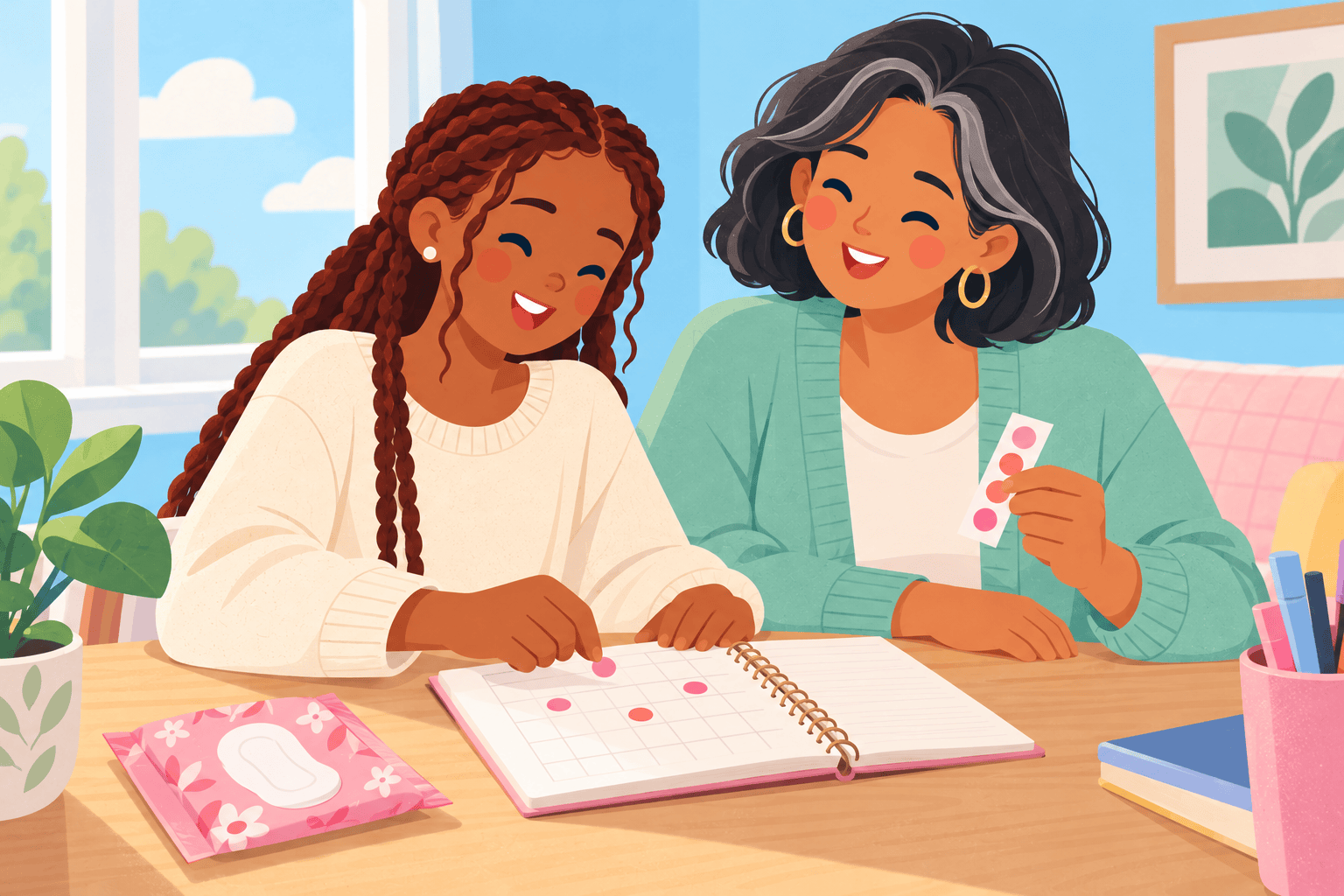
Bring a simple record of bleeding dates and any medicines taken. The beginner tracking guide can help, but a complete diary is not a condition for being seen. Mention symptoms that interrupt school, sleep, sport, or everyday life.
Ask how privacy works
A teenager can ask for some time alone with the clinician, even if a trusted adult attends the rest of the visit. Before sharing sensitive information, they can ask what stays private and what circumstances require information to be shared.
Rules and record systems differ. Ask who can see appointment notes, test results, portal messages, or billing information. Do not assume that a private conversation means every later electronic record will automatically be hidden from other account holders.
Understand any proposed examination
An internal pelvic examination is usually not needed at an initial adolescent visit unless symptoms or a particular procedure make it relevant. Ask why an examination or test is suggested, what it involves, and whether there are alternatives.
The clinician should explain before touching and seek permission. The young person can ask for a chaperone, a support person where appropriate, a slower pace, or for the examination to stop. They can also tell the clinician about anything that would make the experience more difficult.
Leave with clear next steps
Ask what the likely explanations are, which results are still needed, and when treatment should help. If a medicine is prescribed, confirm how to take it and whom to contact about side effects or worsening symptoms.
Our teen cramp guide gives examples of concerns that deserve follow up. Before leaving, agree on how results will be communicated and when to return. A useful first visit helps the young person understand both their care and how to ask for help again.
References
- ACOG: Pelvic exams and adolescent care (opens in a new tab)
- American Academy of Pediatrics: Privacy in health care for teens (opens in a new tab)
- American Academy of Pediatrics: Menstrual disorders in teens (opens in a new tab)
- Royal Children’s Hospital: Adolescent dysmenorrhoea guidance (opens in a new tab)

Lifeing Editorial
Stories for a little more understanding, a little more reassurance, and the everyday moments in between.
Related posts
First period preparation: Building a Small Emergency Kit