
First period preparation: Building a Small Emergency Kit
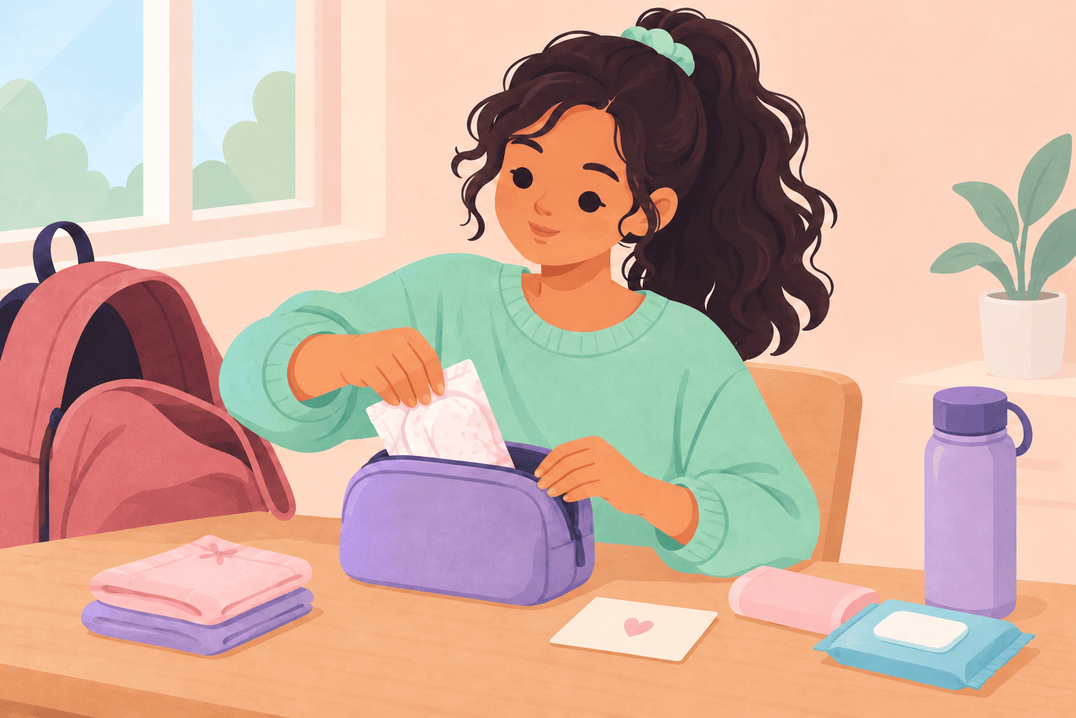
A first period kit does not need to be large or expensive. Its purpose is to make the next step easy if bleeding starts unexpectedly. Choose the contents with the young person so they know what each item is for and where to find it.
Pack a few useful items
A few pads, spare underwear, and tissues are a practical starting point. Add a small separate bag for clothing that needs washing. A pouch can keep everything together without turning the kit into something that must be hidden at all costs.
Let the child choose a size that fits the bag they actually carry. If supplies stay in a locker, think about how they would get to them during a lesson or activity. Our school period guide covers those access questions.
Practice with the product before it is needed
Show how a pad attaches to underwear, which side faces the body, and how to wrap it for disposal. Explain handwashing before and after changes. Pads need replacing every few hours and sooner when the flow makes them wet or full.
If the child prefers another product, read its instructions together without pressure. Reusable items need a plan for bringing them home and washing them. The product choice guide compares these options.
Include a person as well as supplies
Agree on whom the child could approach if the kit is missing or they need help. It might be a teacher, school nurse, relative, or another trusted adult. Practice a short sentence such as, “I need period supplies and somewhere to change.”
A written note or message can be an alternative if speaking feels difficult. Make sure the child knows that asking for help does not mean they have done anything wrong.
Keep the kit usable
Check and replace supplies after they are used. Keep clean products dry and separate from used clothing. If the bag changes for sports, a trip, or a different school day, remember to move the kit too.
If pain medicine is part of an agreed care plan, follow the child’s clinician or pharmacist guidance and the school’s medicine arrangements. Do not add loose, unidentified tablets. The kit is a convenience, while pain that interferes with everyday activities deserves a proper conversation about care.
References

Lifeing Editorial
Stories for a little more understanding, a little more reassurance, and the everyday moments in between.
Related posts

First period signs: Helping a Young Person Know What to Expect