
First periods at school: Planning Supplies and Support
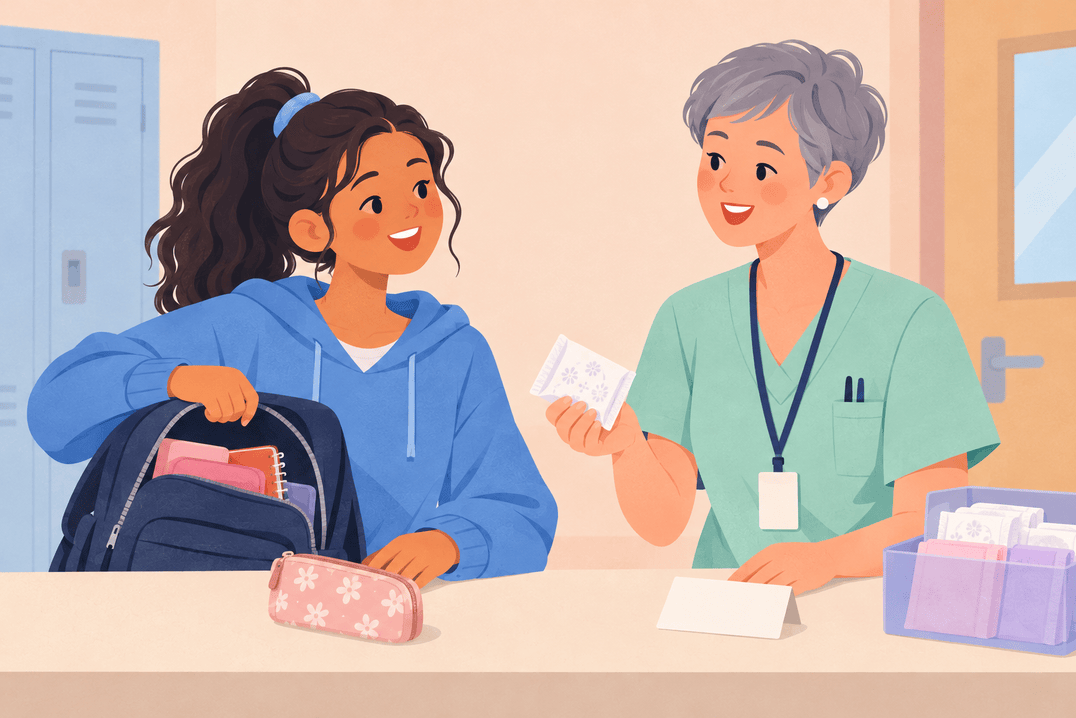
A period starting at school can feel less daunting when the young person knows where to go and who can help. The plan should work during an ordinary lesson, an exam, and a day when the usual staff member is absent.
Identify the available support
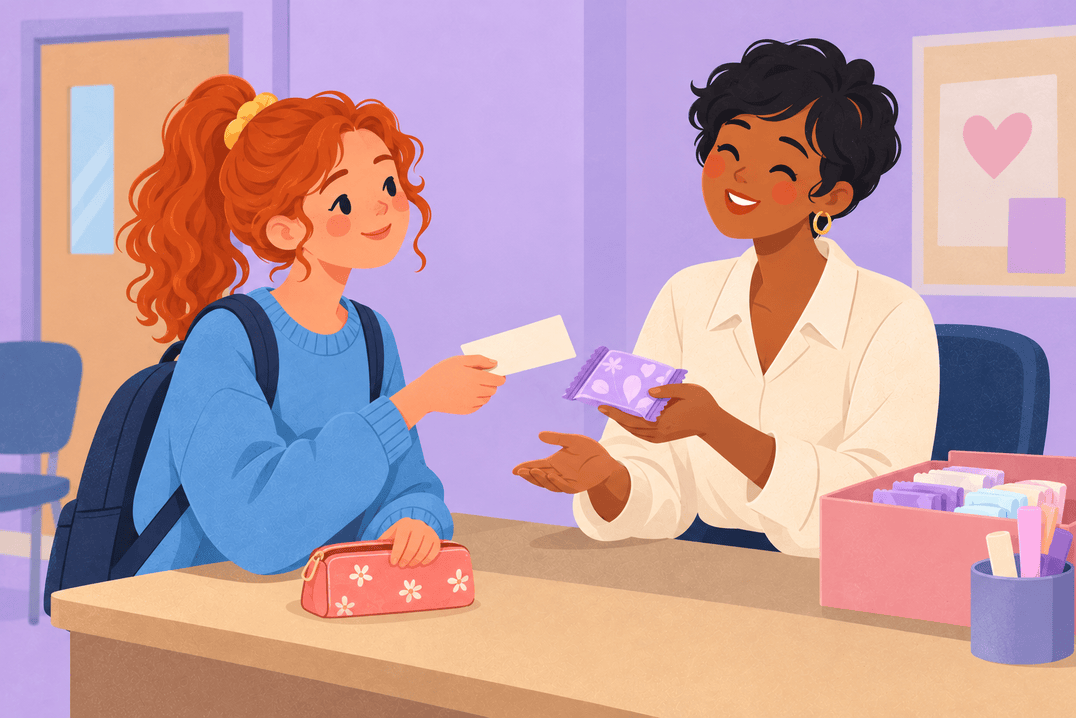
Find out where spare products are kept and whether a school nurse or another trusted staff member is available. Ask how a pupil can leave class to change and what to do if they do not have their bag.
The young person could practice saying, “I need to use the bathroom for a period change,” or simply ask to speak privately. They should not have to explain the details to classmates. The period embarrassment guide offers other ways to begin asking for help.
Keep supplies within reach
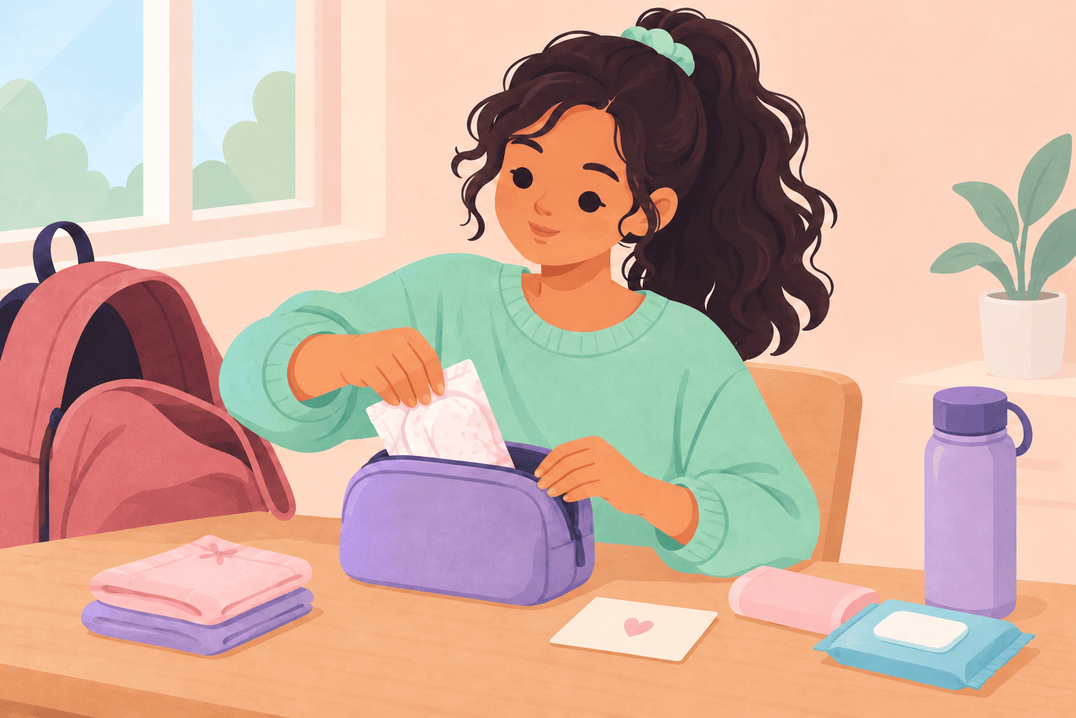
Carry familiar products and spare underwear in a small pouch. A separate bag is useful for clothing that needs washing. Check the first period kit guide together and adapt it to the school bag or locker arrangement.
Explain that pads need regular changes and earlier replacement when wet or full. A timetable should not force someone to wait through a leak. If access is a recurring problem, discuss a practical arrangement with the school.
Make a plan for an unexpected stain
A trusted adult can help find clean clothes, a private place to change, or a way to contact home. A jumper around the waist can be a temporary option if the pupil wants it, but the priority is helping them feel comfortable.
Avoid making the incident a public event. Ask what support the young person prefers. Teasing should be addressed by adults, not treated as something the pupil must prevent by keeping periods secret.
Treat symptoms separately from logistics
Being able to change a product does not solve significant pain or heavy bleeding. Record missed lessons, urgent changes, dizziness, or activities the child could not manage and discuss them with a clinician.
Seek immediate help if heavy bleeding comes with fainting or marked weakness. For ongoing cramps or flooding, arrange care rather than relying on repeated trips home as the only solution. A useful school plan supports participation while making it easy to ask for medical help when needed.
References
- NHS: Starting your periods (opens in a new tab)
- American Academy of Pediatrics: Physical development during puberty (opens in a new tab)
- UNICEF: Talking with a child about periods (opens in a new tab)
- American Academy of Pediatrics: Menstrual disorders in teens (opens in a new tab)
- FDA: Menstrual pads and liners (opens in a new tab)
- ACOG: Abnormal uterine bleeding (opens in a new tab)

Lifeing Editorial
Stories for a little more understanding, a little more reassurance, and the everyday moments in between.
Related posts
Your First Prenatal Appointment: What to Bring and Ask