
Period embarrassment: Helping Young People Ask for What They Need
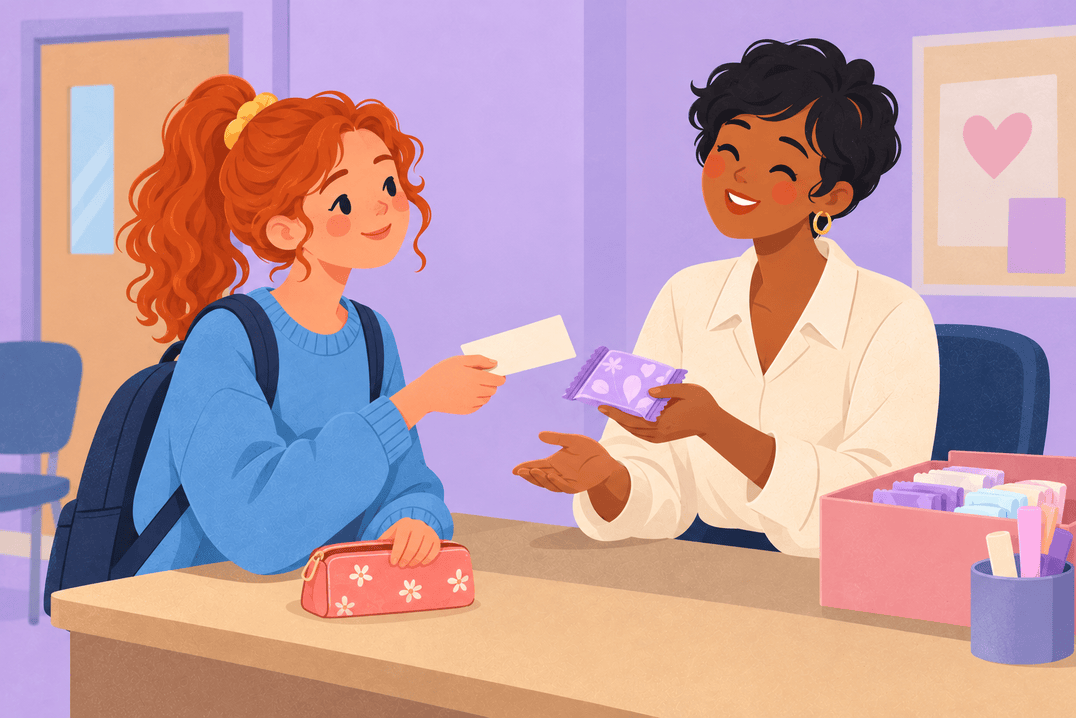
Feeling embarrassed about a period can make a simple request feel difficult. A young person may need a pad or help with pain long before they feel ready for a detailed conversation. Support can begin with making that first request easier.
Offer a short sentence to use
Practice a phrase that names the need, such as, “I need a period product,” or, “I need somewhere private to change.” If speaking is hard, a note or message to a trusted adult can work too.
The young person can choose words that feel comfortable while still being clear enough to get help. They do not need to explain the story to everyone nearby. Our school period guide helps identify who is available during the day.
Respond to the need first
An adult can offer supplies, clean clothing, or a private conversation before asking lots of questions. Avoid jokes, surprise announcements, or describing a stain as a disaster. Ask what would help right now.
Later, check whether something practical made the situation harder, such as products being locked away or not knowing how to leave a lesson. A small period kit can help, but access should not depend on always remembering it.
Distinguish privacy from shame
A child can want privacy without believing periods are wrong. Let them choose who hears personal news. At the same time, make clear that they are allowed to ask for supplies, comfort, or medical care.
If teasing happens, involve a trusted adult and ask how it will be addressed. The child should not be responsible for preventing bullying by becoming more secretive. Include all children in respectful conversations about bodies and practical support.
Make room for health questions
Embarrassment should not leave someone coping alone with heavy bleeding, significant pain, or a long gap between periods. Offer to help arrange an appointment or write down the first question.
A teenager can ask to speak privately with a clinician and ask what information can stay confidential where they live. The first gynecology conversation guide explains how to prepare. If one conversation feels too difficult, starting with “There is something about my period I need help with” is enough to begin.
References

Lifeing Editorial
Stories for a little more understanding, a little more reassurance, and the everyday moments in between.
Related posts

Period induction claims: Why Home Remedies Need Caution