
First period signs: Helping a Young Person Know What to Expect
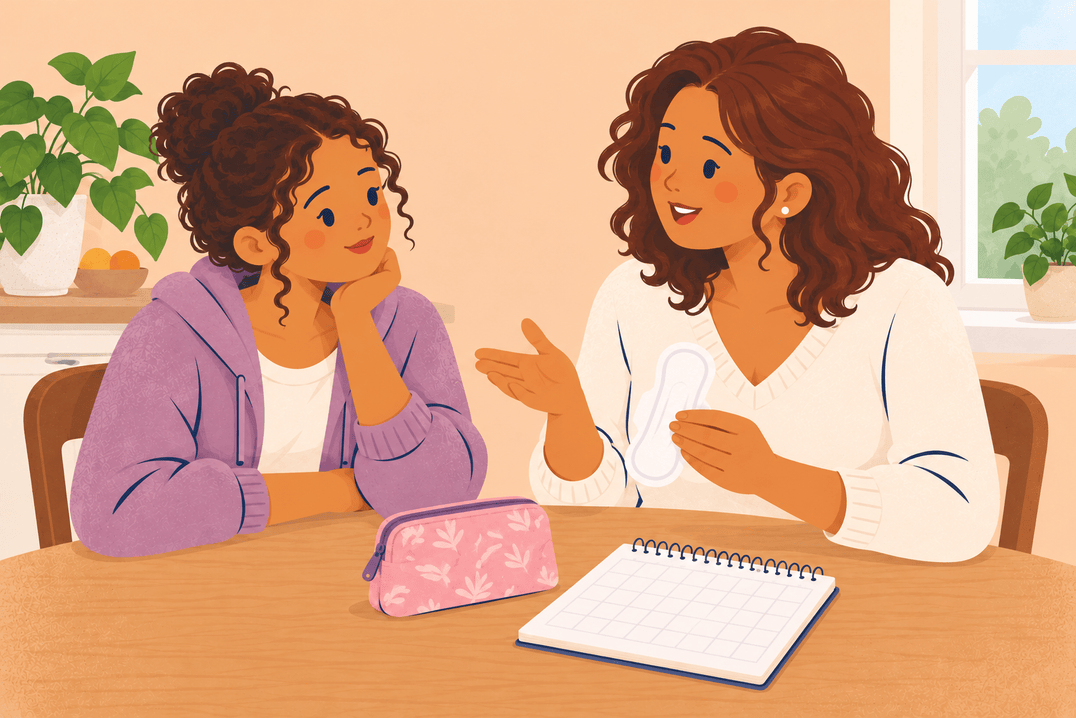
A first period usually follows other puberty changes, but there is no sign that predicts the exact day. Helping a young person know what bleeding might look like and where to get supplies is more useful than trying to count down to its arrival.
Put changes in context
Breast development often begins about two to three years before the first period. Body hair also develops during puberty, and some young people notice clear or white vaginal discharge before periods begin. The sequence and timing vary.
These changes can be a prompt for a calm conversation and a small supply kit. They are not a timetable the child needs to meet. Our first period preparation guide explains a practical way to get ready.
Explain first period color and flow
The first bleeding might be bright red or appear as a few reddish brown marks in underwear. It may be light and last only a few days. Explain that it comes from the uterus and leaves through the vagina, so the child does not mistake ordinary period blood for an injury.
Color alone does not show how healthy a period is. Focus on how long bleeding lasts, how quickly protection becomes soaked, and whether the child feels well. A light first period does not mean every later period will look the same.
Make the first response simple
Offer a familiar product, clean underwear if needed, and privacy. Ask what would help rather than assuming the child wants an announcement or celebration. They can tell a trusted adult if bleeding starts at school; our school support guide helps plan that conversation.
Record the date if they are comfortable doing so. The next period may not arrive on a predictable monthly schedule. There is no need to promise an exact date or compare their experience with a sibling’s.
Know when reassurance needs an appointment
Arrange medical advice for bleeding that lasts longer than a week, repeatedly soaks a product within an hour or two, or comes with significant pain. A gap of about three months after periods have started also deserves assessment.
Ask about development if periods have not started by age fifteen, within three years of breast development, or if breasts have not begun developing by thirteen. Earlier concerns can be discussed too. Supporting a child includes both explaining ordinary changes and taking disruptive symptoms seriously.
References
- NHS: Starting your periods (opens in a new tab)
- ACOG: Your first period (opens in a new tab)
- American Academy of Pediatrics: Physical development during puberty (opens in a new tab)
- American Academy of Pediatrics: Menstrual disorders in teens (opens in a new tab)
- ACOG: Menstrual patterns and assessment in adolescents (opens in a new tab)

Lifeing Editorial
Stories for a little more understanding, a little more reassurance, and the everyday moments in between.
Related posts
First periods at school: Planning Supplies and Support