
Contraception without estrogen: Options to Discuss With Your Doctor
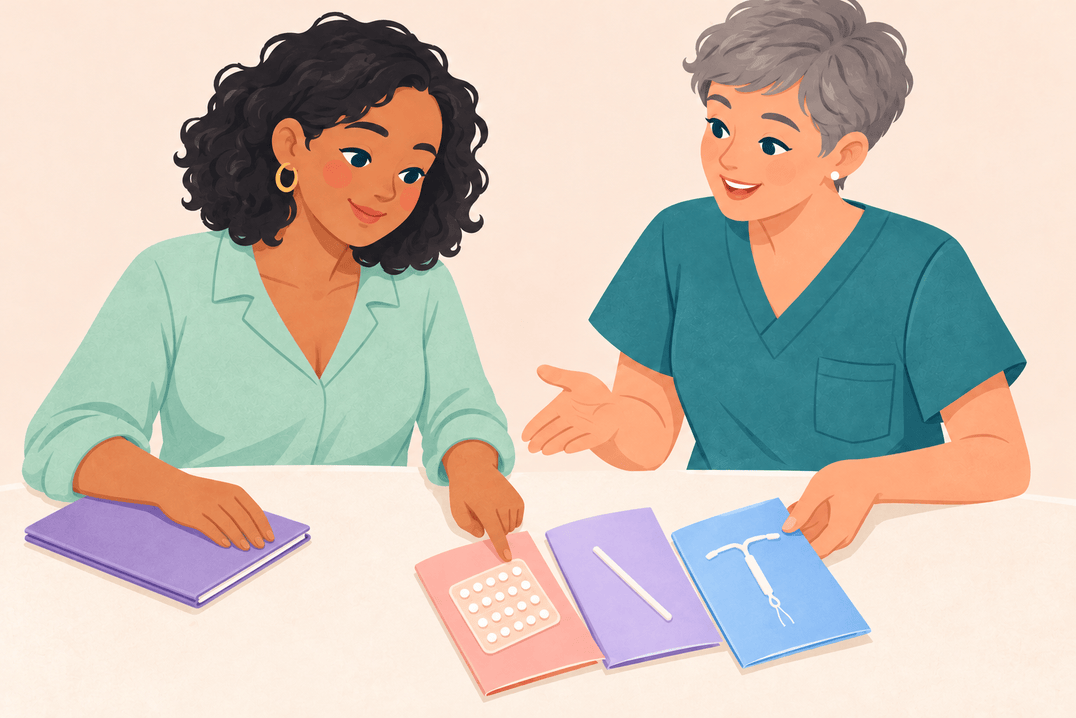
Being unable or unwilling to use estrogen does not leave you with only one contraceptive option. Progestogen only pills, implants, injections, hormonal coils, and methods without hormones may all enter the discussion. They differ in bleeding effects, day to day use, procedures, and medical suitability.
Distinguish no estrogen from no hormones
A hormonal coil, implant, injection, or progestogen only pill still uses a hormone. A copper coil does not. Condoms are another option without hormones and can also help prevent sexually transmitted infections.
Avoid choosing solely from the label. The progestogen only pill guide describes daily dosing differences, while the copper coil guide explains why a method without hormones can still affect your periods.
Compare the practical demands
A pill requires regular tablet taking and a plan for missed doses or sickness. An implant or coil requires fitting and eventual removal but avoids a daily contraceptive task. An injection needs repeat doses on time and cannot be removed once administered.
Tell the clinician if access to appointments, remembering medicines, privacy, or a fitting procedure is a concern. A method that looks convenient on paper may not fit your actual routine. You can ask how a future switch would work before making the first choice.
Discuss the bleeding pattern you can accept
Progestogen methods may make bleeding lighter, irregular, or absent. They do not all guarantee predictable periods or the same reduction in flow. Copper coils can make bleeding heavier or more painful, which matters if heavy periods are already a problem.
If symptom control is a major goal, describe it separately from pregnancy prevention. Ask what would happen if spotting remained troublesome and whether a different method could better meet both needs.
Keep individual health checks in the decision
Avoiding estrogen does not mean every remaining method is suitable for everyone. Breast cancer history, liver disease, unexplained bleeding, other conditions, and medicines can change the options. Some medicines interact with implants and pills, even though only one of those is swallowed.
Bring a medication list and explain any plans for pregnancy. Use the contraception review guide to prepare those details. Ask when protection begins and whether temporary condoms are needed before relying on a new method.
References
- NHS: Who can take the progestogen only pill (opens in a new tab)
- NHS: Implant suitability and medicine interactions (opens in a new tab)
- NHS: Hormonal coil overview (opens in a new tab)
- NHS: Copper coil overview (opens in a new tab)
- NHS: Injection side effects and risks (opens in a new tab)
- CDC: Contraceptive implant practice guidance (opens in a new tab)

Lifeing Editorial
Stories for a little more understanding, a little more reassurance, and the everyday moments in between.
Related posts


Contraceptive implants: Bleeding Patterns and Common Questions