
Early first period: Questions for Your Child's Clinician
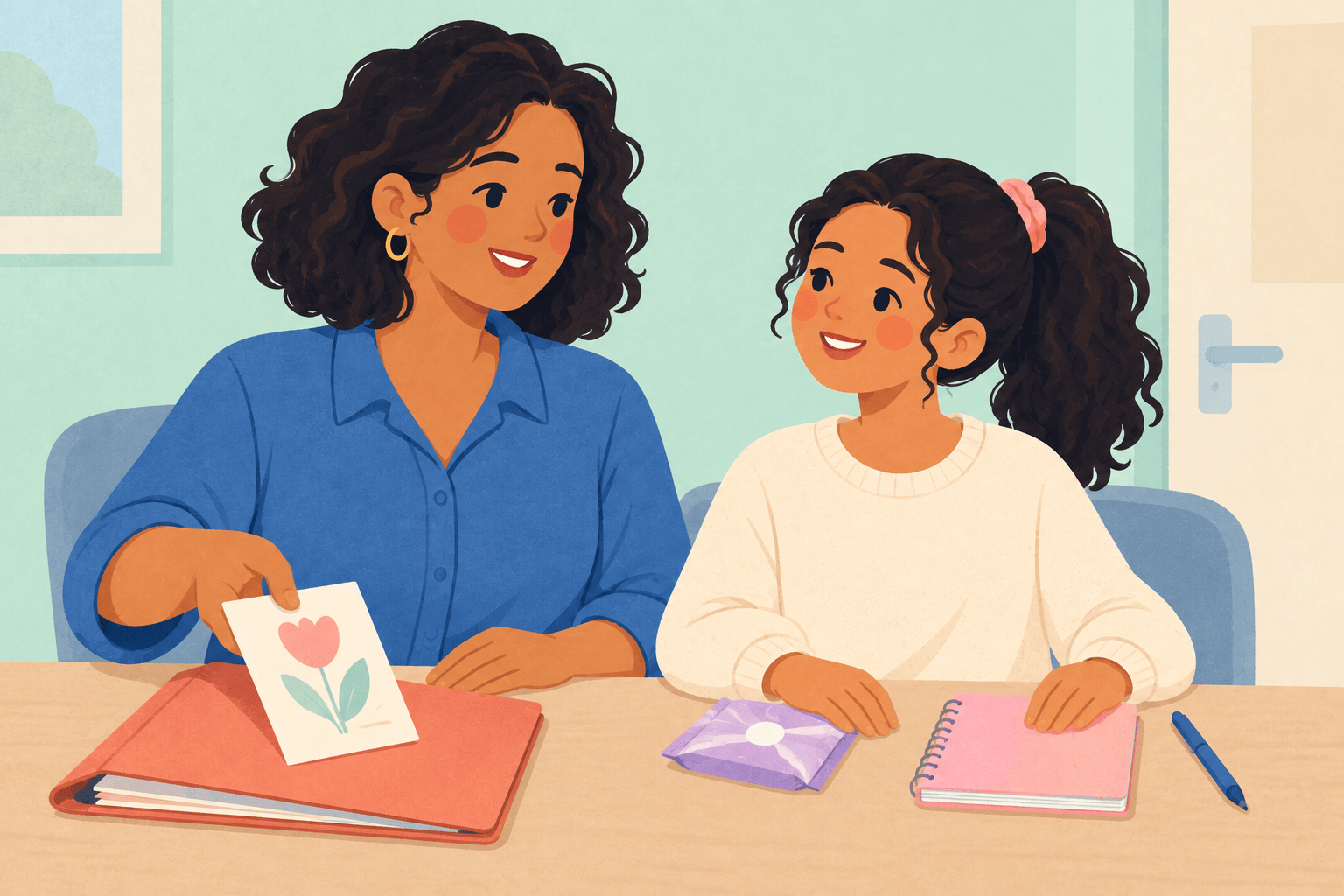
Bleeding that seems like an early first period should be discussed with a child’s clinician. Puberty can begin at different ages, but vaginal bleeding in a child is not always a menstrual period, particularly when other puberty changes have not appeared.
Describe the sequence of changes
Note when breast development, faster growth, body hair, or bleeding first appeared. Puberty changes before age eight in a girl warrant assessment. If bleeding occurs before other expected changes, ask for advice rather than deciding from the color that it must be a period.
Other causes can include irritation, injury, or something retained in the vagina. A clinician can work out which explanation fits. Do not attempt an internal examination or removal at home.
Explain what you have noticed
Bring dates, the amount and duration of bleeding, any pain or discharge, and medicines or hormone products used by the child or in the household. Exposure to another person’s hormone cream can be relevant, so mention it if possible.
You do not need to have identified the cause before booking. Our first period signs guide can help explain why the overall development pattern matters more than one isolated observation.
Ask what testing would answer
Assessment may include the growth chart, an examination, hormone tests, or an image of the hand and wrist to assess bone maturity. Further imaging is considered in particular circumstances, rather than being needed for every child.
Questions could include, “Does this look like puberty?” and “Is it progressing faster than expected?” If treatment is suggested, ask about its purpose, possible effects, and follow up. Specialist treatment may slow some forms of early puberty, but decisions depend on the cause and the child’s circumstances.
Keep support appropriate to the child’s age
A child who starts periods early still needs the care, play, and boundaries appropriate to their age. Help with products and school arrangements without implying that their emotional maturity has suddenly changed.
The talking about periods guide offers simple language. Respect the child’s privacy when sharing information with other adults. Heavy bleeding, severe pain, fainting, or a child who is very unwell needs urgent medical assessment rather than waiting for a development appointment.
References
- Pediatric Endocrine Society: Precocious puberty (opens in a new tab)
- NHS: Early or delayed puberty (opens in a new tab)
- Royal Children’s Hospital: Vulval and vaginal conditions in children (opens in a new tab)
- American Academy of Pediatrics: Physical development during puberty (opens in a new tab)
- UNICEF: Talking with a child about periods (opens in a new tab)
- ACOG: Abnormal uterine bleeding (opens in a new tab)

Lifeing Editorial
Stories for a little more understanding, a little more reassurance, and the everyday moments in between.
Related posts
Ejaculation difficulties while trying: When to Seek Specialist Support