
Talking about periods with your child: Keeping the Conversation Simple
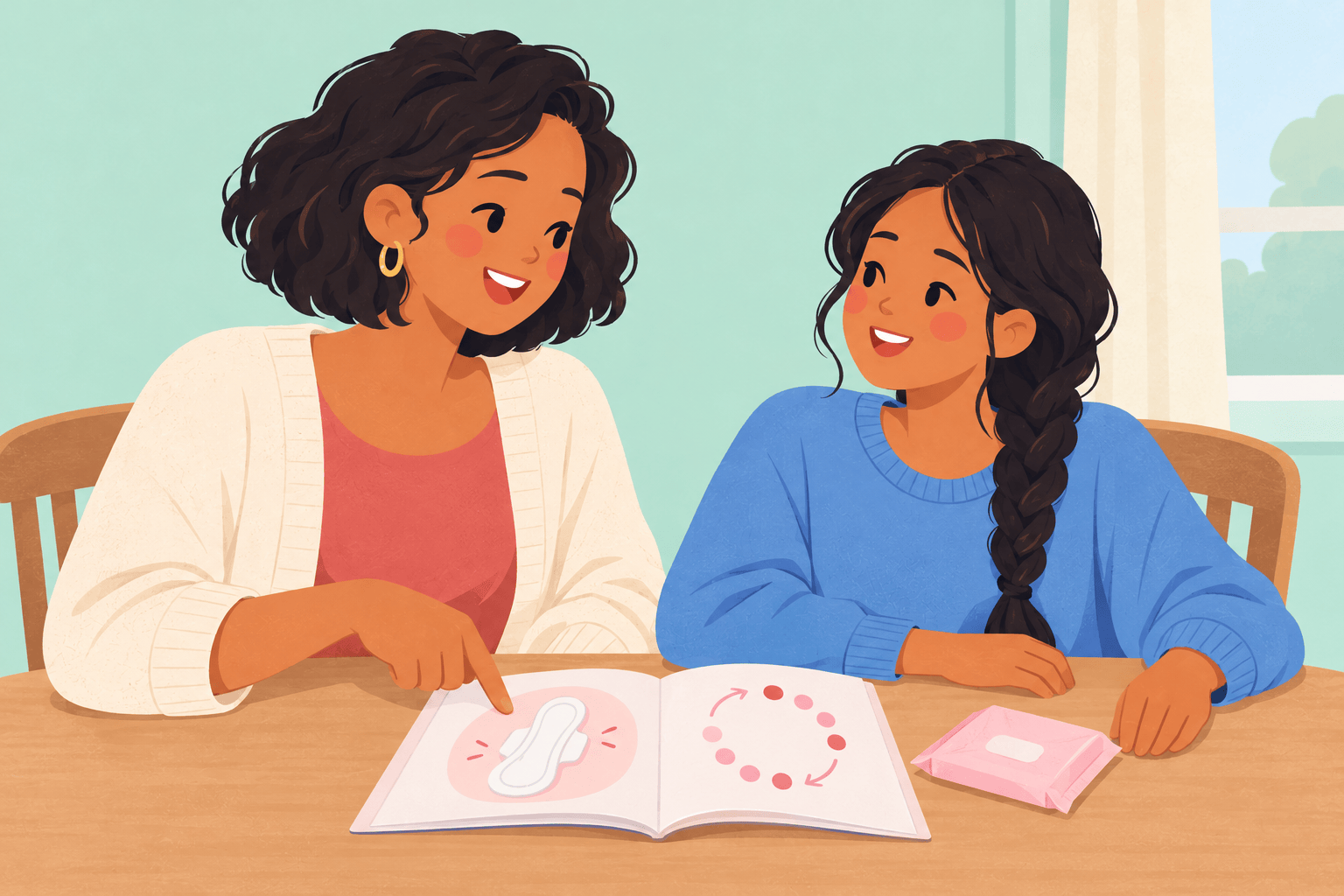
Talking about periods works best as a series of ordinary conversations. A young person can learn a little at a time, ask a question later, and change what kind of support they want as puberty progresses.
Begin with what they already understand
Ask what they have heard at school or from friends. Listen before correcting a misunderstanding. You might say, “A period is when blood and tissue from the lining of the uterus leave the body through the vagina.” Clear words make future questions easier.
Explain that periods are a body process, not a sign that someone is dirty or has done something wrong. People who do not have periods should learn about them too, so supplies and stains do not become reasons for teasing.
Make room for different feelings
Some children are curious, others worried, and others uninterested for now. You do not need to persuade them that the first period must be exciting. Ask whether they would prefer a short explanation, a written resource, or another conversation later.
The first period signs guide explains what may happen without promising a particular date. Avoid comparing development with classmates, siblings, or your own childhood timetable.
Show the practical steps
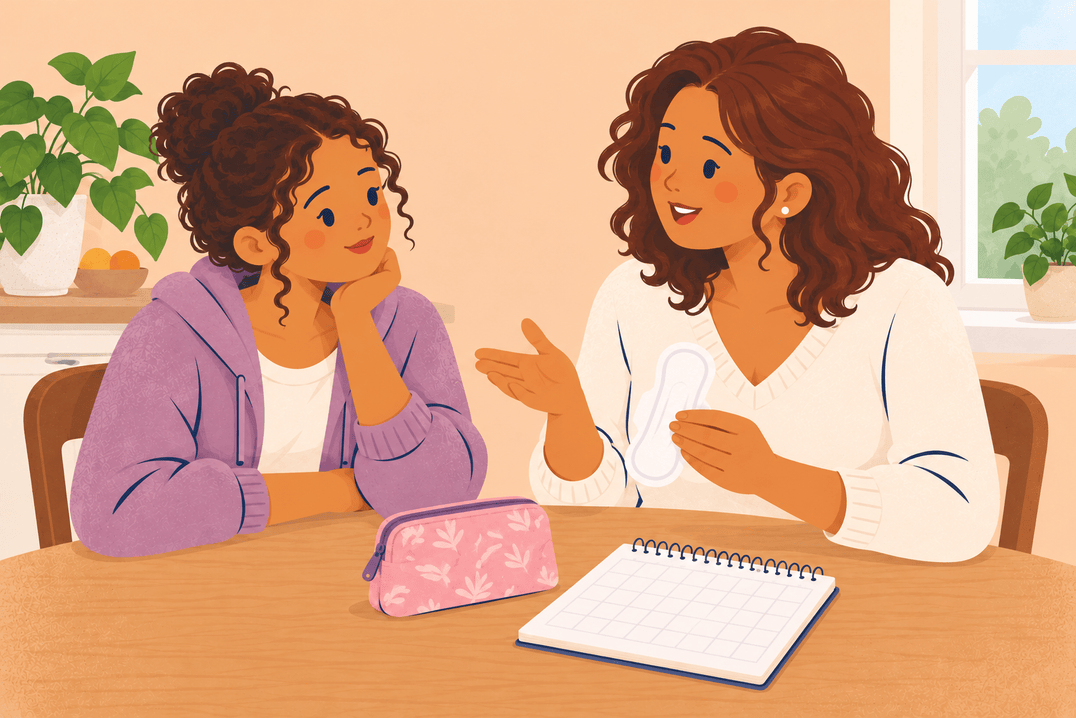
Open a product and explain how it is used and disposed of. Let the child help choose supplies. Discuss where they can find them at home and whom they can approach at school.
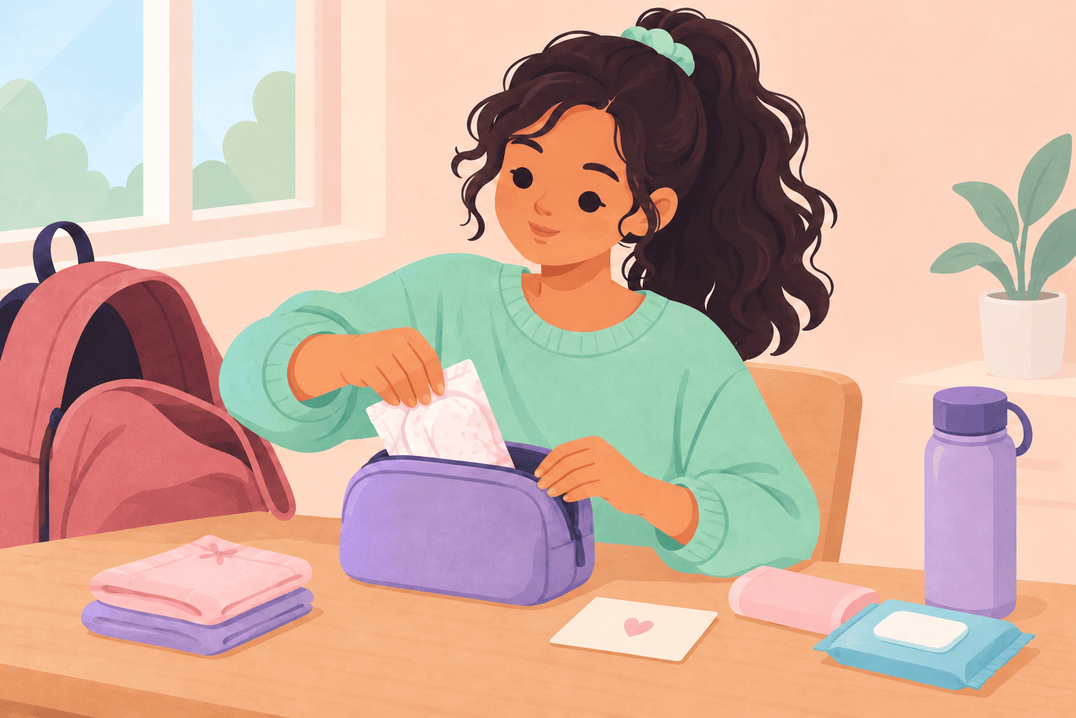
A small preparation kit can make the conversation concrete. You can also practice asking for a bathroom break or clean clothes. Keep the focus on what they need rather than how to avoid anyone ever noticing.
Respect privacy and keep listening
Ask before sharing news of a first period with relatives or friends. A child may want support from you without wanting a wider announcement. Offer to help answer another adult’s questions if the child prefers.
Be clear that privacy does not mean dealing with difficult symptoms alone. Heavy bleeding, significant pain, or a long gap between periods can need medical assessment. If you do not know an answer, say so and find reliable information together. Showing how to ask a question is part of preparing them to take care of their health.
References

Lifeing Editorial
Stories for a little more understanding, a little more reassurance, and the everyday moments in between.
Related posts
Tampons for beginners: Comfort, Changing, and Safe Use