
Educational video claims: What to Consider Before Relying on Screens
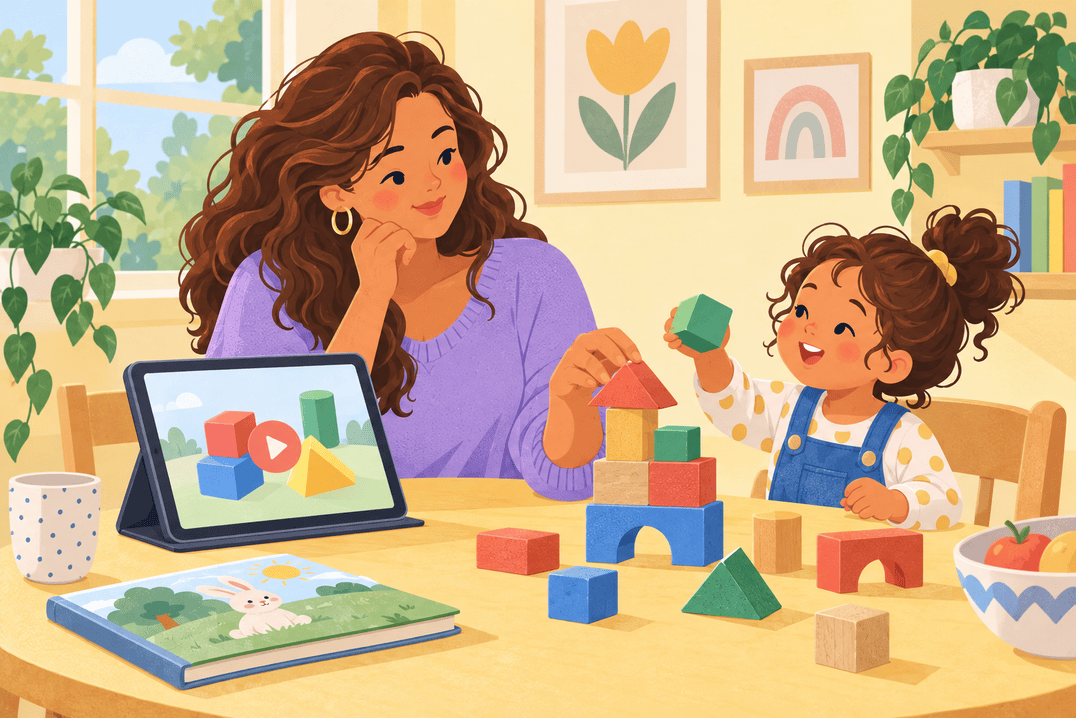
A video described as educational may be enjoyable, but the label alone does not show that it will teach your child to speak, read or reach a milestone. Before making it part of the day, look at the specific claim and the age of the children it is meant to help.
Ask what the promised benefit means
A claim that children learn words should mean more than watching intently or repeating a sound during the programme. Ask whether they understand and use those words in ordinary situations. A claim about intelligence or accelerated development needs stronger evidence than testimonials from pleased parents.
You can look for a description of the research: who took part, how old they were, what was measured and what the comparison group did. Evidence about preschool children should not automatically be applied to an infant. Popularity, a polished presentation and an expert photograph do not answer those questions.
Know what infant studies can tell you
In a 2010 study, children aged twelve to eighteen months watched a commercially available baby DVD over four weeks. Their word learning was no greater than that of the comparison group. Children whose parents taught the same words in everyday activities learned the most.
That study tested a particular intervention, not every programme now available. It supports caution about assuming that repeated viewing creates language learning. It does not establish that a single viewing harms a child or explain the cause of an individual child’s speech delay.
Adult involvement changes the activity
Research involving children aged thirty months found that an adult modelling participation during a video could support learning a new word. This does not mean that any video becomes beneficial simply because an adult is in the room, or that findings in older toddlers apply to babies.
If you use suitable content with an older toddler, talk naturally about something interesting and connect it with real life afterwards. For instance, you might notice the same animal in a book. Follow your child’s response rather than checking whether they can repeat every label.
Keep everyday learning available
For infants, responsive interaction with people remains central. During dressing, name the clothes your baby is looking at. During play, answer a sound or gesture and leave a turn. Sharing books offers another opportunity for conversation without needing to finish a whole story.
Our screen time guide sets out current age guidance and practical limits. Educational branding does not create an exception to the need for sleep, movement, relationships and ordinary exploration.
Seek help for a concern directly
If your child is not developing expected communication skills, loses words or seems to have difficulty hearing, ask for professional advice. A programme marketed for language development is not an assessment or an individual treatment plan.
Our late talking guide explains what to describe at an appointment. You can continue enjoyable conversation while arranging help. Neither buying a programme nor removing one should become a reason to postpone that conversation.
References
- DeLoache and colleagues: Infant word learning from baby media (opens in a new tab)
- Strouse and colleagues: Shared viewing and toddler word learning (opens in a new tab)
- American Academy of Pediatrics: Digital media guidance explained, 2026 (opens in a new tab)
- Best Start in Life: Screen guidance for children under five (opens in a new tab)
- NHS: Helping your baby learn to talk (opens in a new tab)
- American Academy of Pediatrics: Language delays and assessment (opens in a new tab)

Lifeing Editorial
Stories for a little more understanding, a little more reassurance, and the everyday moments in between.
Related posts
Egg freezing: Deciding Which Questions Matter Before You Start