
Screen time for toddlers: Choosing Limits and Shared Use
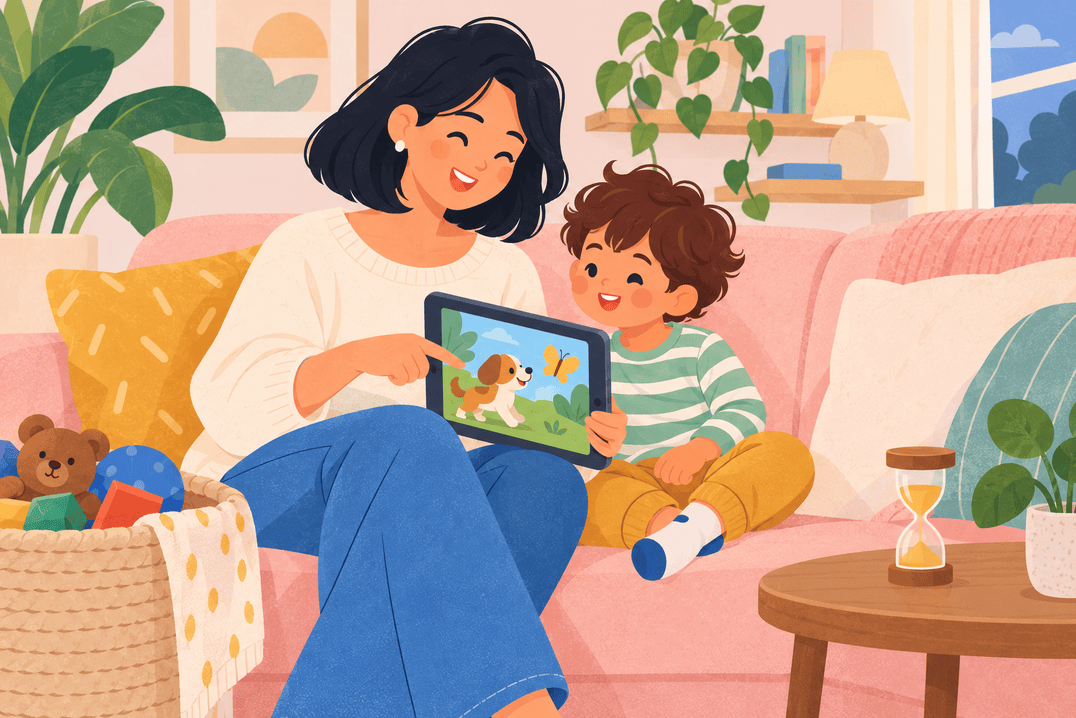
A useful screen plan starts with what your toddler needs during the day: company, movement, meals, play and sleep. Then decide whether a screen has a place, what they will watch and when it will end. A timer can help, but it cannot tell you whether the content or situation is suitable.
Use current age guidance
UK guidance advises avoiding screens below age two except for shared activities that support connection, such as a family video call or looking at photographs together. For ages two to five, it recommends trying to keep viewing to no more than an hour daily, and less where possible. This is a limit, not a target to fill.
The American Academy of Pediatrics updated its media recommendations in 2026. Its advice also considers the child, content, family circumstances and what media displaces. These approaches support asking both how much viewing happens and how it fits into ordinary life.
A communication aid or another assistive device serves a different purpose from entertainment. Do not restrict access to essential communication using an entertainment screen limit; discuss individual needs with the child’s support team.
Choose the programme before handing over the device
Preview content yourself. Look for a clear, gentle story your child can follow, without frightening scenes or repeated pressure to buy things. Switch off autoplay and avoid leaving a toddler to move through an open feed of suggested videos.
A colourful label saying a programme is educational is not enough to establish its benefit. Our guide to educational video claims explains what to consider before relying on a programme to teach a skill.
Make shared use an actual exchange
If you choose a programme for an older toddler, join them when you can. Notice what catches their interest and add a short comment. Afterwards, you could connect a scene about a bus to the bus you see outside. Constant questions are unnecessary.
A video call can work differently from passive viewing because the person can respond to the child. Help a relative follow your toddler’s interests, perhaps by showing a favourite book. End the call when your child needs a break rather than asking them to keep performing.
Protect the ordinary parts of the day
Keep meals and the sleeping space free of entertainment screens. Plan to stop viewing an hour before bedtime. Our evening screen guide offers a simple transition to quieter activities.
Turn off background television when nobody is watching. During play, put your own phone aside when possible so you can notice your child’s attempts to communicate. Small changes to a repeatable routine are more useful than an elaborate schedule that nobody can maintain.
Make the plan workable for your family
Tell other caregivers which content is suitable and what happens afterwards. Have a manageable alternative ready, such as one of these simple toddler activities. A busy or difficult day does not require blame; return to the plan at the next opportunity.
If screens are consistently replacing meals, sleep or interaction, discuss the pattern with your health visitor or clinician. Ask for practical support with the pressure behind the habit as well as ideas for changing it.
References
- Best Start in Life: Screen guidance for children under five (opens in a new tab)
- American Academy of Pediatrics: Digital media guidance explained, 2026 (opens in a new tab)
- American Academy of Pediatrics: New media recommendations, 2026 (opens in a new tab)
- NHS Best Start in Life: Toddler play and connection (opens in a new tab)
- NHS: Helping your baby learn to talk (opens in a new tab)
- UK Government: Screen guidance and assistive technology, 2026 (opens in a new tab)

Lifeing Editorial
Stories for a little more understanding, a little more reassurance, and the everyday moments in between.
Related posts
Screening versus diagnostic tests: Two Different Ways to Assess Risk