
Toddler play ideas: Simple Activities That Encourage Learning
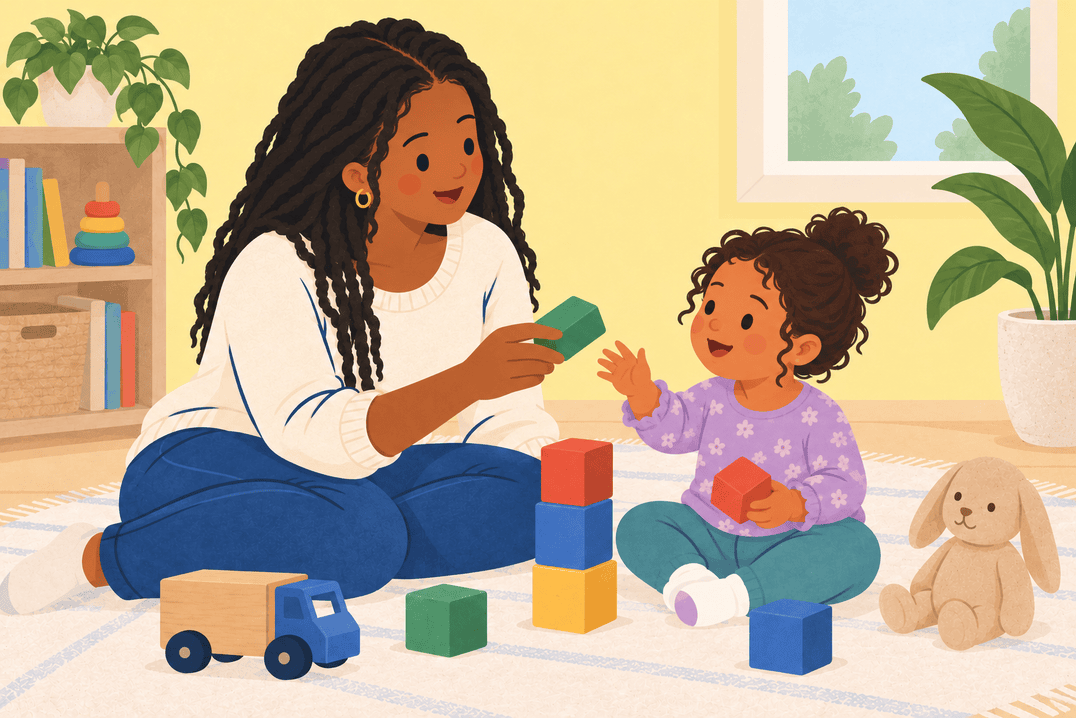
Toddler play can begin with a few safe objects and a little room to explore. You do not need a lesson plan or a toy for every skill. Choose something your child is interested in, stay nearby and notice what they decide to do with it.
Put in, take out and try again
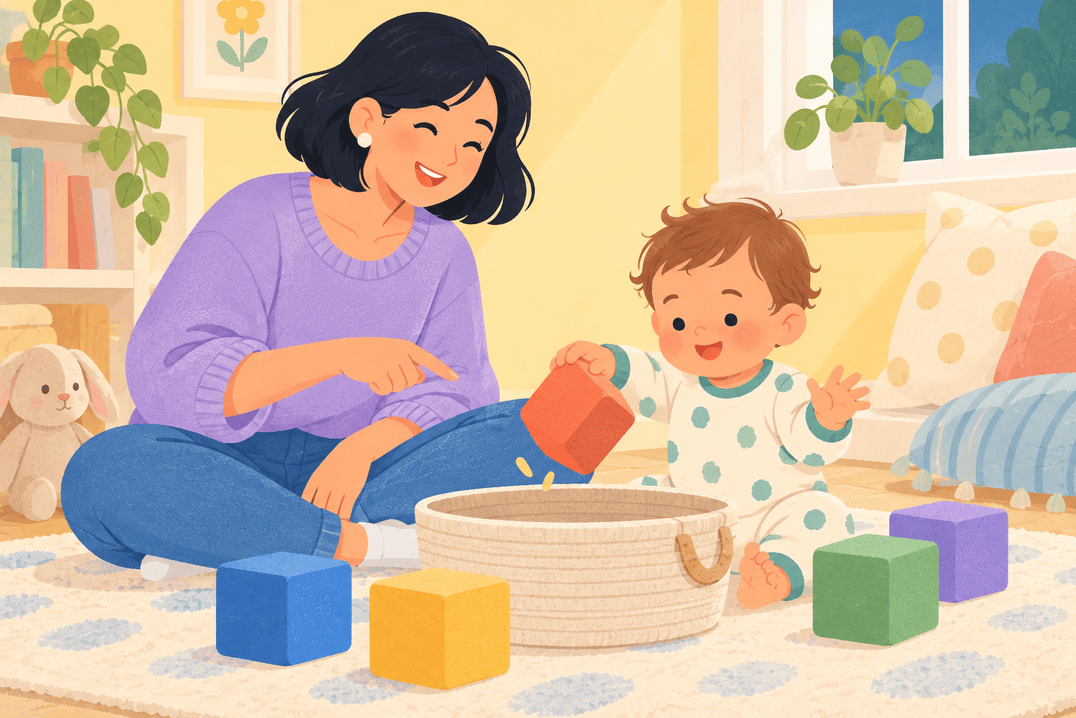
Offer large age appropriate blocks and an open container without sharp edges. Your toddler might fill it, empty it, build a short stack or carry a block across the room. Name an action occasionally, then allow time for their own experiment.
You could put your own block beside theirs and see whether they invite you into the game. Our hand skills guide covers reaching and releasing. Choose pieces suited to their development, not tiny objects designed for an older child.
Add a little movement
Roll a suitable ball across a clear floor, dance to a familiar song or copy a simple movement together. Adapt the activity to what your child can manage. A seated child can participate through a reach, a tap or choosing what happens next.
Keep the area away from stairs, unstable furniture and other hazards. Stop if movement appears painful or your child becomes tired. The purpose is enjoyable activity, not completing a difficult movement because another toddler can do it.
Explore marks and simple puzzles
If your child is ready, offer age appropriate crayons and paper under supervision. Let them make marks without requiring a recognisable picture. Keep small broken pieces out of reach and stop if materials are being chewed or used unsafely.
A simple puzzle with large pieces can be another option. Show one possibility and then wait rather than correcting every attempt. If it repeatedly frustrates your child, try fewer pieces or return to an easier activity. Difficulty with one game does not by itself establish a developmental problem.
Make an everyday scene into a game
A toy animal and a suitable cup can become a pretend café, or a toy vehicle can deliver a block to another part of the floor. Our pretend play guide explains how to build on a child’s idea without taking over.
You can also share a book, sing or let your child help place safe items in a basket. The reading guide includes ways to keep that activity flexible. Repeating a favourite game is an option, not evidence that you need to provide constant novelty.
Choose materials for the child you have
Check age warnings, damage, loose parts and accessible batteries. Keep small magnets, water beads, cords and older children’s tiny toys out of toddler play. Supervision does not make an unsuitable object safe to offer.
For a child with hearing, vision, movement or other additional needs, ask their team about useful adaptations or a local toy lending service. If expected skills are missing, progress concerns you or established abilities are lost, arrange developmental advice. More toys or a harder game do not replace assessment and support.
References
- NHS Best Start in Life: Toddler play and connection (opens in a new tab)
- East of England Community Health and Care NHS Trust: Playing and social skills (opens in a new tab)
- CDC: Developmental milestones at two years (opens in a new tab)
- CDC: Developmental milestones at thirty months (opens in a new tab)
- NHS: Accessible toys and play (opens in a new tab)
- East of England Community Health and Care NHS Trust: Toy safety (opens in a new tab)
- CDC: Getting help with developmental concerns (opens in a new tab)
- NHS: Baby and toddler safety (opens in a new tab)

Lifeing Editorial
Stories for a little more understanding, a little more reassurance, and the everyday moments in between.
Related posts
Toddler portions: Offering Food Without Pressure to Finish