
Eight month old baby: Exploring Safely and Supporting Connection

An eight month old may seem eager to explore one moment and keen to stay close the next. Both situations call for practical preparation: a safer space to investigate and familiar adults who respond when needed. You do not have to choose between encouraging curiosity and offering comfort.
Look at the room from floor level
Check what has become reachable, including beneath furniture and beside bags left on the floor. Put small objects, medicines and cleaning products away securely. Button batteries and magnets need particular care because swallowing them can cause serious injury.
Secure furniture and televisions against tipping using suitable fixings and the manufacturer’s instructions. Do not assume a heavy cabinet cannot fall. Move appealing objects from the tops of furniture so they do not invite climbing later. Keep cords out of reach and check stair and window protection before new movement makes them urgent.
These checks are useful even before your baby travels across the room. The first successful attempt rarely arrives with advance notice. Revisit the space when siblings bring in different toys or you visit another home.
Make departures predictable
Separation anxiety can occur from around six months and often changes over time. A baby who protests when you leave is not being deliberately difficult. Equally, a baby who settles easily has not failed a test of attachment.
Try brief periods with a familiar caregiver, explain that you are leaving in a warm, simple way and return as planned. Avoid sneaking away. Share what helps your baby settle, such as a familiar song or being held. If nights are difficult too, our bedtime separation guide explores that setting.
Share the feeding plan with caregivers
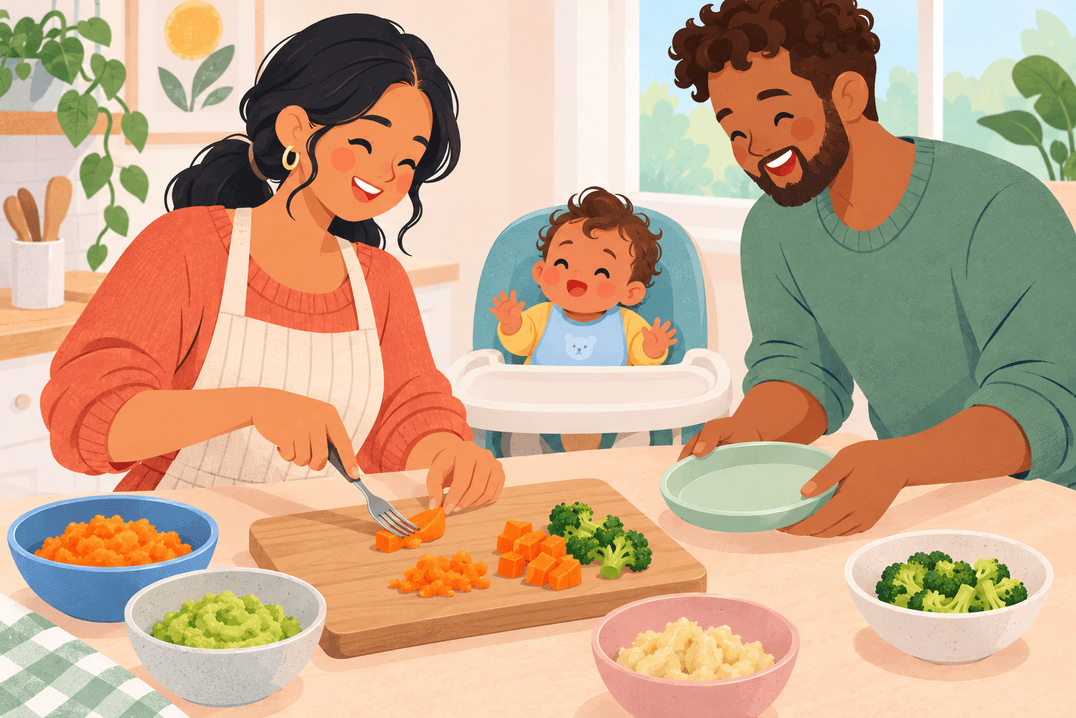
Explain what foods and textures your baby already manages and how you prepare them. Breast milk or infant formula remains the main drink before twelve months. Meals can become more varied without expecting identical portions at every sitting.
Use suitable finger foods alongside other textures your baby can handle. Agree that your baby remains seated upright while eating and an adult stays with them. A hurried snack during crawling is not an appropriate way to combine exploration and lunch.
Enjoy repetition without making it a lesson
A safe toy placed into and taken from a container can hold interest. A familiar face appearing during a peekaboo game can become an invitation to respond. Choose intact materials intended for this age, and stop when your baby has had enough.
The upcoming nine month checkpoint includes responding to a name, varied babbling and sitting without support. These are not invented eight month requirements. Our seven month guide explains the transition between checkpoints.
Keep support available
Raise concerns now if earlier skills are absent, progress worries you or an ability has been lost. Do not wait for nine months simply to obtain permission to ask. If separation distress is intense, lasts well after you leave or continues to interfere with daily life, speak with your health visitor or clinician about support for both of you.
References
- CDC: Developmental milestones at nine months (opens in a new tab)
- NHS: Separation anxiety in babies and young children (opens in a new tab)
- NHS: Baby and toddler safety (opens in a new tab)
- US Consumer Product Safety Commission: Preventing furniture and television tip overs (opens in a new tab)
- NHS Best Start in Life: Feeding from seven to nine months (opens in a new tab)
- CDC: Getting help with developmental concerns (opens in a new tab)
- American Academy of Pediatrics: The power of play (opens in a new tab)

Lifeing Editorial
Stories for a little more understanding, a little more reassurance, and the everyday moments in between.
Related posts

Eighteen month old toddler: A Development Check In for Parents