
Exercise during cramps: Choosing Movement That Feels Manageable

Some people find movement helpful during period cramps; others need to reduce activity for a while. You do not need to complete a workout to manage your period correctly. The useful question is whether the activity helps you feel and function better today.
Begin with an activity you can adjust
A short walk, gentle stretching, or familiar yoga may feel manageable. Choose something you can slow down or stop easily. If a movement increases pain, change it or stop rather than pushing through to reach a target.
The period cramp overview includes other comfort options. Combining approaches is reasonable when each is suitable for you; exercise does not have to be your only strategy.
Keep expectations realistic
Research suggests regular exercise may reduce primary menstrual pain, but the evidence is limited. Studies generally examined routines across the month, not just a single workout during a painful episode. They do not establish one best exercise, intensity, or session length for everyone.
Evidence comparing exercise with pain medicines is uncertain. Do not stop an effective agreed treatment because an exercise plan is described as natural. If you want to change your approach, discuss how to judge the result and what to do if pain remains disruptive.
Record your response without making rules
Notice how you feel during the activity and afterward. You might find a shorter session useful on one day and ordinary activity comfortable on another. A note about what helped can guide future choices without turning every cycle into a rigid schedule.
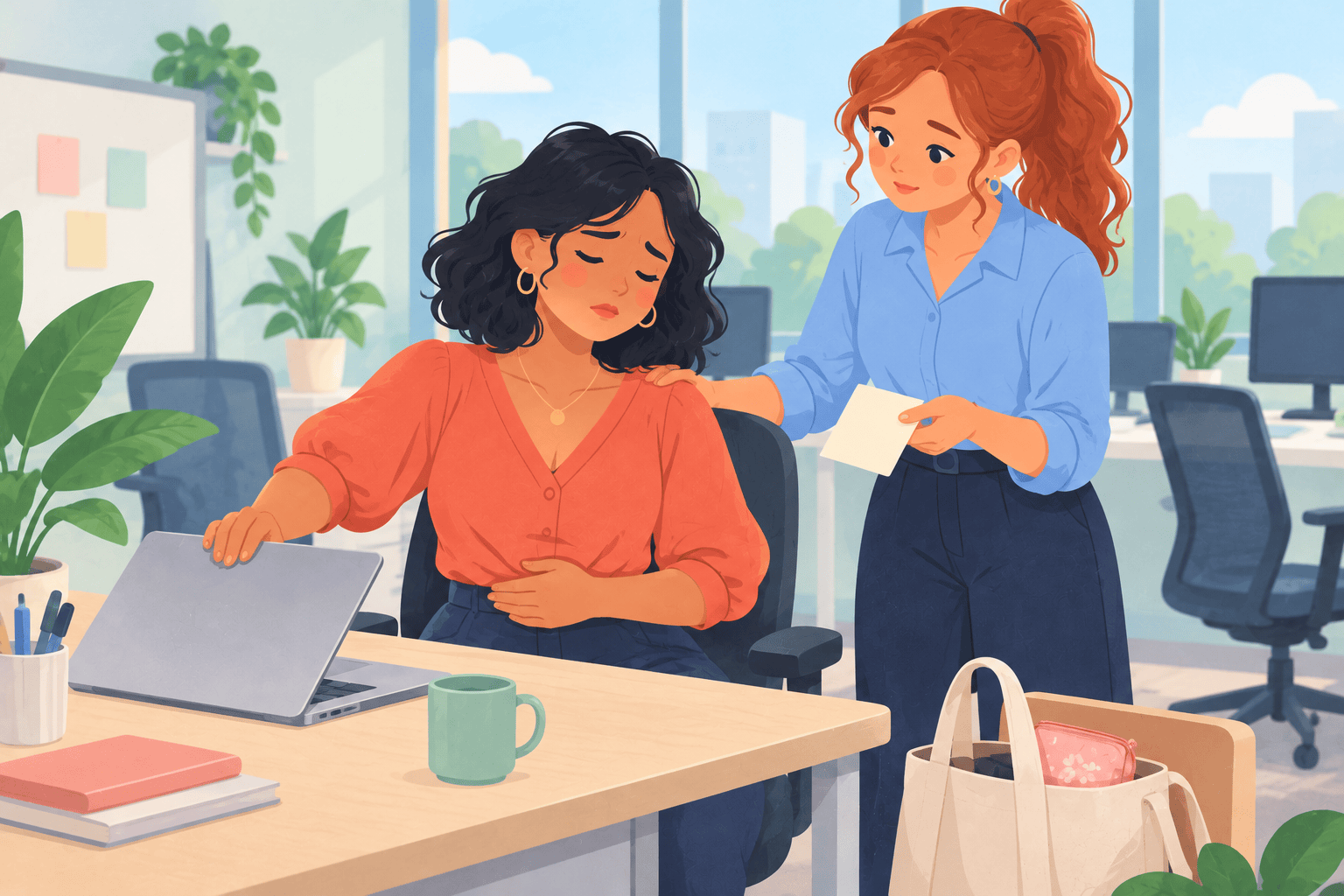
Our guide to period pain at work considers activity and rest within a day that you may not fully control. Pain that repeatedly prevents ordinary movement deserves a clinical conversation.
Stop for concerning symptoms
Seek urgent advice for pelvic pain with possible pregnancy, fever, or unusual bleeding. Sudden severe or worsening pelvic pain, faintness, shoulder pain, or difficulty breathing needs emergency care.
For persistent cramps without emergency symptoms, ask for assessment and a treatment plan. Needing that support does not mean you have exercised too little, chosen the wrong class, or failed to tolerate a normal experience.
References

Lifeing Editorial
Stories for a little more understanding, a little more reassurance, and the everyday moments in between.
Related posts

Exercise While Trying to Conceive and During the Two Week Wait