
Five month old baby: Exploring Objects and Preparing for New Skills

At five months, everyday objects can become increasingly interesting. Your baby may want to look, reach, hold and explore with their mouth. This is a useful time to review the play space and plan for the next stage, while keeping current feeding and sleep needs at the centre of the day.
Watch the pattern rather than inventing a new test
Five months sits between the usual four and six month developmental checkpoints. The six month guidance includes reaching for a wanted toy, exploring objects with the mouth and rolling from tummy to back. These are upcoming observations, not a new checklist every five month old must complete today.
If an earlier expected skill is missing, something worries you or an ability has been lost, contact your clinician now. Do not wait for the next birthday. If your baby was premature, ask how corrected age affects the developmental discussion. Our four month guide covers the earlier checkpoint.
Make exploration suitable for mouthing
Choose intact toys intended for your baby’s age and check them regularly. Keep small parts, loose magnets, button batteries and older children’s small toys out of reach. An adult watching nearby does not make an unsuitable object safe.
Clear the space before placing your baby on the floor, including anything that has fallen from a pocket or bag. Offer one or two safe objects rather than surrounding them with clutter. Notice what they choose to look at or reach towards, and let that guide the interaction.
Continue simple social play
Talk about what your baby is exploring and pause for a response. A sound, movement or interested look can be part of the exchange. You can repeat a little game if they seem comfortable, or stop when they turn away or need a rest.
Sharing a book can mean looking at one picture together. Keep books and other play materials out of the sleep space afterwards. There is no need to finish a story or ask a baby to sit through a lesson.
Prepare for food without rushing it
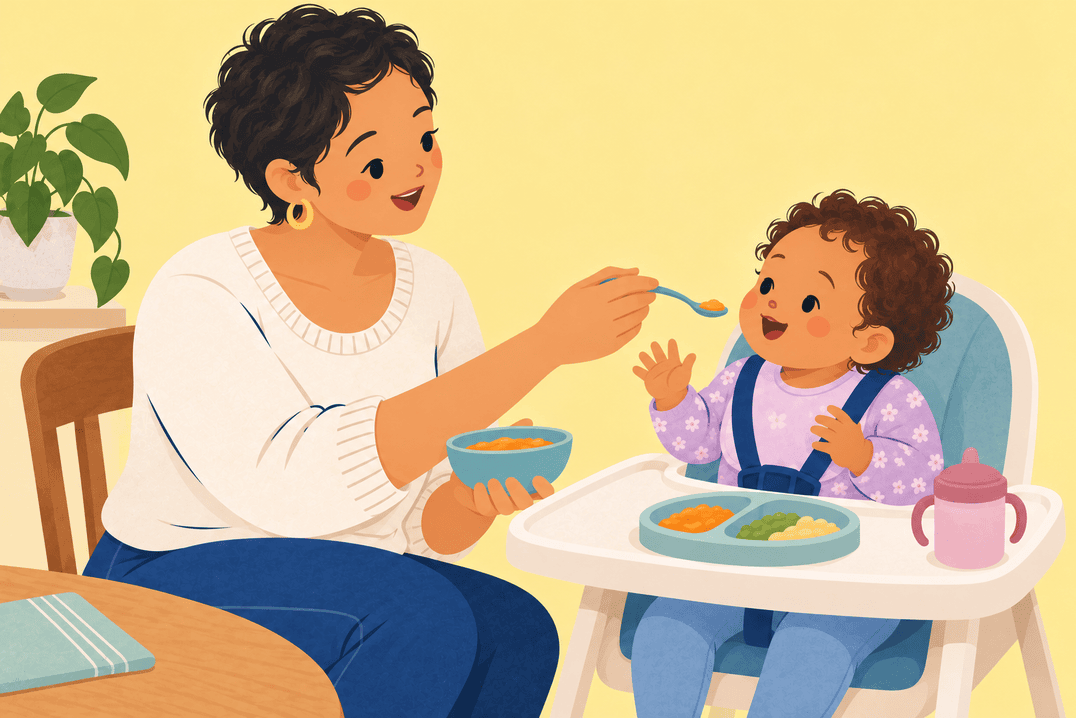
Breast milk or infant formula remains the basis of feeding. Plan to introduce solid foods around six months, when the readiness signs appear together: a steady head while sitting, coordinated reaching towards the mouth, and swallowing food rather than pushing it out.
Chewing fists, watching adults eat or waking more often does not establish readiness by itself. Our first foods guide explains the practical preparation. Ask for individual advice if your baby was premature or has feeding or developmental needs. Do not add cereal to a bottle to improve sleep.
Keep rest and health needs visible
Use a firm, flat, clear sleep space and continue placing your baby on their back to start each sleep. Never swaddle a baby showing attempts to roll. Check that every caregiver knows the same approach as movement changes.
If feeding drops markedly or your baby seems unwell, seek prompt advice. Breathing difficulty, an unusual colour change or trouble waking needs emergency help. Preparing for new skills should never mean explaining away an abrupt change in your baby’s health.
References
- CDC: Developmental milestones at four months (opens in a new tab)
- CDC: Developmental milestones at six months (opens in a new tab)
- American Academy of Pediatrics: Corrected age for premature babies (opens in a new tab)
- NHS: Your baby’s first solid foods (opens in a new tab)
- East of England Community Health and Care NHS Trust: Toy safety (opens in a new tab)
- NHS: Baby and toddler safety (opens in a new tab)
- American Academy of Pediatrics: Safe sleep recommendations (opens in a new tab)
- NHS: Urgent medical help for babies and young children (opens in a new tab)

Lifeing Editorial
Stories for a little more understanding, a little more reassurance, and the everyday moments in between.
Related posts

Flu during pregnancy: When to Seek Advice About Symptoms