
Frequent urination while pregnant: Everyday Changes and Infection Clues
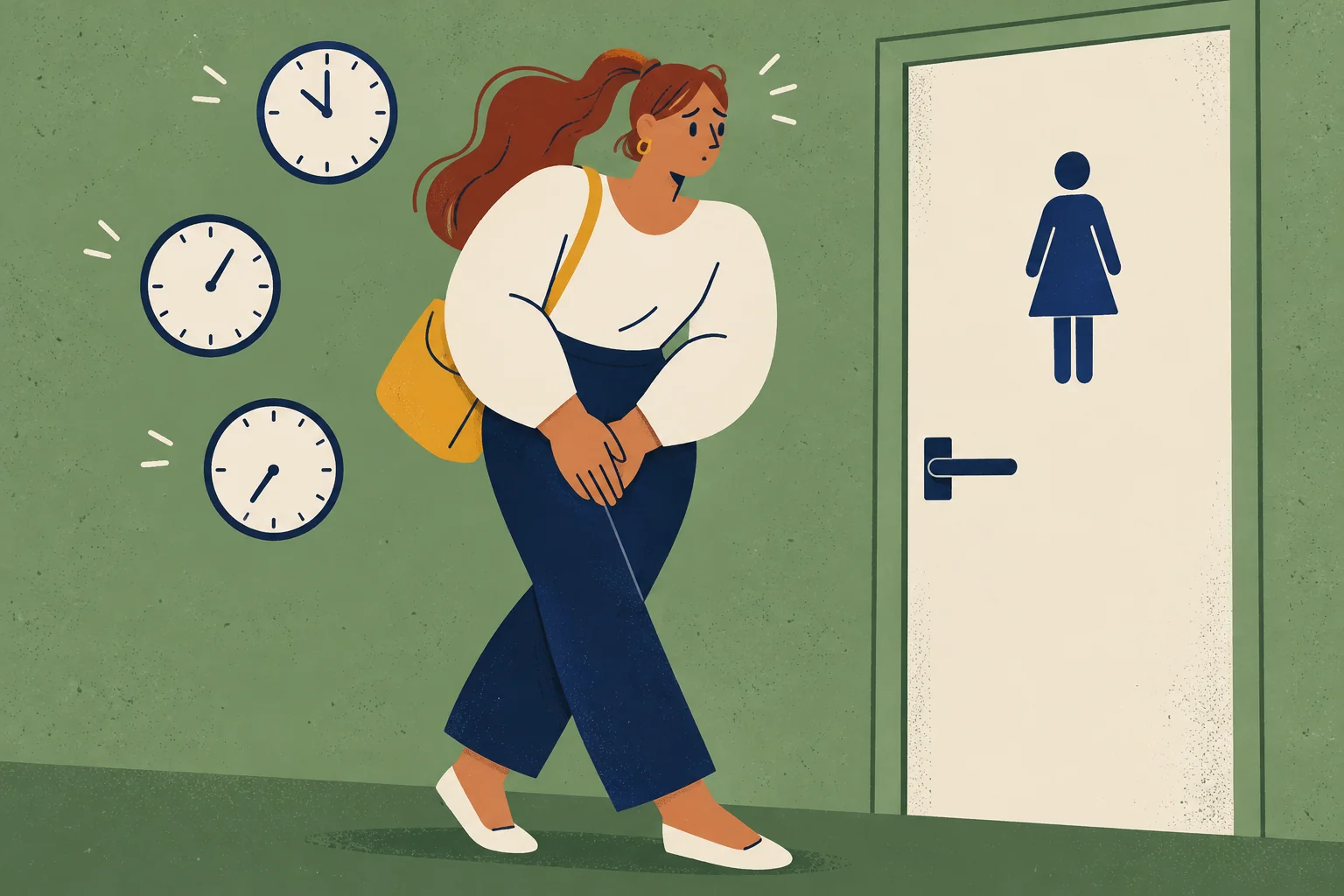
Needing to urinate more often can begin early in pregnancy and continue as the growing uterus affects the bladder. Frequent trips alone may be familiar, but pain, blood, fever, or difficulty passing urine should not be put down to pregnancy without assessment.
Plan for access rather than avoiding fluids
Keep drinking regularly during the day. If late evening drinks repeatedly interrupt sleep, discuss adjusting their timing while maintaining adequate daytime fluids. Do not try to solve bathroom trips by becoming dehydrated.
Think about access at work, on journeys, and during appointments. Asking for a toilet break is a practical need, not an inconvenience you must hide.
Notice infection clues
Pain or burning when urinating, blood in the urine, or a new sense of urgency can indicate a urinary infection. Contact your doctor or maternity team promptly during pregnancy. Fever, back or side pain, vomiting, or feeling unwell can make assessment more urgent.
Describe when symptoms began and whether you can pass urine normally. A urine test may help guide care. Do not use leftover antibiotics or rely on drinks marketed for urinary health to treat a possible infection.
Distinguish frequency from leakage
Leaking a little urine with coughing or sneezing is a different symptom from needing to go often. Pelvic floor support may be useful after the cause has been assessed.
If you are unsure whether wetness is urine or fluid from the vagina, contact maternity care. The guide to pregnancy discharge explains why a possible waters leak should not wait for a routine visit.
Include symptoms in your care plan
Tell your team if bathroom needs disrupt sleep or work, even when there is no infection. Ask whether there are practical adjustments or additional assessment that would help.
Seek immediate medical care if you cannot pass urine despite needing to. Urinary changes with new numbness around your bottom or genitals need emergency assessment. Not every bladder symptom belongs to the same diagnosis.
Frequent urination before you know you are pregnant
Extra bathroom trips can be an early pregnancy symptom, but they cannot confirm conception. In particular, pain or burning, blood, or a new urgent need to go should not be treated as a reassuring pregnancy clue. Tell the clinician if pregnancy is possible when asking about a suspected infection.
Use the early pregnancy testing plan to answer the pregnancy question. If you do not know when your period is due, test at least twenty one days after the relevant unprotected sex. Seek care for urinary symptoms on their own timetable rather than waiting for a positive result.
It may help to describe whether you pass a usual amount each time or only a little, whether you feel empty afterward, and whether the pattern wakes you repeatedly. A clinician can decide which checks are appropriate from the whole picture.
References
- NHS: Common health problems in pregnancy (opens in a new tab)
- NHS: Pregnancy symptoms that need help (opens in a new tab)
- NHS: Medicines in pregnancy (opens in a new tab)
- NHS: Signs and symptoms that might mean you are pregnant (opens in a new tab)
- NHS: Doing a pregnancy test (opens in a new tab)
- NHS: Urinary tract infections (opens in a new tab)
- NIDDK: Urinary retention symptoms and causes (opens in a new tab)
- NHS: Sciatica and emergency nerve symptoms (opens in a new tab)

Lifeing Editorial
Stories for a little more understanding, a little more reassurance, and the everyday moments in between.
Related posts

Functional ovarian cysts: How They Relate to Your Cycle