
Hearing concerns in toddlers: When to Arrange an Assessment
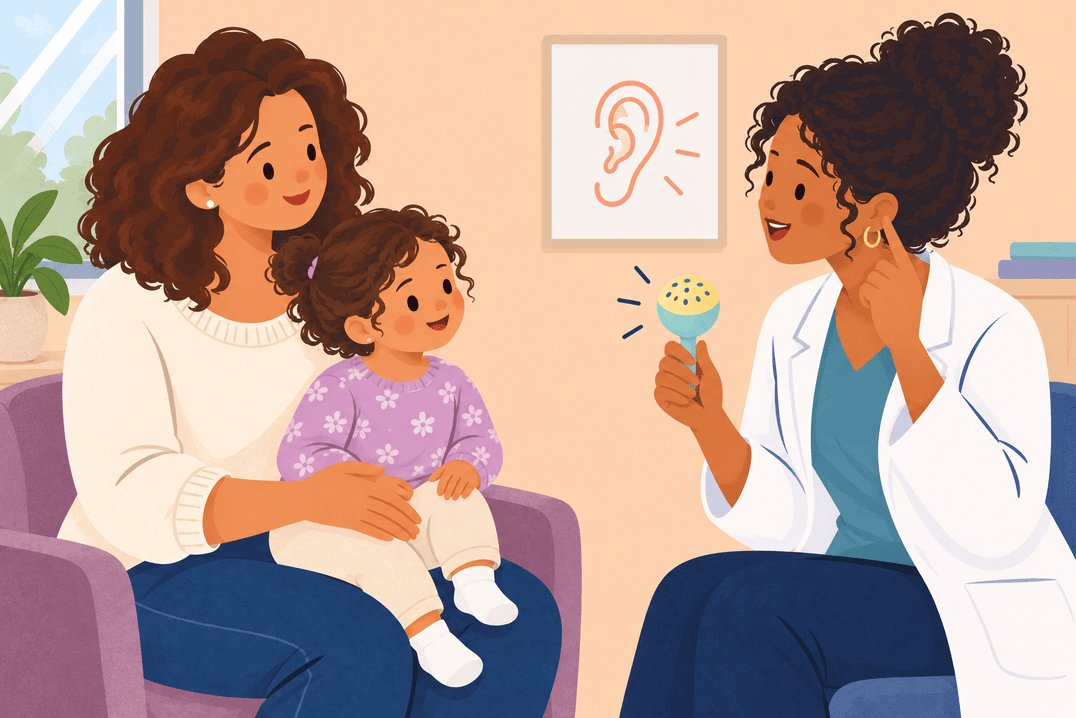
If your toddler seems to miss voices, needs repeated instructions or has stopped responding as they usually do, arrange a hearing discussion. You do not need to know whether the problem is permanent before asking. Hearing can change after a baby has passed the newborn screen.
Describe the situations that concern you
Notice whether your child responds differently in a quiet room and a busy space. They may turn the television up, speak more loudly or seem tired by listening. These observations do not diagnose hearing loss, but they can help explain why you are concerned.
Write down when you first noticed a change, any ear pain or discharge, and whether nursery staff see something similar. Describe what actually happens: “She watches my face before following the request” is more useful than deciding she is deliberately ignoring you.
Do not use a home noise test to rule it out
A child who hears a door slam may still miss parts of speech. Response to one sound cannot establish the hearing level in each ear or across different pitches. Do not make loud sounds close to the ears or use an adult online hearing test to settle the question.
Not responding to a name also needs context. Hearing, attention and wider development may all be considered. A clinician can help decide which assessments are appropriate rather than asking you to choose the explanation.
Ask for a suitable assessment
Start with your GP, health visitor or child’s clinician and ask about referral to audiology. If you already use an audiology service, follow its advice for reporting new concerns. A previous result is helpful background, but it should not close a discussion about a new change.
Children’s hearing tests are adapted to age and ability. The audiologist may observe a response to sound with a visual reward or turn listening into a game. They may also check how the eardrum moves. Ask what each test can show and whether further testing is needed.
Keep the next steps clear
Glue ear, where fluid collects behind the eardrum, is one possible cause of temporary hearing difficulty. An examination is needed to assess it. Do not assume that every listening concern is glue ear or wait months before first seeking advice.
Before leaving, ask what the results mean, who will arrange any further appointment and when to contact the service if concerns continue. If language is also affected, hearing and speech and language support may both be relevant. One referral does not automatically replace the other.
Respond sooner to a sudden change
Seek urgent medical advice for sudden hearing loss, hearing that worsens over days or weeks, or a change accompanied by ear pain or discharge. These situations need a faster route than a routine developmental appointment.
While waiting, reduce competing background noise and make sure your child can see you comfortably when you speak. Share useful communication approaches with nursery. These adjustments support participation while the cause is assessed; they do not replace the hearing check.
References
- NHS: Hearing tests and when to seek help (opens in a new tab)
- NHS: Glue ear and hearing changes (opens in a new tab)
- NIDCD: Hearing screening and ongoing hearing checks (opens in a new tab)
- NIDCD: Speech, language and developmental assessment (opens in a new tab)
- American Academy of Pediatrics: Language delays and assessment (opens in a new tab)
- CDC: Getting help with developmental concerns (opens in a new tab)

Lifeing Editorial
Stories for a little more understanding, a little more reassurance, and the everyday moments in between.
Related posts

Heat Rash in Babies: Keeping Skin Cool and Comfortable