
Not responding to a name: Discussing the Pattern With a Clinician

One missed response to a name does not identify a developmental condition. A repeated pattern is worth discussing, especially if you are also concerned about hearing, gestures or interaction. The useful question is what your child does across everyday situations, rather than whether they pass one home test.
Consider age and the wider pattern
Looking when their name is called is included in the CDC milestones for nine months. If that skill is missing at the expected stage, or you have an earlier concern, talk with your child’s clinician. A checklist supports a conversation; it does not make a diagnosis.
Notice whether your child responds to familiar voices, looks towards things you show them or uses sounds and gestures to involve you. Our gesture guide explains the difference between asking for something and sharing interest in it.
Bring examples without repeatedly testing
Think about a few ordinary moments: a quiet room, play with a favourite object or a noisy nursery collection. Write down what happened and whether your child was awake and comfortable. Include situations when they did respond as well as those when they did not.
You do not need to call their name over and over, startle them or insist on eye contact. Move into a comfortable position where they can notice you, reduce competing noise and speak naturally. Do not make access to food, comfort or another essential need depend on a response.
Include hearing in the discussion
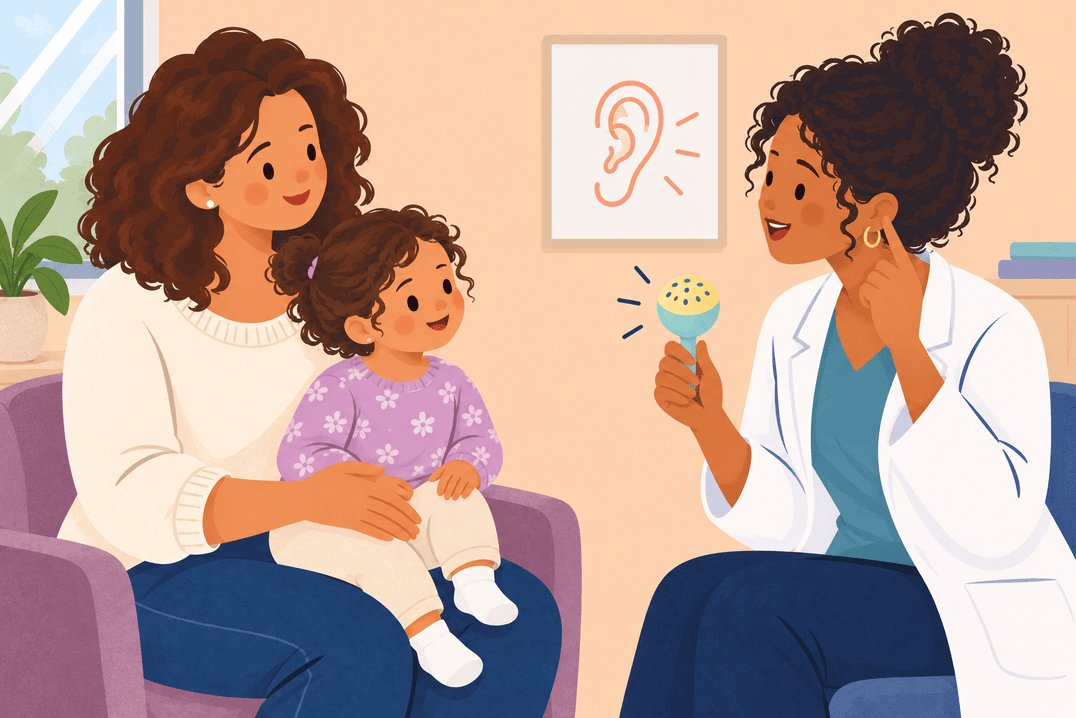
Passing a newborn hearing screen does not rule out hearing changes later. Likewise, responding to some noises is not enough to establish normal hearing. Ask whether an audiology assessment is appropriate, especially if responses have changed or speech is also a concern.
Our hearing guide explains the referral conversation. Tell the clinician about ear symptoms and about the languages and names your child hears at home. Practical background can help them interpret your observations.
Avoid diagnosing from one behaviour
Differences in responding, sharing attention, gestures and language can be considered in an autism assessment, alongside developmental history and other observations. A child who sometimes responds can still need support. A child who misses their name is not automatically autistic.
Ask what assessment is recommended and what help is available while you wait. If the concern continues after an initial reassurance, contact the service again. You do not have to wait for every possible sign to appear before discussing your child’s needs.
Separate a developmental pattern from an emergency
A child who suddenly becomes difficult to wake, unconscious, floppy or has trouble breathing needs immediate medical help. That is different from an awake child repeatedly not turning when called. Use local emergency services for an acute loss of responsiveness.
Losing words, gestures or other established abilities also needs prompt professional assessment. Our developmental regression guide covers that situation. Keep everyday interaction gentle while arranging help; repeatedly checking the same response cannot replace an assessment.
References
- CDC: Developmental milestones at nine months (opens in a new tab)
- ASHA: Communication during the first year (opens in a new tab)
- NIDCD: Hearing screening and ongoing hearing checks (opens in a new tab)
- American Academy of Pediatrics: Early social communication differences (opens in a new tab)
- CDC: Getting help with developmental concerns (opens in a new tab)
- NHS: Urgent medical help for babies and young children (opens in a new tab)
- NHS: Helping your baby learn to talk (opens in a new tab)

Lifeing Editorial
Stories for a little more understanding, a little more reassurance, and the everyday moments in between.
Related posts

Nursery Illnesses: Planning Care and Checking Return Guidance