
Normal cycle length: Understanding Your Personal Range
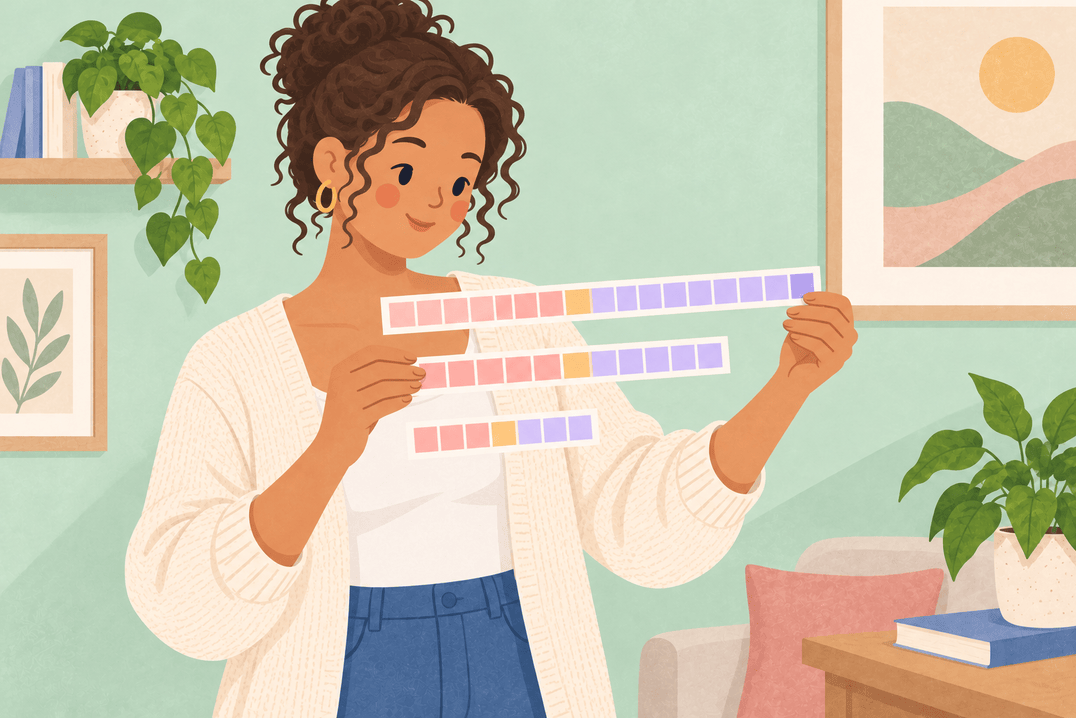
A cycle does not have to last exactly 28 days to be healthy. That number is a familiar example, not a deadline your body must meet. Your usual pattern, your age, and any symptoms matter alongside the number of days between periods.
Measure the same interval each time
Count from the first day of one period to the first day of the next. Do not start counting when bleeding finishes. A period beginning on April 1 followed by another on April 29 gives a cycle length of 28 days.
Keep the start dates themselves, even if an app calculates the interval. Our guide to counting cycle days explains how to handle uncertain entries without rewriting your history to match a prediction.
Understand why ranges differ
Public health resources do not all use identical boundaries. Some describe adult cycles of 21 to 35 days, while others use 24 to 38 days. These are population descriptions, not competing promises that every cycle outside them means disease.
A single number cannot tell you whether you ovulated or why a period changed. Bring your actual dates to a clinician if the pattern is repeatedly unusual for you, rather than choosing whichever range feels more reassuring.
Include symptoms in the picture
Record bleeding between periods, increasing pain, and how your periods affect work, sleep, or school. Also note contraception changes. A predictable calendar does not make disruptive bleeding unimportant.
If the intervals change considerably, the guide to unpredictable periods can help you organize the information to discuss.
Use tracking to support a conversation
A practical summary might say, “My last three cycles lasted 27, 29, and 40 days, and the last bleed was much heavier.” That is more useful than saying only that a tracker marked a day red. Seek advice for a persistent change or symptoms that concern you; you do not need a perfect diary before asking for help.
References

Lifeing Editorial
Stories for a little more understanding, a little more reassurance, and the everyday moments in between.
Related posts

Nosebleeds while pregnant: Managing Bleeding and Knowing When to Get Help