
Nut butters for babies: Offering a Safer Texture

Smooth nut butter can offer a way to include nuts in a baby’s diet, but smooth does not mean safe to give straight from a spoon. Its thickness and stickiness matter. Prepare it as a thin spread or mix it thoroughly into suitable food before offering it.
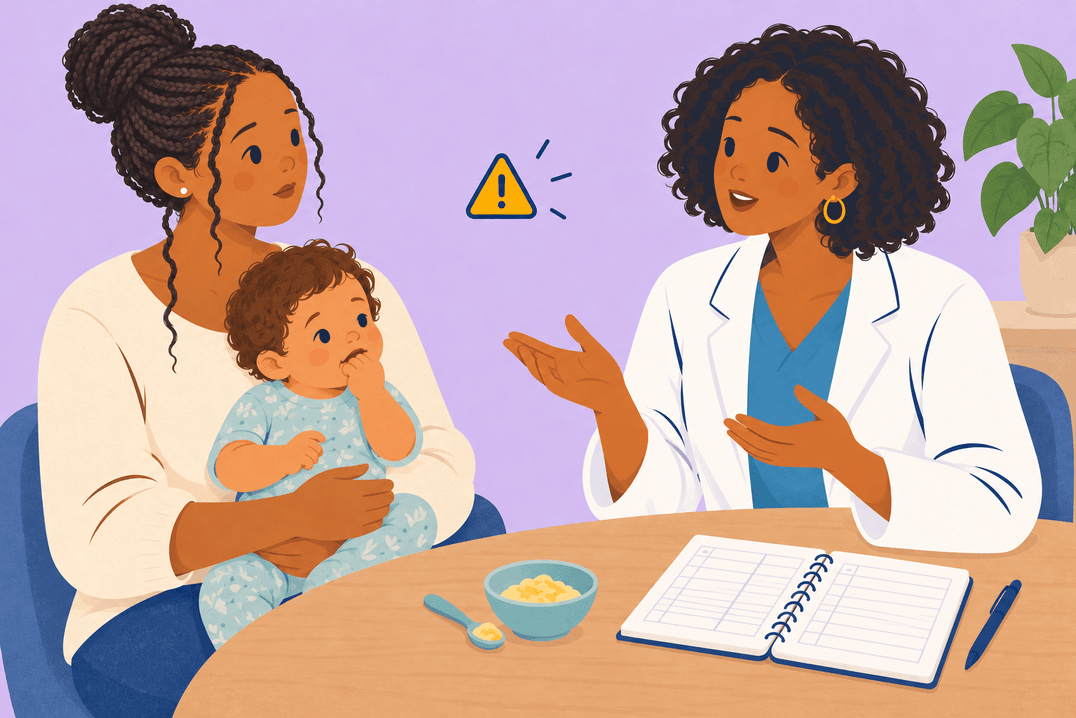
Begin with the allergy plan
When your baby is ready for solids, usually around six months, nut foods can be introduced in an appropriate form. Ask for advice first if they have eczema, a known allergy or a previous reaction. Severe eczema or egg allergy needs an early discussion about peanut timing and assessment.
Our peanut introduction guide explains that specific pathway. A baby with a known nut allergy should not be offered the allergen because it has been blended or thinned. Changing texture reduces a choking concern; it does not remove allergenic protein.
Avoid a thick mouthful
Choose a smooth product without hard pieces. Stir a small amount into a familiar soft food, such as already tolerated porridge or puree, until the mixture is evenly combined and easy for your baby to manage. Do not leave a dense lump in the centre of the bowl.
A thin layer on suitable lightly toasted bread is another option when your baby can manage that food. Avoid a thick spread that forms a sticky mouthful. Let warmed mixtures cool before feeding.
Do not give whole nuts, crunchy nut pieces or a spoonful of thick nut butter. A product labelled natural can still be very sticky. Check its ingredients as well as its texture, and avoid honey containing products for babies under twelve months.
Introduce a clear ingredient
A mixed nut butter can contain several different nuts. If these are all new, it becomes harder to identify the cause of a reaction. Choose one new allergenic ingredient at a time, with other ingredients already tolerated.
Our allergen introduction guide explains how to build variety and keep tolerated foods in the diet regularly. Tolerating peanut does not prove tolerance of every tree nut, and a first successful taste is not a guarantee against every future reaction.
Keep the meal responsive
Seat your baby upright and stay with them. Offer a small prepared amount without forcing them to finish. Do not place sticky food in the mouth while they are crying, distracted or moving around.
If symptoms suggest an allergic reaction, stop the food and seek advice. Breathing difficulty, tongue or throat swelling, collapse or marked floppiness needs emergency help and prescribed adrenaline if available. If food appears to obstruct the airway and the cough is ineffective, use choking first aid and call for help.
Our gagging and choking guide explains the difference. Caregivers should know both the feeding safety routine and any individual allergy action plan before offering a new food.
References
- NHS Best Start in Life: Preparing food safely (opens in a new tab)
- CDC: Choking hazards (opens in a new tab)
- ASCIA: Infant feeding and allergy prevention guideline (opens in a new tab)
- American Academy of Pediatrics: Introducing egg, peanut and other food allergens (opens in a new tab)
- NHS: Foods to avoid giving babies and young children (opens in a new tab)
- NHS: Anaphylaxis (opens in a new tab)

Lifeing Editorial
Stories for a little more understanding, a little more reassurance, and the everyday moments in between.
Related posts

Nutrition in a twin pregnancy: Reviewing Your Individual Needs