
Introducing allergenic foods: Planning One New Food at a Time
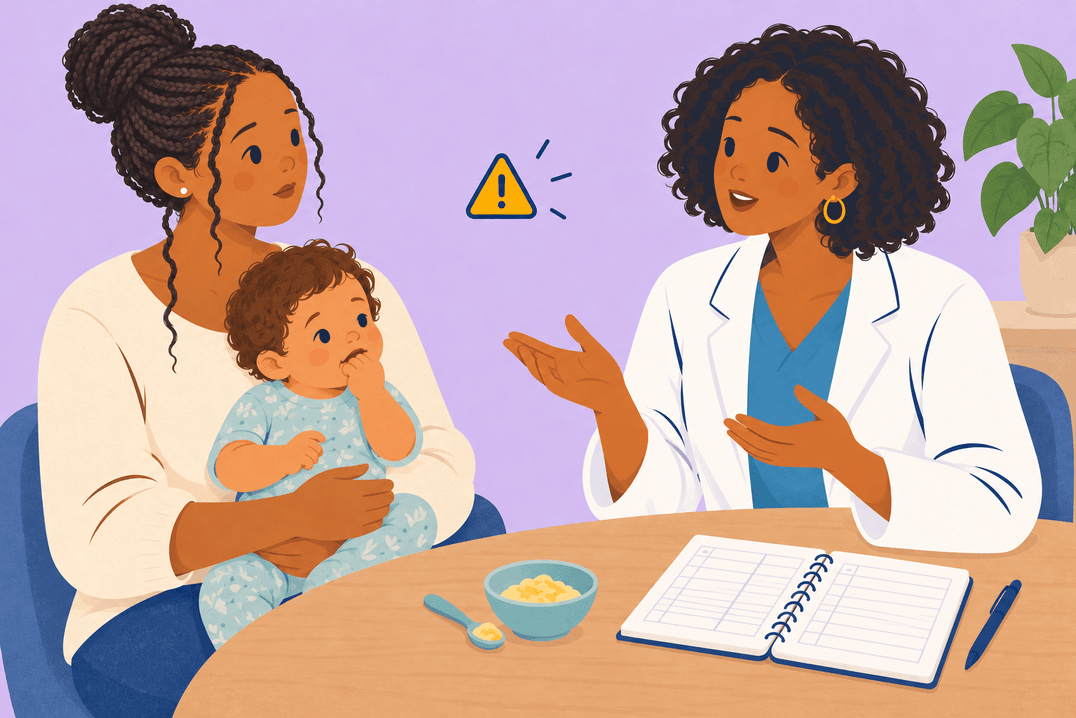
Foods that commonly cause allergies can be part of a baby’s varied diet when solids begin, usually around six months. Deliberately postponing them for a long time does not provide reliable protection. The practical task is to introduce suitable foods in a way that helps you notice and respond to a reaction.
Check whether your baby needs an individual plan
Ask your clinician before introduction if your baby has eczema, a known food allergy or a previous reaction. Severe eczema or egg allergy changes the conversation about peanut in particular. Our peanut introduction guide explains why that discussion should happen early.
The usual advice is for babies who are developmentally ready for solids. Do not start before four months or use an allergen prevention message as a reason to feed a baby who cannot manage food safely. An existing allergy or feeding plan takes priority over a general menu.
Choose one new allergen for the meal
Examples of allergenic foods include egg, peanut, milk, wheat, sesame, soy, fish, shellfish and tree nuts. Introduce one new allergenic food at a meal, in a small amount, rather than combining several unfamiliar allergens in one recipe. Previously tolerated ingredients can still be used.
A simple note can help: the food, preparation, date and whether any symptoms occurred. This is especially useful when several caregivers share meals. It does not need to become a complicated scoring system or a reason to delay all other foods for weeks.
Use a preparation your baby can manage
Smooth nut butter can be thinned into suitable food. Whole nuts and thick spoonfuls of nut butter are choking hazards. Cook egg well and offer it in a manageable texture; our egg guide gives practical examples.
Do not smear food on the skin to test for allergy. Skin redness after contact is not a reliable diagnostic test, and skin exposure is not a substitute for eating an appropriate food under the agreed plan.
Continue tolerated foods
Once a food is tolerated, keep offering it regularly as part of ordinary meals. A single first taste followed by months of avoidance is not the intended approach. Decide on easy repeat meals that fit your family and ask your clinical team for a pattern if your baby has an individual prevention plan.
Introduction can reduce the likelihood of some food allergies, particularly peanut and egg, but it cannot guarantee that a child will never develop an allergy. Do not force food or increase amounts through symptoms to try to create tolerance.
Know what would change the plan
Stop a food if a suspected reaction occurs and seek advice before offering it again. Redness only where food touched can also be irritation, so assessment can prevent unnecessary avoidance. Our symptoms guide explains what to record and when to get help.
Breathing difficulty, tongue or throat swelling, collapse or sudden marked floppiness needs emergency help immediately. Do not wait to finish observing the meal if serious symptoms appear.
References
- NHS: Food allergies in babies and young children (opens in a new tab)
- American Academy of Pediatrics: Introducing egg, peanut and other food allergens (opens in a new tab)
- ASCIA: Infant feeding and allergy prevention guideline (opens in a new tab)
- BSACI: Allergy prevention (opens in a new tab)
- CDC: Choking hazards (opens in a new tab)
- NHS: Anaphylaxis (opens in a new tab)

Lifeing Editorial
Stories for a little more understanding, a little more reassurance, and the everyday moments in between.
Related posts

Iodine in pregnancy: Questions About Diet and Supplements