
Food allergy symptoms in babies: When to Seek Help
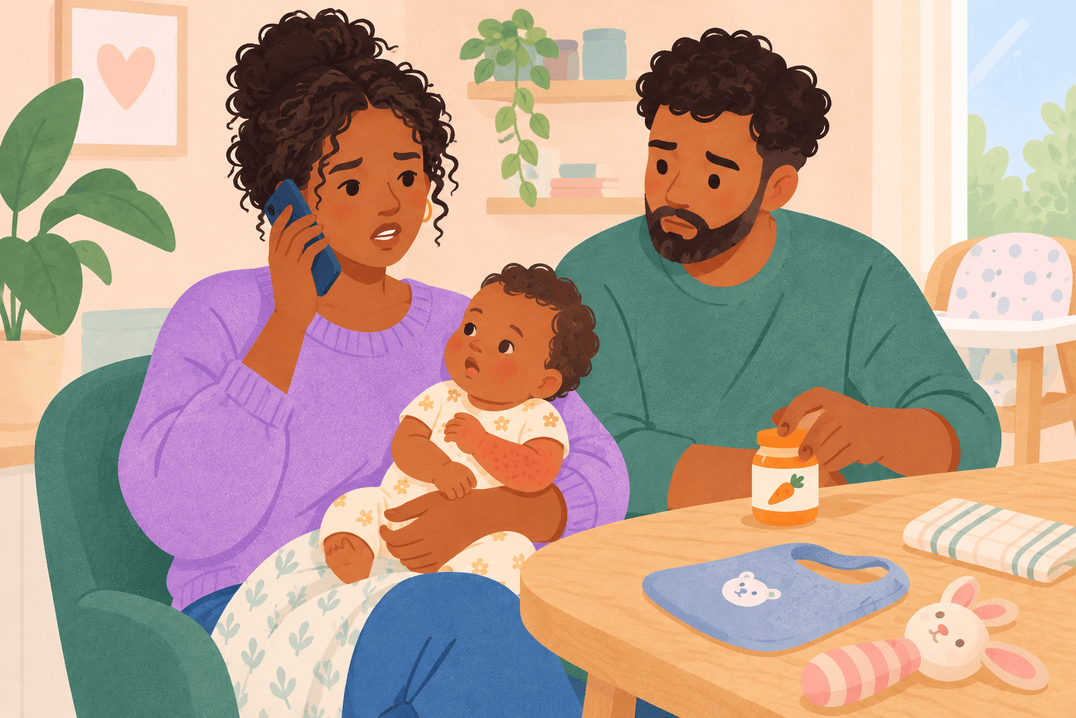
A rash or vomiting after a meal can raise the question of food allergy, but timing alone does not establish a diagnosis. What happened, how quickly it developed and whether symptoms affected breathing or alertness all matter. First decide whether your baby needs emergency help.
Act immediately on serious symptoms
Call your local emergency number for difficulty breathing, tongue or throat swelling, collapse, or a baby who suddenly becomes very pale, floppy or difficult to wake after a possible allergen exposure. A severe allergic reaction can occur without a rash.
Use prescribed emergency adrenaline promptly according to your child’s action plan, if available, and call an ambulance even if they improve. Our severe reaction guide explains the immediate steps. Do not wait to photograph symptoms or identify every ingredient before seeking help.
Notice when symptoms begin
An immediate food allergy reaction often begins within minutes and usually within two hours. Possible signs include raised itchy patches, swelling, vomiting, coughing or wheezing. Breathing symptoms are not something to monitor casually at home while deciding whether a rash will appear.
Some food allergies cause delayed symptoms, including digestive problems or worsening eczema. These can appear later and are harder to connect to one meal. Eczema, reflux, loose stools or constipation also have many nonallergic causes, so a symptom list cannot confirm the explanation.
Repeated vomiting with marked pallor, lethargy or dehydration needs urgent assessment even when there are no hives. Not every serious reaction follows the same pattern.
Record useful details once your baby is safe
Write down the food and ingredients, approximate amount, time eaten, first symptom and how the symptoms changed. Note previous exposures and any treatment given. A photo of a rash can help if taking it does not delay care.
Stop the suspected food and seek advice before another trial. Redness only where food touched the skin can be irritation rather than a food allergy. A clinician can help interpret this, rather than automatically removing several foods from the diet.
Our introduction guide explains how introducing one new allergen at a meal can make the history clearer. It is a prevention guide, not a reason to repeat a food after a concerning reaction.
Expect a history before a diagnosis
The clinician may recommend targeted skin or blood tests for an immediate allergy, or a supervised dietary assessment for a delayed pattern. Tests need interpretation alongside the history. Broad commercial panels, food IgG tests and hair analysis are not substitutes for this process.
Do not remove major food groups or change a baby’s main milk without advice about nutritional replacement. If an elimination and reintroduction trial is recommended, ask exactly what to exclude, for how long and where reintroduction should happen.
A written plan should explain which foods remain safe, what caregivers should avoid and what to do if symptoms recur. Our egg introduction guide also explains why a first food approach differs from care after a diagnosed allergy.
References
- NHS: Food allergies in babies and young children (opens in a new tab)
- NHS: Food allergy (opens in a new tab)
- NICE: Food allergy in children and young people, recommendations (opens in a new tab)
- ASCIA: Infant feeding and allergy prevention guideline (opens in a new tab)
- ASCIA: Acute management of anaphylaxis (opens in a new tab)

Lifeing Editorial
Stories for a little more understanding, a little more reassurance, and the everyday moments in between.
Related posts
Food allergy testing: What to Expect From Specialist Advice