
Severe allergic reactions: Recognizing a Medical Emergency
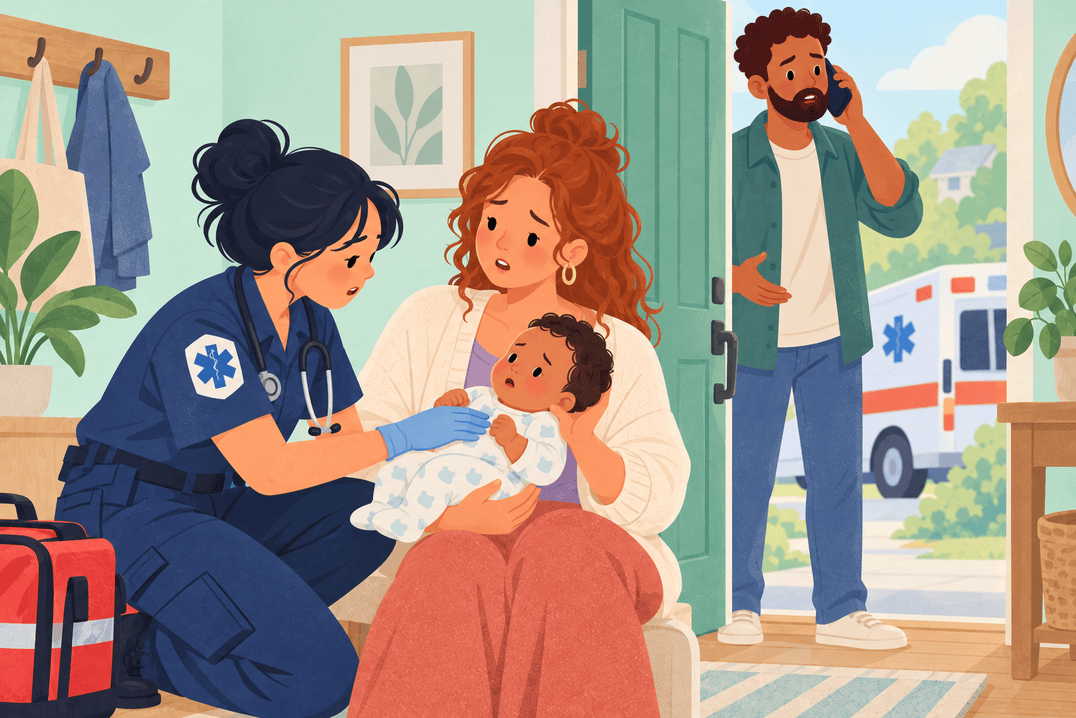
If a baby or toddler may be having a severe allergic reaction now, use their prescribed adrenaline immediately if available and call your local emergency number. In the UK, call 999. Tell the call handler that you suspect anaphylaxis. Do not wait for a rash or for symptoms to settle on their own.
Recognise more than a skin reaction
Anaphylaxis can affect the airway, breathing or circulation. Warning signs include tongue or throat swelling, a suddenly hoarse cry, difficult or noisy breathing, persistent coughing or wheezing, collapse, or a child becoming very pale and floppy. Skin changes such as hives may occur, but they can be absent.
Babies cannot describe a tight throat or dizziness. A sudden change in breathing, colour or responsiveness after a possible exposure is especially important. Our food allergy symptoms guide covers less urgent assessment, but these emergency signs need immediate action.
Give emergency treatment without delay
If your child has an adrenaline auto injector, use it promptly according to the device instructions and their written action plan. The usual injection site is the outer thigh. Follow the instructions for that particular device and hold the child’s leg steady as you have been taught.
Call an ambulance even if symptoms improve after adrenaline. If there is no injector available, call immediately and follow the call handler’s advice. Do not spend time searching online for a substitute.
If symptoms have not improved after five minutes, give a second prescribed auto injector if available. Adrenaline is also called epinephrine. Antihistamines do not treat the dangerous breathing or circulation problems of anaphylaxis, and an asthma inhaler is not a substitute for adrenaline.
Keep your child in a safe position
Lay your child flat. Do not let them stand or walk, even if they seem better. For a baby, avoid holding them upright over your shoulder; keep them flat, including across your lap if needed.
If breathing is difficult, they may need a supported sitting position with legs outstretched. If unconscious but breathing normally, or vomiting while breathing normally, turn them onto their side to protect the airway. Follow the emergency call handler’s guidance and avoid sudden changes of position.
If your child is unresponsive and not breathing normally, begin CPR and follow the call handler’s instructions. Infant and child first aid training helps caregivers practise these skills before an emergency.
Continue care after the first improvement
Anaphylaxis requires hospital assessment because symptoms can return. Do not cancel the ambulance because the rash fades or your child looks more comfortable.
After treatment, ask for an allergy assessment and an updated written emergency plan. Make sure caregivers know the suspected trigger, where prescribed devices are kept and how to use them. Check expiry dates and carry the prescribed supply; people prescribed auto injectors are generally advised to have two available.
Do not attempt a home food challenge after a severe reaction. Our peanut guide and allergen introduction guide concern prevention and first offers. A child who has reacted needs a plan based on their own assessment.
References
- NHS: Anaphylaxis (opens in a new tab)
- NHS: Food allergy (opens in a new tab)
- Resuscitation Council UK: First aid guidelines (opens in a new tab)
- Resuscitation Council UK: Anaphylaxis questions (opens in a new tab)
- ASCIA: Acute management of anaphylaxis (opens in a new tab)
- ASCIA: Positioning a person with anaphylaxis (opens in a new tab)

Lifeing Editorial
Stories for a little more understanding, a little more reassurance, and the everyday moments in between.
Related posts

Sex after childbirth: Comfort, Readiness, and Contraception