
Egg introduction: Preparing Food and Watching for Reactions
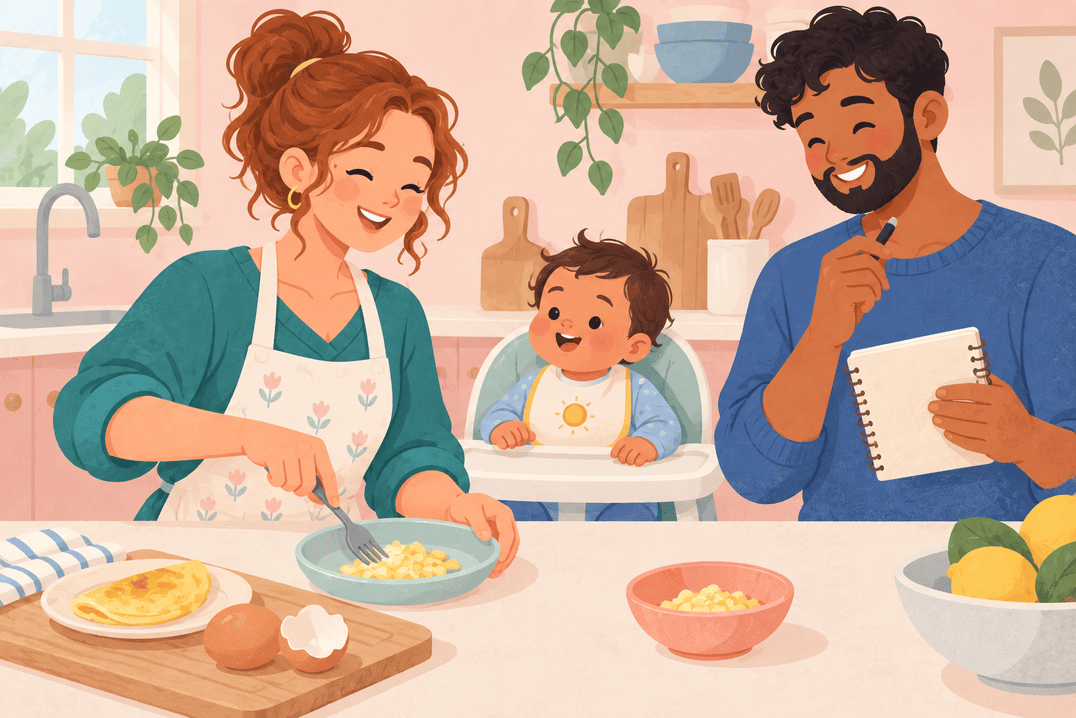
Well cooked egg can join a baby’s meals when they are ready for solids, usually around six months. There is no general benefit in postponing egg for many months to prevent allergy. The aim is a suitable first offer followed by regular inclusion if it is tolerated.
Check the starting point
If your baby has eczema, a known food allergy or a previous reaction to egg, ask for an individual plan before offering it. A guide to first introduction does not apply in the same way to a child with diagnosed egg allergy.
Readiness for solids matters alongside age. Your baby should be able to sit with appropriate support, control their head and manage food in the mouth. Do not offer food before four months. Earlier introduction within the first half year should be discussed with a clinician, especially when allergy risk is part of the decision.
Cook the egg and adapt the texture
A practical first preparation is egg cooked until both white and yolk are firm, then mashed into a suitable texture. Soft, thoroughly cooked scrambled egg can also work. Let it cool before offering it, and avoid large rubbery pieces that your baby cannot manage.
Use a familiar ingredient if you need to soften the texture. For example, a little already tolerated puree can make mashed egg easier to offer. Avoid adding several new allergens through milk, cheese or a complex recipe at the same first meal.
Wash hands and utensils after handling raw egg and keep raw ingredients away from food ready to eat. Well cooked egg is the preparation used in allergy prevention guidance; raw egg is not needed for this purpose.
Make the first offer easy to observe
Choose a time when your baby is well and you can stay with them. Begin with a small amount and follow any individual instructions about progressing the offer. Our allergen introduction guide explains why one new allergenic food at a meal makes reactions easier to interpret.
Do not rub egg onto the skin as an allergy test. A contact mark does not prove allergy, and no reaction on the skin does not establish that eating the food is safe.
Respond to symptoms without guessing
Hives away from the contact area, swelling, vomiting or other symptoms after egg need advice. Stop the suspected food and record what happened. Redness just where food touched may be irritation rather than allergy, but ask if you are unsure before repeating an uncertain trial.
Breathing difficulty, tongue or throat swelling, collapse or sudden marked floppiness needs emergency help immediately. Our allergy symptoms guide distinguishes routine assessment from urgent action.
Keep tolerated egg in the menu
If egg is tolerated, include it regularly in suitable meals rather than treating the first taste as a completed task. If an allergy is diagnosed, follow the specialist’s avoidance and reintroduction advice instead of testing different forms at home.
Egg allergy also affects the assessment for peanut introduction. Our peanut guide explains why it is useful to raise that question with your baby’s clinician promptly.
References
- American Academy of Pediatrics: Introducing egg, peanut and other food allergens (opens in a new tab)
- ASCIA: Infant feeding and allergy prevention guideline (opens in a new tab)
- NHS: Food allergies in babies and young children (opens in a new tab)
- NHS: Foods to avoid giving babies and young children (opens in a new tab)
- NHS Best Start in Life: Preparing food safely (opens in a new tab)
- BSACI: Allergy prevention (opens in a new tab)
- NHS: Anaphylaxis (opens in a new tab)

Lifeing Editorial
Stories for a little more understanding, a little more reassurance, and the everyday moments in between.
Related posts

Egg retrieval: Preparing for the Procedure and Recovery