
Pelvic pain with fever: When to Get Urgent Medical Advice
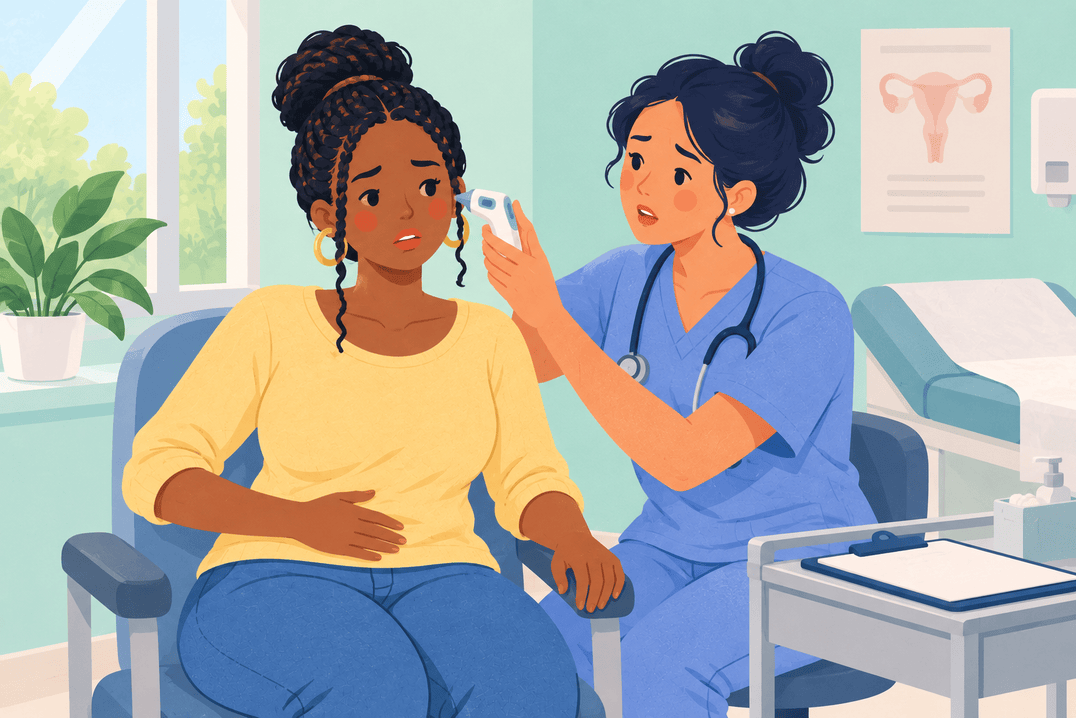
Pelvic pain with fever or shivering needs urgent medical advice. Infection is one possible cause, but symptoms alone cannot identify where the problem is or which treatment is needed. Do not wait for your next period or assume that a familiar pelvic condition explains the fever.
Severe or worsening pain, fainting, confusion, breathing difficulty, shoulder tip pain, heavy vaginal bleeding with pelvic pain, or feeling very unwell needs emergency assessment. Use your local emergency service if you cannot travel safely.
Explain the whole episode
Tell the clinician when pain and fever began, where the pain is, and whether it is worsening. Mention vomiting, unusual discharge, vaginal bleeding, painful urination, difficulty passing urine or stool, and any recent procedure, childbirth, or miscarriage.
Share any temperature measurement you have, but do not delay help to find a thermometer. Also mention medicines already taken, allergies, and antibiotics used recently.
Make pregnancy possibility clear
Pelvic pain when pregnancy is possible needs urgent assessment, even without a positive test. Fever does not rule out another urgent condition. Bleeding can be mistaken for a period, so describe it rather than assuming it excludes pregnancy.
The sudden pelvic pain guide explains why a new severe episode needs assessment even if pain is mainly on one side or temporarily improves.
Let assessment guide treatment
Possible causes include infection in the reproductive organs, urinary system, or another part of the abdomen. Clinicians may check vital signs, examine you with consent, and arrange urine, pregnancy, blood, or other tests. Imaging depends on the suspected cause and severity.
For possible pelvic inflammatory disease, treatment may begin before all test results are available. The PID assessment guide explains why a negative swab does not always exclude infection higher in the reproductive tract.
Keep the return instructions specific
If you are treated at home, ask when improvement is expected and who to contact if it does not happen. Worsening symptoms, repeated vomiting that prevents treatment, or new emergency signs need reassessment sooner.
If you are already taking antibiotics for PID and are not improving within three days, contact the treating service promptly. Do not simply extend the course or take leftover medicine. A review may change the diagnosis, treatment, or place of care.
References

Lifeing Editorial
Stories for a little more understanding, a little more reassurance, and the everyday moments in between.
Related posts


Perimenopause mood changes: Finding Support During the Transition