
Potty Rewards: Encouraging Practice Without Pressure
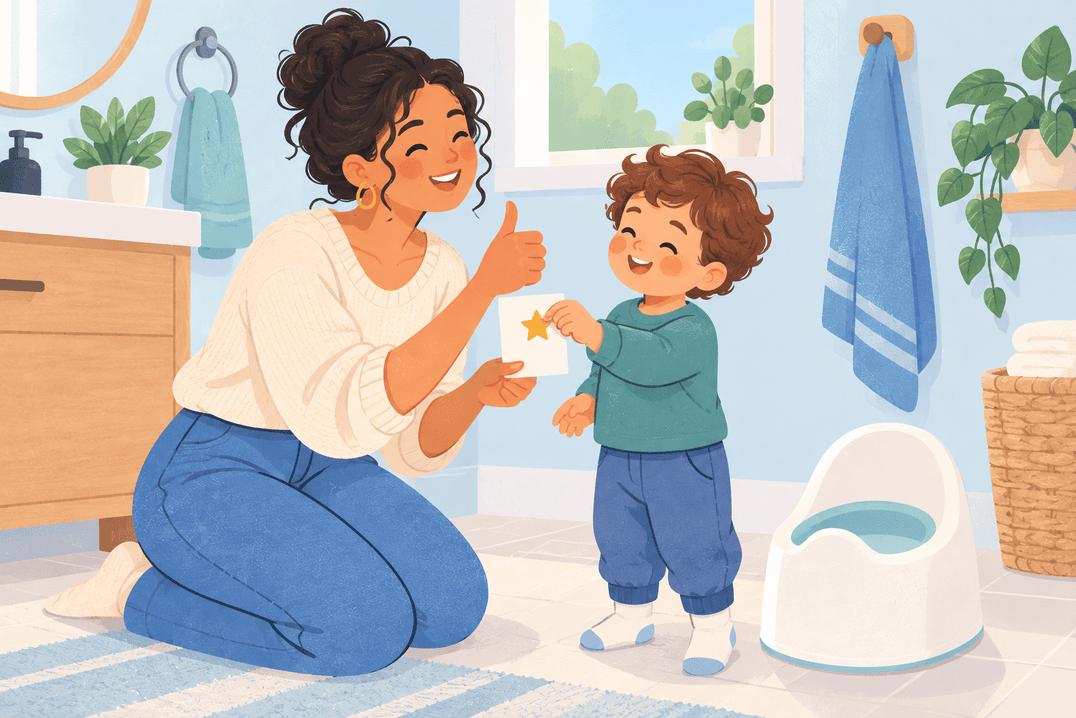
A sticker, smile or specific comment can help a toddler notice a new toilet skill. The useful target is something they can attempt, such as telling you, approaching the potty or helping with handwashing. A reward should support learning rather than make the child responsible for a result they cannot control.
You do not need a prize system to begin. Warm encouragement and practical help may fit your child better than a chart.
Choose one small action
Start with the next manageable step. If your child is anxious about the bathroom, entering calmly may be a meaningful effort. If they are already comfortable sitting, you might recognize asking for help with clothing.
Describe the action: “You told me you needed the potty.” This is more informative than a broad label about being good or grown up. Our positive attention guide explains how to keep recognition specific without making affection conditional.
Keep a chart simple if you use one
Explain the goal in a few words and give recognition soon after it happens. A toddler may struggle to understand a large reward that depends on a whole week of perfect performance. An immediate small marker can be easier to connect with the effort.
Do not make the target longer or harder after the child has completed what you agreed. If your child loses interest in the chart, review whether it is useful rather than automatically increasing the size of the prize.
Notice attempts as well as results
Trying the agreed step is worth recognizing even when no pee or poop appears. Pressuring a child to produce something can turn a relaxed opportunity into a struggle. Do not require prolonged sitting, straining or holding urine to earn a reward.
If your child is afraid, the potty refusal guide can help you examine comfort and understanding. Rewards do not replace a secure seat, accessible toilet or adult assistance.
Do not use rewards to override pain
Hard stools, painful pooping, holding or repeated soiling need assessment for constipation. A bigger prize will not make a painful bowel movement reliably comfortable. Follow the treatment plan and ask what kind of practice is suitable while the problem is being managed.
Likewise, painful peeing or a child who seems unwell deserves medical advice rather than another incentive. Suspected urinary infection in a child needs urgent advice. Keep the focus on health and support instead of interpreting reluctance as insufficient motivation.
Keep accidents and sleep out of the punishment system
Do not remove a sticker already earned, shame the child or withdraw ordinary care after an accident. Help them clean and change, then continue with a realistic plan. If cleanup includes a small task for the child, it should be ordinary participation with help, not a penalty.
For sleep, recognize an action such as visiting the toilet before bed rather than promising a prize only for a dry night. Our nighttime guide explains why sleep dryness can come later.
Share what helps and change what does not
Let nursery or other caregivers know which action you are recognizing and how your child prefers feedback. Some enjoy a cheerful celebration; others respond better to a quiet comment. A useful approach should remain manageable, respectful and flexible as the child gains skills.
References
- NHS Best Start in Life: Potty training your child (opens in a new tab)
- NHS Derbyshire: Potty training and rewarding small steps (opens in a new tab)
- CDC: Using praise and rewards (opens in a new tab)
- ERIC: Toilet anxiety in children (opens in a new tab)
- NICE: Bedwetting in children and young people (opens in a new tab)
- NHS: Constipation in children (opens in a new tab)
- NHS: Urinary tract infections (opens in a new tab)

Lifeing Editorial
Stories for a little more understanding, a little more reassurance, and the everyday moments in between.
Related posts


Pregnancy after loss anxiety: Finding Support During the Waiting Period