
Pregnancy heartburn: Practical Changes and Treatment Questions
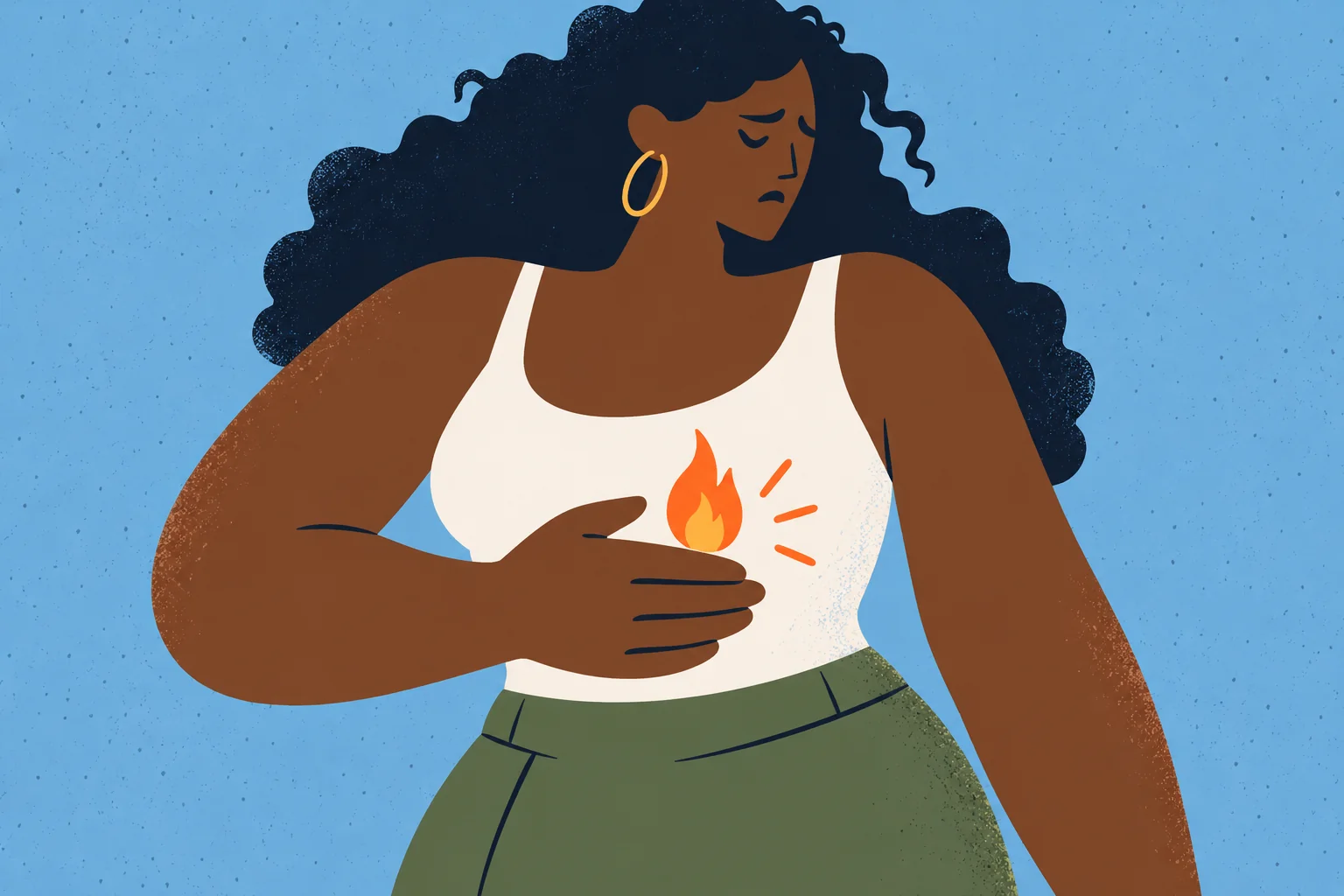
Pregnancy heartburn often feels like burning behind the breastbone, sometimes with a sour taste or food coming back up. Hormonal changes and pressure from the growing uterus can contribute. There are practical adjustments and treatments to discuss if symptoms are making meals or sleep uncomfortable.
Change the size and timing of meals
Smaller meals may feel easier than large ones. Stay upright while eating and afterward, and try leaving about three hours between your last meal and bed. Notice whether particular foods or drinks repeatedly trigger symptoms rather than removing long lists of foods automatically.
If evening discomfort also includes nausea, our guide to morning sickness at night can help you describe the difference during a consultation.
Make resting more comfortable
Raising your head and shoulders in bed may reduce reflux. Lying on your left side can also help some people. Choose support that feels stable and comfortable rather than a position that strains your back.
If changes are not helping, that is useful information for your pharmacist or maternity team. You do not need to keep making your diet more restrictive to justify asking about treatment.
Check medicines and their timing
A pharmacist can advise about antacids or alginates suitable for pregnancy. Mention all medicines and supplements you take. Antacids should be separated from iron or folic acid supplements by at least two hours because they can affect absorption.
Ask what to do if symptoms continue and whether a different treatment needs prescribing. The first trimester checklist includes a simple way to keep your medicines list together.
Do not label every chest or upper abdominal pain as reflux
Difficulty swallowing, persistent pain, or unintentional weight loss needs medical advice. Call your local emergency number for sudden chest discomfort that does not go away, pain spreading to the arm, neck or jaw, or chest pain with breathlessness, sweating or faintness. It can feel like indigestion rather than extreme pain.
Contact your maternity unit immediately for heartburn that does not go away with treatment, severe or persistent pain below the ribs, a severe headache, visual changes or sudden swelling. These can be warning signs of preeclampsia. Do not wait for several symptoms to occur together. A familiar history of heartburn should not stop you reporting a new or different symptom.
References

Lifeing Editorial
Stories for a little more understanding, a little more reassurance, and the everyday moments in between.
Related posts

Pregnancy insomnia: Building a More Comfortable Night Routine