
Traveling with expressed milk: Planning Cooling and Storage

Traveling with expressed milk involves more than putting bottles into a bag. Consider the full journey, possible delays and what will happen when you arrive. Keeping the milk cold and its history clear helps you decide whether to feed it, refrigerate it or freeze it at the destination.
Plan the whole route
Check access to a suitable refrigerator or freezer where you are staying. A small hotel drinks cooler may not hold the temperature your milk storage plan requires, so confirm its temperature rather than relying on its name. Include travel to and from stations or airports when estimating time away from refrigeration.
If flying, check the current rules of your departure and transfer airports and airline for milk, ice packs and pumps. Rules can differ between countries. Allow time for screening and keep milk easy to identify. Do not assume that an allowance used on one journey applies everywhere.
Pack with temperatures and labels in mind
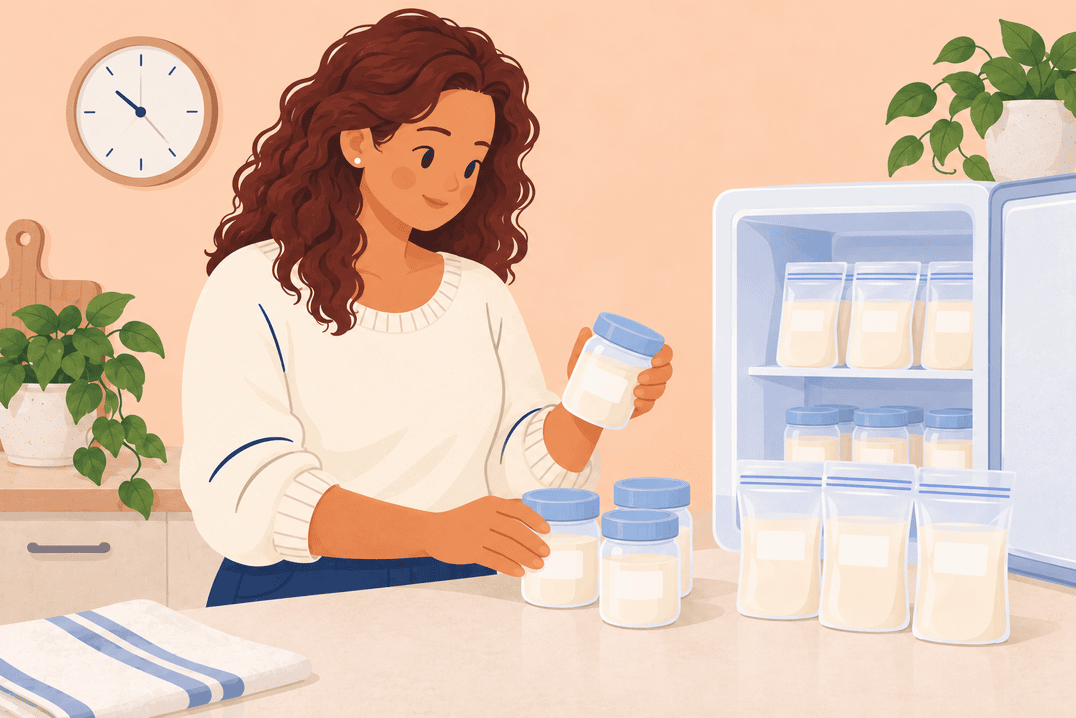
Use securely closed milk containers in an insulated cooler with frozen ice packs. Label the milk with its expression date and time. Pack portions that can be used separately so you do not need to warm everything together.
Under United States CDC guidance, freshly expressed milk can travel in an insulated cooler with frozen ice packs for up to 24 hours. It must remain properly cooled. On arrival, use it, refrigerate it or freeze it according to its existing storage history. The journey does not give old milk a new expression date. Our storage guide explains the underlying limits.
Treat frozen milk differently
Check whether frozen milk is still frozen during a long journey and when you arrive. CDC guidance allows milk that still contains ice crystals to be refrozen. If it has completely thawed, do not refreeze it; keep it cold and follow the applicable thawed milk limit.
For the CDC approach, that refrigerated limit is 24 hours after complete thawing. Other local guidance may be stricter. Our thawing and warming guide explains those differences. If you cannot establish when milk thawed or whether it stayed cold, seek advice rather than resetting the clock.
Include expression and cleaning breaks
Plan expression around the feeds you would normally provide if you want to maintain production while apart. Check power supplies and carry necessary compatible parts. Knowing hand expression provides an option if a pump fails or power is unavailable.
Take clean collection kits and a way to separate used equipment. If milk cannot be stored safely, you may still need to express for your own comfort and feeding plan, then discard it. For a premature or unwell baby, ask their team for specific travel and handling instructions before departure.
References
- CDC: Travel recommendations for nursing mothers (opens in a new tab)
- CDC: Breast milk storage and preparation (opens in a new tab)
- CDC: Breast milk storage questions and answers (opens in a new tab)
- CDC: Cleaning and sanitizing breast pumps (opens in a new tab)
- CDC: Breastfeeding and returning to your workplace (opens in a new tab)

Lifeing Editorial
Stories for a little more understanding, a little more reassurance, and the everyday moments in between.
Related posts

Trying after ectopic pregnancy: Planning Follow Up Before Conception