
Appetite changes while pregnant: When to Discuss Weight or Intake

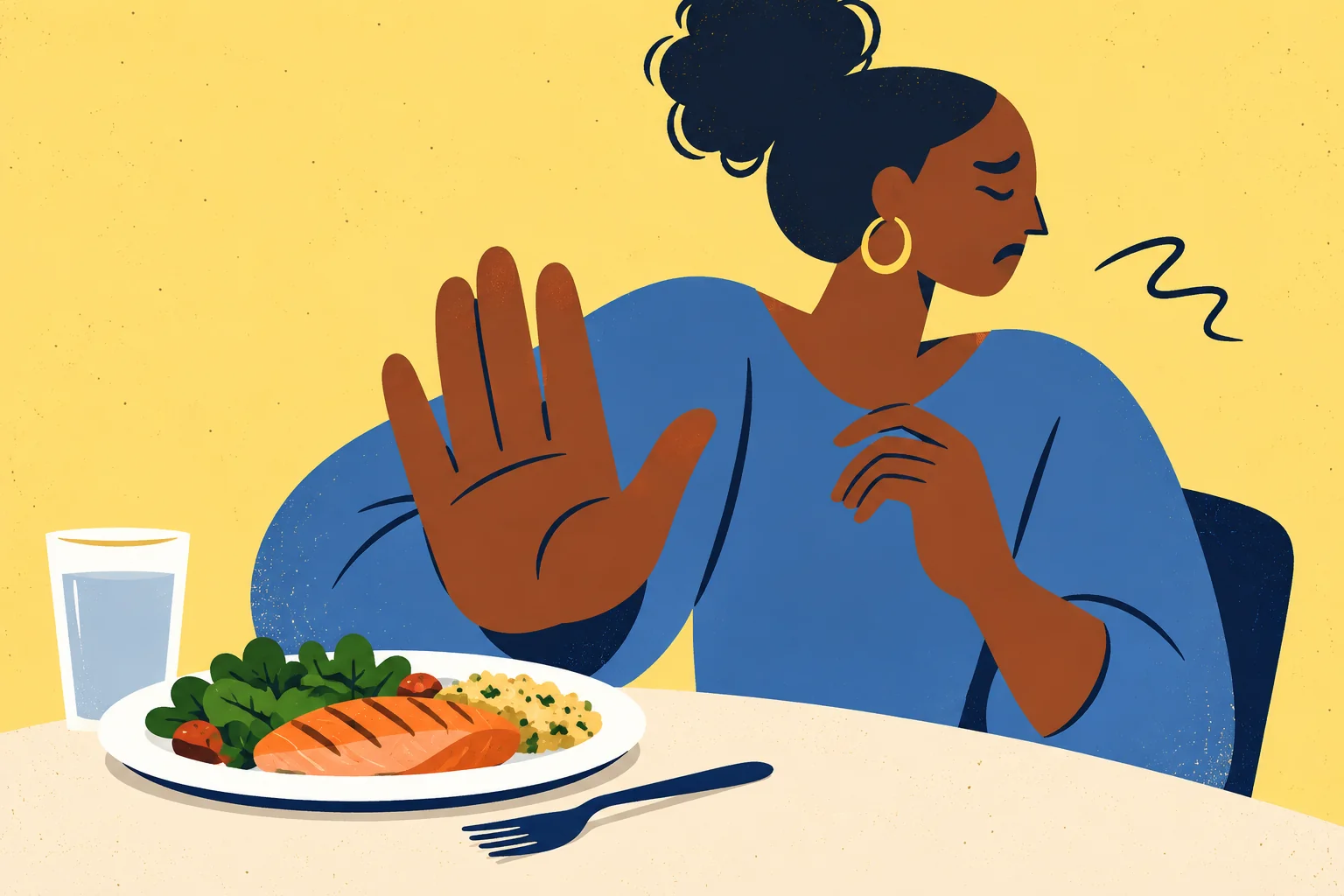
Appetite can change during pregnancy in ways that do not match the idea of steadily increasing hunger. Some days food feels unappealing; on others you may want to eat more often. What matters is whether you can maintain a workable intake and whether changes are affecting your health or wellbeing.
Look at the reason eating feels different
Nausea, aversions, heartburn, constipation, tiredness, or worries about food can each make meals harder. Describe the barrier in your own words. “I am hungry but the smell makes me sick” suggests a different conversation from “I feel full after a few bites.”
Our guides to food aversions and pregnancy heartburn offer more focused questions.
Make the next meal manageable
Keep a few simple options available and consider smaller meals when a large plate is off putting. Ask for help with shopping or cooking if those tasks have become difficult. A meal does not need to look impressive to be useful.
Aim for variety across your overall routine rather than judging one difficult day. Pregnancy does not require eating twice your usual amount, and a changing appetite is not a reason to start a restrictive diet on your own.
Discuss weight without turning it into a daily score
Tell your maternity team about weight loss, a sustained drop in intake, or concerns about weight gain. Ask what monitoring makes sense for your circumstances. Frequent self weighing can create extra worry without explaining why your appetite has changed.
If you have a history of an eating disorder, food insecurity, or difficulty obtaining suitable food, sharing this can help your team arrange more relevant support.
Ask for help when intake is becoming inadequate
Contact your maternity team promptly for a sustained inability to eat or drink normally or ongoing vomiting. Seek urgent advice for very little urine, persistent dizziness when standing or inability to keep fluids down. You do not have to wait for a visible change in your body. A useful plan addresses the symptom limiting food and gives you a clear route back to the team if things do not improve.
Choose small options when appetite is low
If nausea is the main problem, smaller, more frequent meals may be easier than a large plate. Plain foods such as toast, rice or crackers can be a starting point. If cooking smells trigger nausea, try a suitable cold option and ask someone else to prepare food when possible.
As you can manage more, add variety rather than staying with a very narrow set of foods indefinitely. The protein during pregnancy guide offers choices such as beans, tofu, eggs or yogurt according to your diet. Keep pregnancy food safety advice in mind for every option.
Try small, regular sips if a large drink feels difficult. The hydration guide explains symptoms that need urgent help. If practical changes are not enough, ask about treatment for the symptom limiting your intake. You do not need to prove that you have lost weight before seeking support.
References

Lifeing Editorial
Stories for a little more understanding, a little more reassurance, and the everyday moments in between.
Related posts

Back pain in pregnancy: Adjusting Movement and Daily Tasks