
Baby Hives: Looking for Triggers and Urgent Allergy Signs
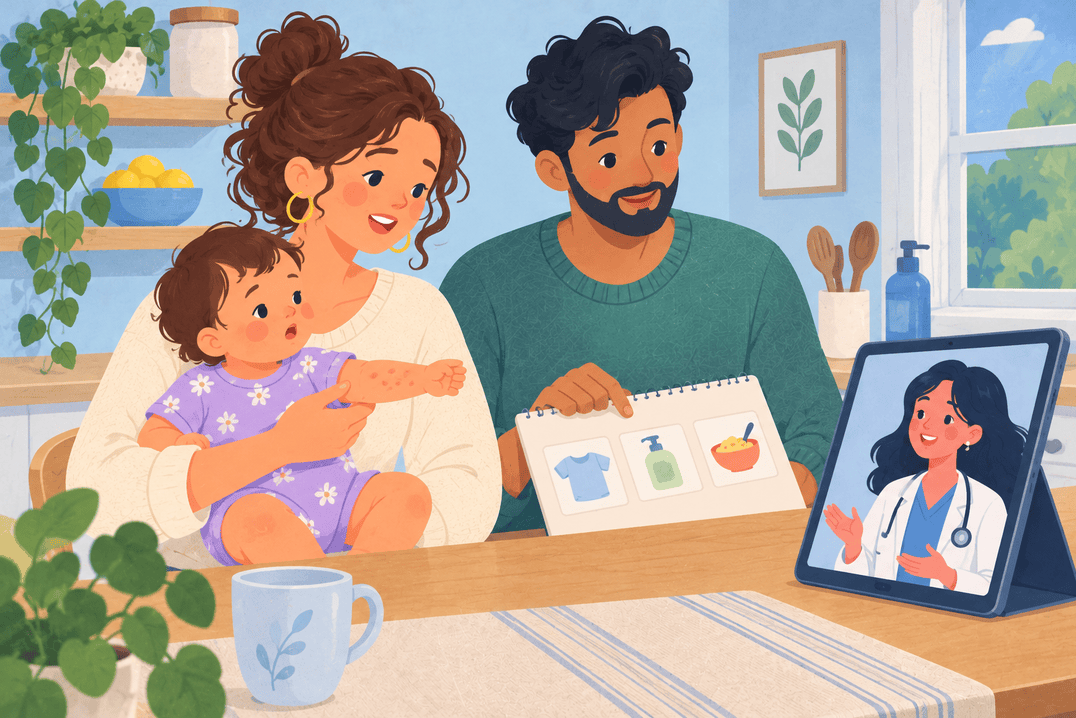
Hives are raised, often itchy patches that can vary in shape and size. They may appear in one area or across the body. Infections, medicines, foods, heat and other triggers can cause them, so a rash alone does not prove that a baby has a food allergy.
Start by checking your baby’s breathing, responsiveness and comfort. Sudden swelling of the mouth or tongue, breathing difficulty, blue or grey colouring, collapse or a floppy, poorly responsive baby needs emergency help immediately.
Act on severe symptoms first
Call your local emergency number if you suspect a severe allergic reaction. If your child has a prescribed adrenaline injector, use it promptly following the device instructions and any emergency plan. Do not wait to see whether an antihistamine will help. If symptoms have not improved after five minutes and a second prescribed injector is available, use it according to the plan and emergency instructions.
Keep your child lying flat if possible and follow the dispatcher’s positioning advice if breathing is difficult. Do not let a child stand or walk, even if they begin to feel better. A severe allergic reaction can happen without hives, so an absent rash is not a reason to delay action. The severe allergy guide explains the emergency response.
Describe the patches and what else happened
Hives can look red or pink on lighter skin, but the colour may be less obvious on brown or black skin. Notice whether the patches are raised, itchy or changing location. Take a photograph if your child is otherwise stable, since the rash may change before an appointment.
Record the time symptoms began and any recent food, medicine, insect sting, illness or new skin product. Include vomiting, coughing, swelling or changes in feeding. Those details are more useful than assuming that the most recent food must be responsible.
Our guide to food allergy symptoms explains why timing and other symptoms matter. Do not deliberately give a suspected trigger again to test the reaction. Ask for an assessment and a clear plan for avoidance or further investigation.
Choose treatment for the baby’s age
Speak with a clinician or pharmacist about a baby with suspected hives. Some antihistamines and formulations are unsuitable for young children, and a dose cannot be copied from an older sibling. Do not use an antihistamine to make your baby sleepy or as a substitute for emergency treatment.
Keep clothing comfortable and avoid heat or rubbing that seems to worsen the irritation. Do not apply several new creams while trying to identify the trigger. A persistent dry, itchy patch may need a different assessment, as described in the eczema guide.
Know when another review is needed
Seek urgent advice if the rash spreads, there is swelling beneath the skin, your baby has fever or seems unwell, or you are worried. Hives that do not improve within two days, or keep returning, also need review. Do not wait for that interval when symptoms are worsening.
Ask what to do if the rash returns and which changes should trigger emergency care. If an allergy is confirmed, share the written plan with everyone who feeds or cares for your baby. Avoid removing several foods or changing formula without clinical advice; a focused plan protects nutrition while addressing the actual concern.
References
- NHS: Hives (opens in a new tab)
- NHS: Anaphylaxis (opens in a new tab)
- NHS: Rashes in babies and children (opens in a new tab)
- NHS: When to get urgent medical help for babies and children under five (opens in a new tab)
- American Academy of Dermatology: Treating eczema in babies (opens in a new tab)
- NHS: Food allergy (opens in a new tab)

Lifeing Editorial
Stories for a little more understanding, a little more reassurance, and the everyday moments in between.
Related posts
Baby led feeding versus purees: Choosing an Approach That Fits Your Child