
Discharge after sex: Understanding Fluids and New Symptoms

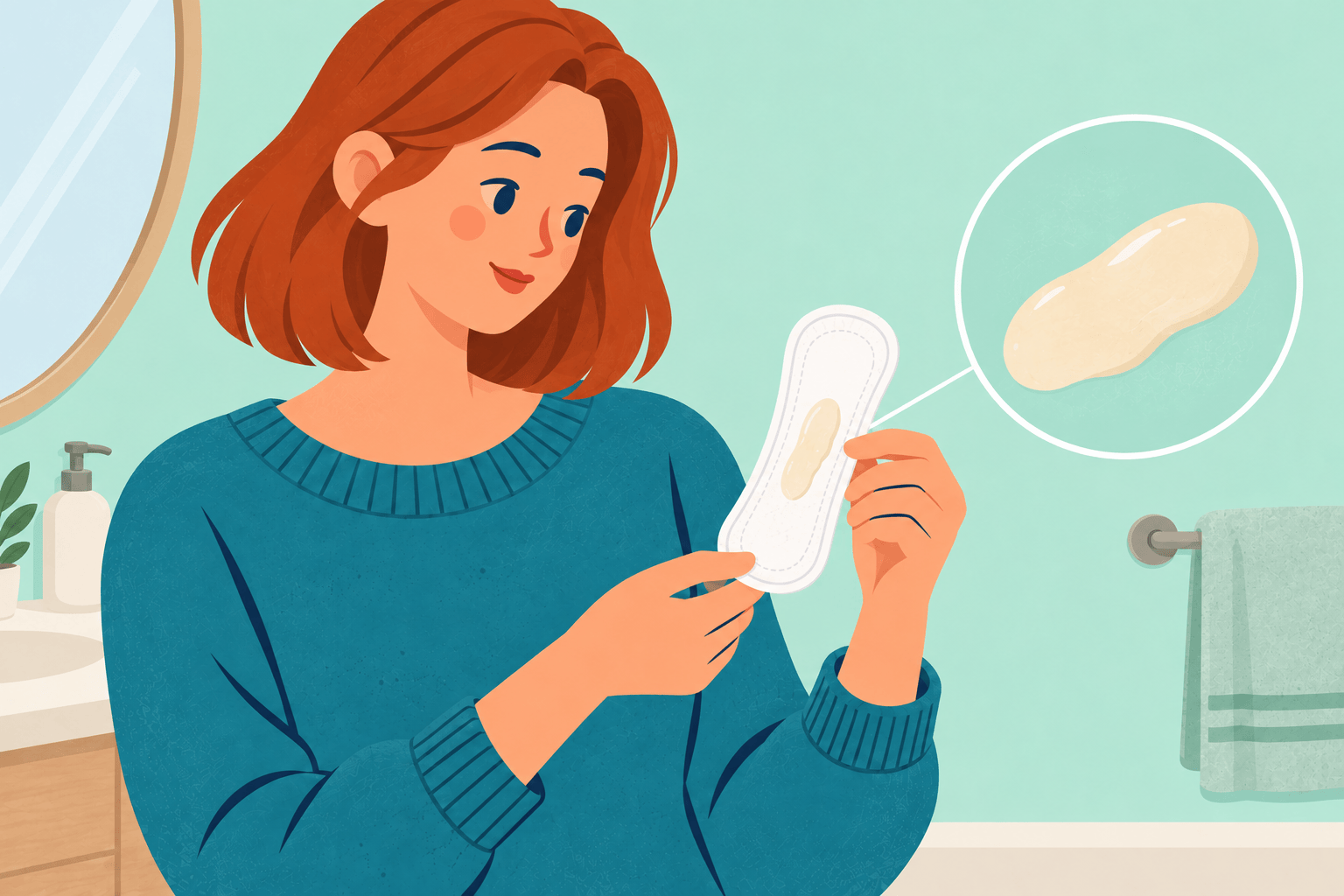
Fluid noticed after sex may include vaginal secretions and semen when ejaculation occurred in the vagina. The vagina naturally clears fluid, so noticing some afterward does not automatically indicate an infection. New odor, irritation, pain, or bleeding deserves attention rather than being explained away as normal fluid.
Look at what is new for you
Consider whether this is a familiar short lived observation or an ongoing change. Tell a clinician if symptoms began after using a new product, if intercourse was uncomfortable, or if the discharge now differs at other times too.
The cycle discharge guide offers context for ordinary variation. You do not need to identify every component of the fluid yourself before asking about a concern.
Do not use leakage as a fertility test
Seeing fluid leave the vagina does not tell you whether pregnancy will occur. Douching after sex does not prevent pregnancy or sexually transmitted infections and can disturb the vaginal environment.
If contraception failed or sex was unprotected and pregnancy is not wanted, contact a pharmacist or sexual health service promptly about emergency contraception. Do not wait for discharge to change or for a pregnancy test to become positive. A possible infection exposure may also need time sensitive advice.
Notice odor, pain, and bleeding
Bacterial vaginosis may produce a fishy odor that is more apparent after sex. This is a possible explanation, not a diagnosis. Testing may be needed to distinguish it from other causes.
Infections can also have few symptoms, and the timing of a new symptom does not prove when an infection was acquired. A sexual health service can advise which tests suit your history. The swab testing guide explains why a single sample does not automatically cover every infection.
Bleeding after sex should be checked even when it is light. If you have missed a period and bleeding comes with abdominal or pelvic pain, seek urgent medical assessment because pregnancy complications need consideration.
Make the next step practical
Avoid sex until assessed if new symptoms suggest an infection. Mention any treatments used and ask when sex can safely resume if treatment is needed. Partner advice depends on the diagnosis.
Gentle external washing is enough after sex. There is no need to flush the vagina, use deodorant, or insert a cleansing product. If symptoms keep returning, ask for a review rather than repeatedly treating what you assume is the same cause.
References
- Office on Women’s Health: Douching and vaginal care (opens in a new tab)
- Office on Women’s Health: Bacterial vaginosis (opens in a new tab)
- CDC: Conditions causing vaginal symptoms (opens in a new tab)
- CDC: About trichomoniasis (opens in a new tab)
- NHS: Vaginal bleeding between periods or after sex (opens in a new tab)
- NHS: Emergency contraception (opens in a new tab)

Lifeing Editorial
Stories for a little more understanding, a little more reassurance, and the everyday moments in between.
Related posts

Discharge before your period: Changes You May Notice