
Follicular phase: What Happens Before Ovulation
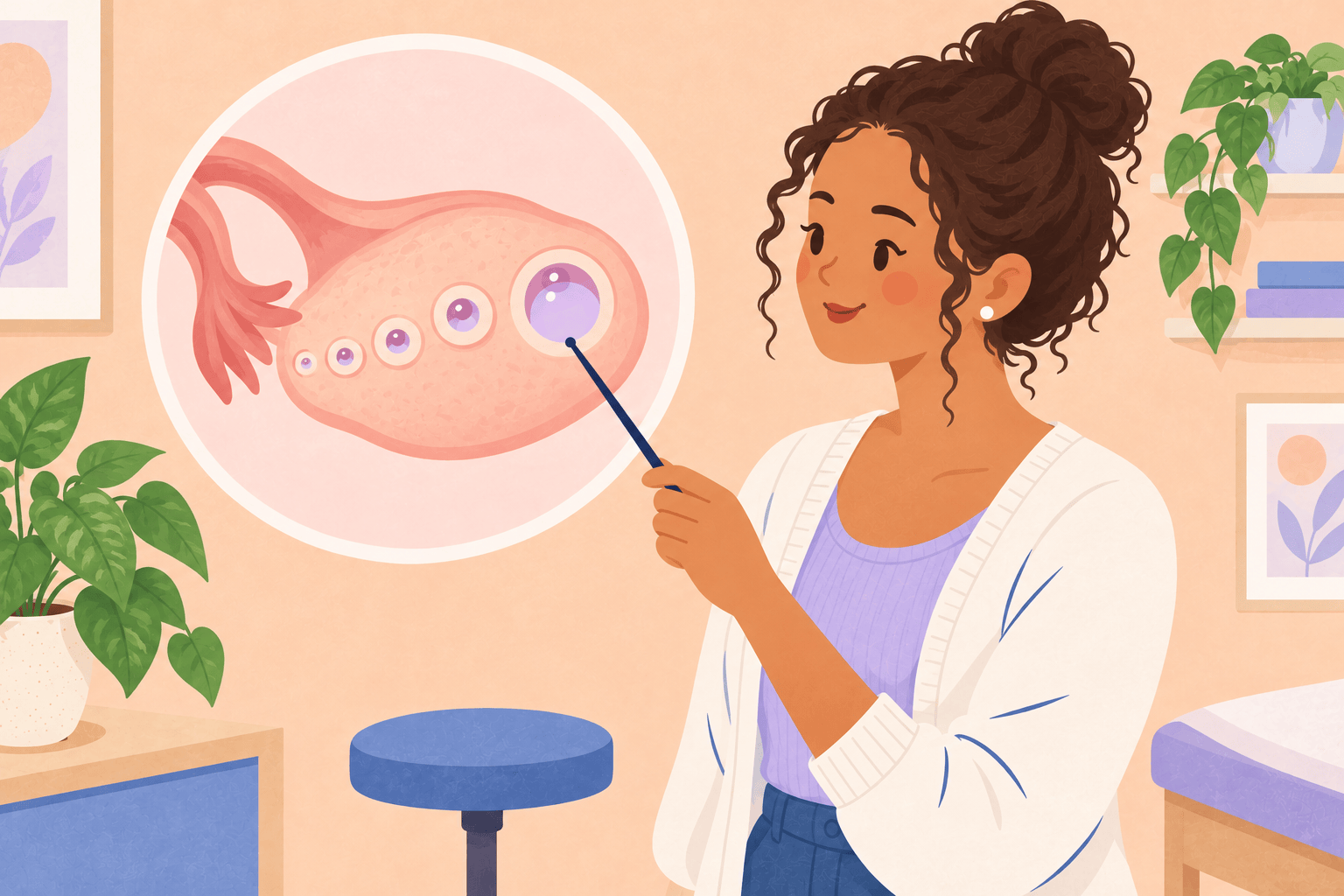
The follicular phase begins on the first day of your period and continues until ovulation. Its name comes from the follicles, small sacs in the ovaries that contain eggs. Bleeding and follicle development overlap, so this phase does not begin only after your period ends.
Follow the sequence rather than a calendar template
Signals from the brain help follicles grow. Usually one becomes dominant, and increasing estrogen helps the uterine lining develop. A surge of luteinizing hormone helps trigger the release of an egg, marking the end of the follicular phase.
The timing varies. A diagram with ovulation on day 14 is an illustration of one pattern, not proof of where you are today. For the overall sequence, read your cycle explained.
Treat body signs as clues
You may notice clearer, more slippery discharge as ovulation approaches. Some people notice little change. Record an observation in plain language, such as “more slippery than usual,” rather than labeling it as a confirmed egg release.
An ovulation test detects a hormonal signal. It gives indirect information and does not by itself demonstrate that an egg was released. A clinician may use your history and, when needed, appropriately timed testing to investigate ovulation.
Keep useful notes without assigning every feeling to hormones
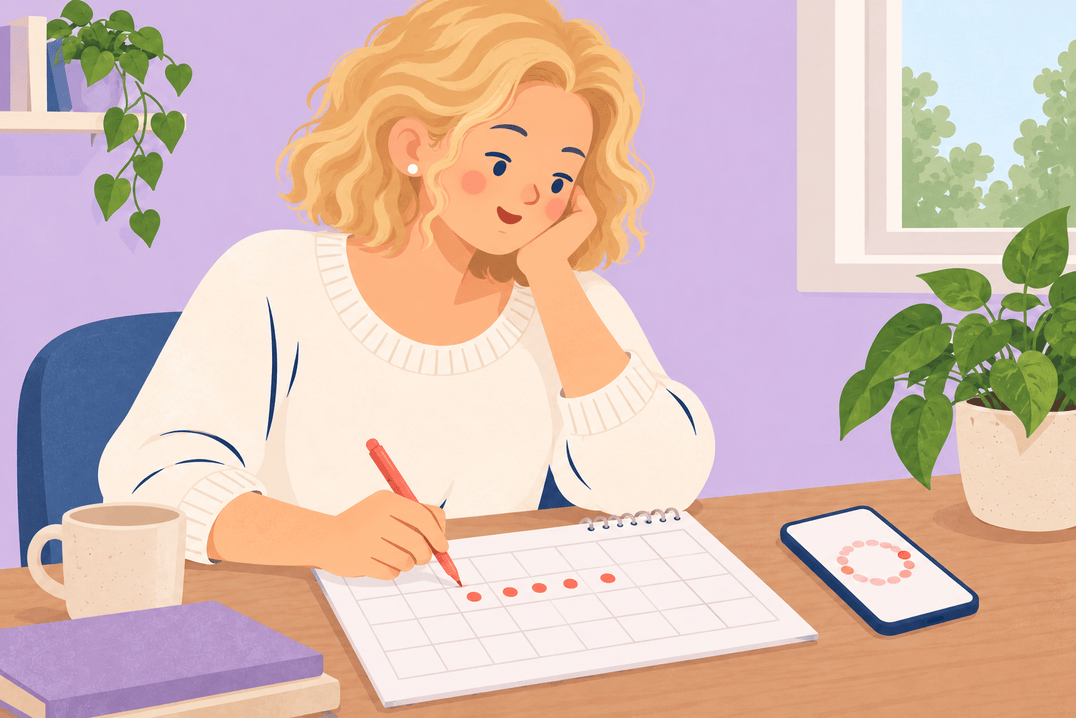
Write down period dates, the days you used an ovulation test, and anything that made the result hard to interpret. You do not need to perform better at work or exercise because a chart calls this your energetic phase. Your experience is the relevant observation.
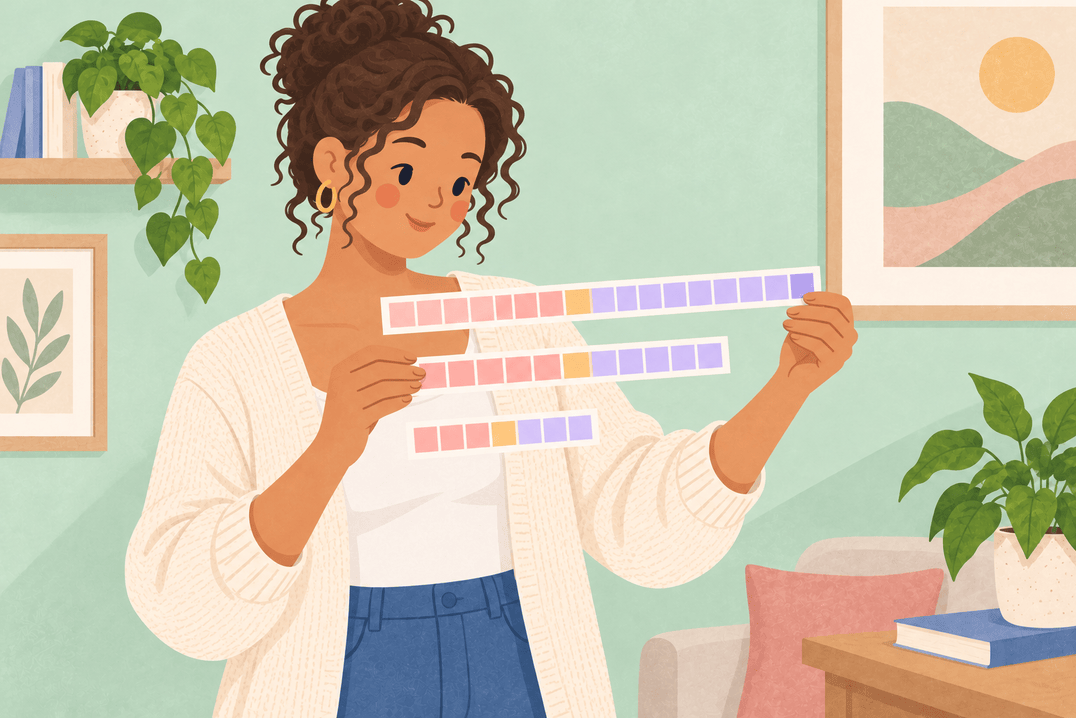
If you are comparing cycles, use the same recording method. Normal cycle length explains why one longer interval does not provide a diagnosis.
Ask about changes that persist
Repeatedly irregular cycles or difficulty conceiving are reasons to discuss your pattern with a healthcare professional. Bring the dates rather than a self diagnosis of a long follicular phase. Ask what the clinician is trying to establish, whether a test is needed, and how its timing will be chosen.
References

Lifeing Editorial
Stories for a little more understanding, a little more reassurance, and the everyday moments in between.
Related posts
Food aversions during pregnancy: Meeting Your Needs When Foods Put You Off