
Hormones across the month: Estrogen and Progesterone Explained

Estrogen and progesterone are part of a changing hormonal conversation between the brain, ovaries, and uterus. Their roles help explain the menstrual cycle, but a chart cannot tell you what your own hormone levels are on a particular day.
Estrogen helps prepare the lining
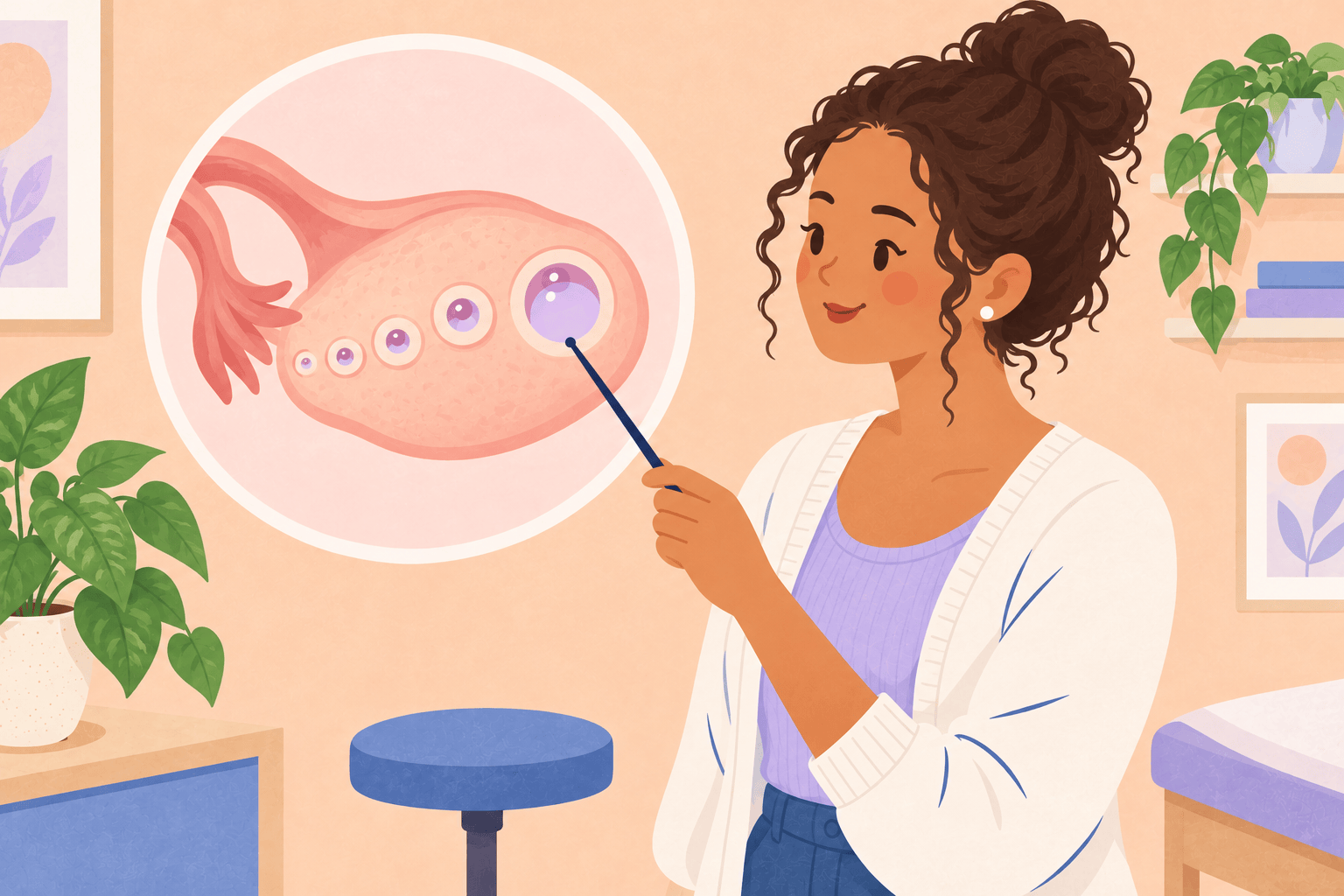
As follicles develop before ovulation, estrogen helps the uterine lining grow. Ovulation occurs when an ovary releases an egg. The follicular phase covers this earlier sequence in more detail.
Textbook graphs show a simplified pattern. Their curves are not a daily target you need to reproduce, and you cannot reconstruct them accurately from energy, skin changes, or appetite alone.
Progesterone supports the next stage
After ovulation, the remaining follicle forms a structure that produces progesterone. This supports changes in the uterine lining. If pregnancy does not develop, falling hormone levels help trigger another period.
The luteal phase guide explains why a single progesterone result should be interpreted according to when it was taken and what the clinician was testing.
Record symptoms without inventing a hormone reading
You might write, “Breast discomfort began four days before bleeding,” or “Low mood interfered with work on these dates.” These observations can help a clinician see a pattern. They are more useful than recording “estrogen dominance” because a social media checklist suggested that label.
Keep the impact visible. A symptom that affects relationships, sleep, or normal activities deserves attention even when it seems to follow a monthly pattern. You do not have to prove a particular hormone level before describing a problem.
Ask what a test would change
Different clinical questions need different investigations. Ask why a hormone test is being offered, whether it needs a particular timing, and how the result would affect care. Include contraception and prescribed medicines in the discussion.
Avoid buying hormone treatments simply to match an idealized graph. A clinician can help distinguish a normal changing pattern from a concern that needs assessment, using your history and targeted tests rather than a symptom quiz alone.
References

Lifeing Editorial
Stories for a little more understanding, a little more reassurance, and the everyday moments in between.
Related posts

Hot flushes and changing cycles: Recognizing a Broader Pattern